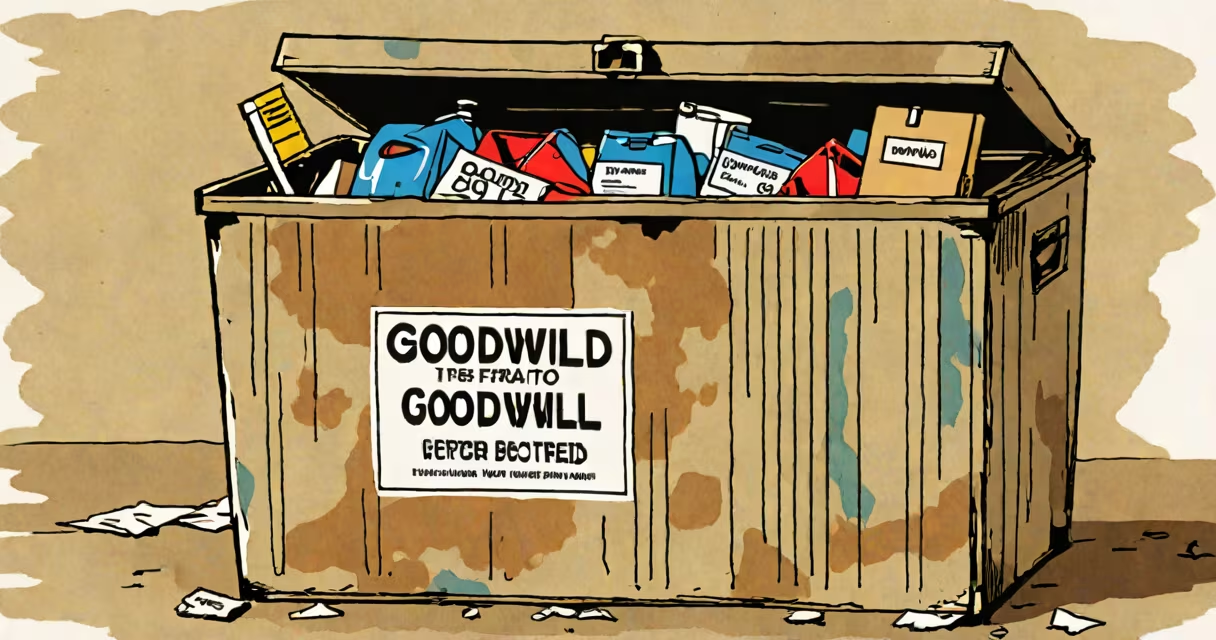
Goodwill does not accept hazardous materials, large furniture, electronics, or damaged or soiled items. These are excluded due to safety, handling, and resale standards.
Goodwill operates under strict guidelines to ensure donated goods meet safety, hygiene, and marketability standards. Items that fail these criteria are rejected at drop-off points or during sorting. The organization prioritizes items in usable condition that can be resold or repurposed through its social programs.
Over 2.4 million pounds of clothing and household goods are processed annually by Goodwill's network of stores and distribution centers. To maintain quality and safety, specific categories are explicitly prohibited from donation.
Goodwill prohibits donations of hazardous materials such as batteries, paint, pesticides, cleaning solvents, and medical waste. These pose risks during transport and storage and require specialized disposal. Even small quantities of these materials are not accepted at any location.
Large furniture pieces exceeding 6 feet in length or weighing over 100 pounds are declined. This includes sofas, beds, and armoires. The size and weight make safe handling difficult, especially in urban stores with limited space and loading access. Staff cannot safely move or store oversized items.
Electronics such as TVs, computers, microwaves, and refrigerators are not accepted. While some charities offer e-waste recycling, Goodwill does not provide this service. These items require certified disposal due to toxic components like lead and mercury. Donors must use designated e-waste facilities instead.
| Prohibited Category | Examples | Reason for Exclusion |
|---|---|---|
| Hazardous Materials | Batteries, bleach, motor oil, aerosol cans | Fire risk, environmental contamination |
| Large Furniture | Queen-sized bed, sectional sofa, armoire | Transport and storage challenges |
| Electronics | Desktop computer, microwave oven, TV | Requires e-waste processing; no internal recycling |
| Damaged or Soiled Items | Stained clothing, torn bedding, moldy books | Unsellable; potential health hazard |
Many donors assume that "used" means "acceptable." But Goodwill only accepts items in working, clean, and repairable condition. A shirt with a hole, a toaster with burnt wiring, or a book with water damage is not eligible. These items are discarded as waste, even if they were donated with good intent.
Another misconception is that all electronics can be recycled through charity bins. Goodwill does not collect or process electronic waste. According to the Environmental Protection Agency (EPA), over 50 million tons of e-waste are generated annually in the U.S., and only 15% is properly recycled. Donors must use certified e-waste recyclers like EPA's e-Stewards program or local municipal collection events.
Some believe that if an item is "not broken," it qualifies. However, functionality isn't enough. A DVD player that plays discs but lacks remote control or power cord may still be rejected if it doesn't meet visual and functional standards. Goodwill evaluates items based on complete usability and presentation.
Acceptable donations include clothing, shoes, accessories, household goods, books, and small appliances in working condition. All items must be clean, dry, and free of stains, tears, or odors. For example, a pair of jeans with a small rip can be donated if the fabric is intact and the item is washable.
Goodwill's acceptance policy is consistent across locations. The organization reports that 85% of all donated items are resold in its retail stores. The remaining 15% are sent to textile recycling facilities when unsellable. This ensures minimal waste and supports sustainability goals.
I once dropped off a box of gently used books at a downtown Goodwill. The staff member politely asked me to remove a volume with mildew on the spine. They explained that even slight moisture damage makes an item unsellable and unsafe for resale. I left with a receipt and a sense of clarity about what truly qualifies.
For electronics, contact local e-waste recyclers. Many cities host annual e-waste collection days. The National Recycling Coalition lists over 1,200 certified facilities nationwide. For large furniture, consider donating to a local shelter or using a junk removal service that partners with reuse organizations.
Hazardous materials must be disposed of through approved channels. Household hazardous waste (HHW) programs exist in nearly every county. The EPA provides a searchable directory at epa.gov/hwrecycle to locate nearby drop-off sites.
When in doubt, check Goodwill's official website or call your local store. Policies may vary slightly by region, but core prohibitions remain unchanged. Always verify before transporting bulky or sensitive items.
Understanding what you cannot donate to Goodwill prevents wasted time, avoids environmental harm, and ensures your contribution aligns with the organization's mission. Knowing the limits strengthens trust in charitable giving.
Goodwill's donation policy aims to protect both people and resources. By avoiding prohibited items, donors support responsible reuse and reduce landfill burden. The goal is not to discourage giving, but to direct it toward items that can be safely reused or recycled.