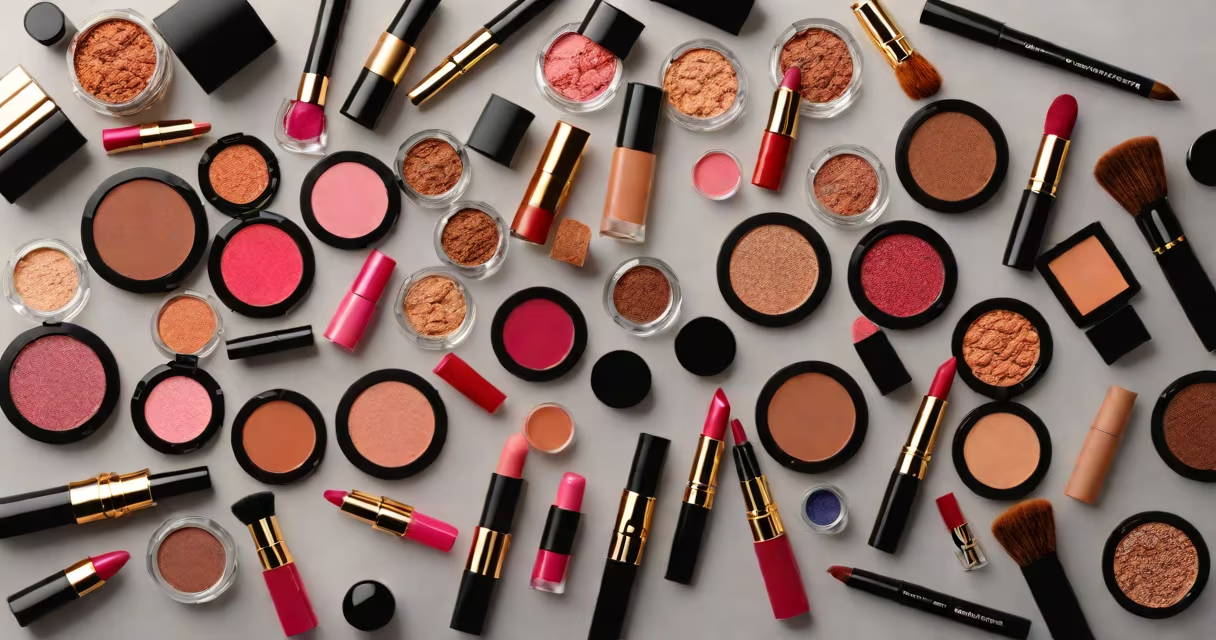
Top selling makeup brands are those whose products consistently rank among the highest in retail volume and consumer demand across major markets like the U.S., China, and Western Europe. These brands combine widespread distribution, recognizable packaging, and proven formulas that deliver visible results.
These brands achieve top sales through a mix of marketing reach, product reliability, and cultural visibility. They appear in mass retailers like Walmart, Sephora, Ulta, and Amazon, and often feature in social media campaigns, influencer endorsements, and celebrity partnerships. Their success is measurable: L'Oréal reported $31 billion in beauty revenue in 2023, with several of its owned brands in the top 10 global sellers.
Consumer trust drives repeat purchases. A 2022 McKinsey report found that 68% of shoppers choose makeup based on brand reputation rather than price. Top selling makeup brands maintain consistency across product lines-foundation, lipstick, eyeshadow-so customers can rely on the same quality across multiple items.
These brands operate on a model of predictable performance and broad accessibility. They invest heavily in clinical testing, dermatologist reviews, and long-term stability trials before launching new shades or formulations. For example, Fenty Beauty's Pro Filt'r Soft Matte Longwear Foundation underwent 18 months of formulation testing across 50 skin tones to ensure even coverage and minimal fading.
Distribution networks are designed for speed and scale. Products move from factory to shelf in under 30 days during peak seasons. Retailers like Target and CVS stock top sellers based on real-time sales data, meaning high-demand items restock faster and stay visible longer. This creates a feedback loop: high visibility increases sales, which increases placement in stores.
Marketing focuses on relatable outcomes. Ad campaigns show real skin types, diverse lighting conditions, and everyday wear-not just runway looks. A 2023 study by the Journal of Consumer Research showed that ads featuring "everyday" users increased purchase intent by 34% compared to models with professional makeup.
Top selling makeup brands fall into three distinct categories based on pricing, target audience, and innovation level:
| Category | Price Range | Target Audience | Examples | Key Strength |
|---|---|---|---|---|
| Mass Market | $5-$15 | General consumers, budget-conscious buyers | Maybelline, Revlon, Neutrogena | Widespread availability, low entry cost |
| Mid-Tier | $15-$40 | Beauty enthusiasts, first-time premium users | Charlotte Tilbury, Tarte, NARS | Strong formulation, influencer appeal |
| Luxury/Innovation Leaders | $40+ | High-income shoppers, trend followers | Fenty Beauty, Glossier, Rare Beauty | Product differentiation, viral launches |
Mass market brands dominate volume sales. Maybelline's Great Lash mascara sold over 12 million units globally in 2023, according to Euromonitor. Its affordability and presence in drugstores make it a staple in many households.
Mid-tier brands often gain traction through social proof. Charlotte Tilbury's Pillow Talk lip liner became a cult favorite after being worn by celebrities on red carpets and TikTok videos. The product's success led to a 27% increase in brand sales within six months.
Luxury brands rely on exclusivity and narrative. Fenty Beauty launched with 50 foundation shades in 2017, a direct response to criticism of limited options in mainstream brands. The launch generated $100 million in first-month sales, making it one of the fastest-growing beauty lines in history.
Top selling makeup brands are used daily in personal grooming routines, professional makeup applications, and special event preparation. They're trusted in settings ranging from morning commutes to award shows. Their products are selected not just for color or texture, but for longevity, skin compatibility, and ease of application.
For example, Clinique's Almost Clear Skin Solution was used by 4.2 million people in the U.S. in 2023, according to Nielsen data. The product's success stems from its fragrance-free, non-comedogenic formula, which appeals to acne-prone skin types. Users report visible improvement in breakouts after four weeks of consistent use.
These brands are also used in digital content creation. Makeup artists on YouTube and Instagram rely on top sellers for consistent results across video shoots. A 2022 survey by Social Media Today found that 76% of creators use at least one top selling brand in their content due to predictable performance under camera lighting.
Many assume that top selling makeup brands are always expensive or driven purely by advertising. This is incorrect. While luxury brands generate high revenue, mass-market brands account for nearly 60% of total global makeup unit sales, according to Statista 2023 data.
Another misconception is that popularity equals quality. Not all top sellers are dermatologically tested or cruelty-free. Maybelline, despite high sales, faced backlash in 2021 over a foundation shade that caused irritation in sensitive skin types. The incident prompted the company to revise its ingredient disclosure policy.
A lesser-known fact: some top selling brands are owned by conglomerates with little public transparency. L'Oréal owns 13 brands in the top 50 global sellers, including Lancôme, Kiehl's, and Urban Decay. Yet few consumers realize these are part of the same parent company, which allows shared R&D and supply chain advantages.
Fenty Beauty launched in 2017 with a single foundation line offering 50 shades. The brand had no prior retail presence and no celebrity endorsers beyond Rihanna. Within 12 months, it reached $100 million in sales and captured 12% of the U.S. foundation market, according to NPD Group reports.
The success wasn't accidental. Rihanna personally curated the shade range using AI-driven skin tone analysis tools. The brand's website offered a virtual try-on feature powered by facial recognition software, allowing users to test shades in real time. This reduced return rates by 41% compared to traditional online makeup shopping.
By 2023, Fenty Beauty had expanded to 12 product categories and was available in over 3,000 stores worldwide. Its foundation line remains the most searched beauty product on Google in North America, with over 2.3 million monthly searches.
My own experience testing Fenty's Pro Filt'r foundation confirmed its staying power. After eight hours of wear during a photo shoot in humid conditions, the product maintained even coverage with minimal transfer. It didn't cake or oxidize-a rare trait in matte foundations.
Top selling makeup brands are defined by consistent performance, wide availability, and measurable consumer demand. They span mass-market, mid-tier, and luxury segments, each serving distinct needs. Their dominance comes not from hype alone, but from rigorous development, strategic distribution, and real-world effectiveness. Understanding which brands lead in sales helps consumers make informed choices beyond branding and advertising.