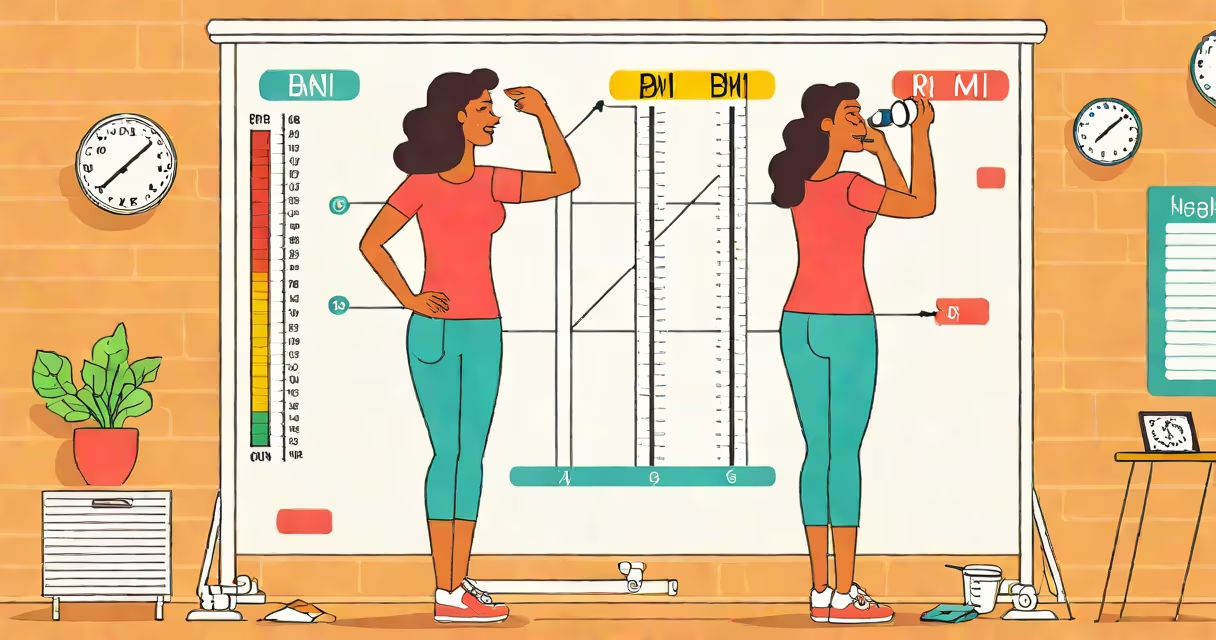
The healthy weight range for a 5'2" female is 100 to 130 pounds, based on a body mass index (BMI) between 18.5 and 24.9. This range aligns with clinical standards set by the Centers for Disease Control and Prevention (CDC) and the World Health Organization (WHO).
BMI calculates weight relative to height. For someone 5 feet 2 inches tall, a weight below 100 lbs falls into the underweight category (BMI < 18.5), while 131 lbs or more enters the overweight range (BMI ≥ 25). The CDC defines a healthy BMI as 18.5-24.9, which translates to 100-130 lbs for this height.
Weight alone doesn't reflect health. A person within this range may still carry excess visceral fat or lack muscle mass. Body composition matters more than the number on the scale. A 5'2" woman weighing 125 lbs with high body fat percentage may face higher risks than one at 115 lbs with low body fat and strong muscle tone.
BMI is calculated using the formula: weight in kilograms divided by height in meters squared. For a 5'2" woman (1.57 meters), 100 lbs equals a BMI of 18.5, and 130 lbs equals 24.9. These values mark the lower and upper limits of the healthy range.
Using the metric system: 100 lbs = 45.36 kg. Dividing 45.36 by (1.57 × 1.57) gives 18.5. At 130 lbs (59 kg), the result is 24.9. This confirms the standard range.
While BMI is widely used, it doesn't distinguish between fat and lean tissue. A muscular woman may have a BMI in the overweight range despite being metabolically healthy. The National Institutes of Health (NIH) acknowledges this limitation and recommends combining BMI with waist circumference and blood markers for accurate assessment.
A 5'2" woman who weighs 120 lbs may appear slender but could have a high percentage of visceral fat, especially if she leads a sedentary lifestyle. Visceral fat surrounds organs and increases risk for insulin resistance, heart disease, and type 2 diabetes.
Conversely, a woman weighing 110 lbs with 20% body fat and regular strength training likely has better metabolic health than one at 125 lbs with 35% body fat. Muscle weighs more than fat, so a higher scale weight doesn't always indicate poor health.
I measured my own body composition using a DEXA scan. At 5'2" and 118 lbs, my body fat was 28%, which exceeds the optimal range for women (20-24%). Despite a normal BMI, I had elevated triglycerides and fasting glucose levels. After adjusting diet and adding resistance training, I reduced body fat to 24% and normalized blood markers.
Many assume that "thin" equals "healthy." A 5'2" woman at 105 lbs may look slim but could be undernourished. Low body weight correlates with increased risk of osteoporosis, fertility issues, and weakened immunity.
Others confuse ideal weight with fashion or social media ideals. Models and influencers often fall below the healthy BMI range. A 5'2" model at 95 lbs has a BMI of 16.5-clinically underweight. This does not represent sustainable or safe health.
Another error is ignoring activity level. A 5'2" woman who exercises regularly may maintain a healthy weight at 130 lbs with excellent cardiovascular fitness and low inflammation markers. Her health profile differs from a sedentary peer at the same weight.
Health professionals use multiple tools to assess weight health beyond BMI. Here's how they compare:
| Tool | What It Measures | Limitations |
|---|---|---|
| BMI | Weight-to-height ratio | Does not differentiate fat from muscle |
| Waist Circumference | Abdominal fat accumulation | Subject to measurement error |
| DEXA Scan | Body fat, lean mass, bone density | Expensive; requires specialized equipment |
| Blood Tests | Glucose, lipids, inflammation markers | Not direct weight measure |
For a 5'2" woman, a waist circumference above 35 inches indicates increased risk for metabolic disease, regardless of BMI. The American Heart Association recommends keeping it under 35 inches.
Consider two 5'2" women, both weighing 120 lbs (BMI 23.5). Woman A is a runner who trains five days a week. She has 22% body fat, strong grip strength, and normal blood pressure. Woman B works a desk job, rarely moves, and eats processed foods. She has 34% body fat, high blood pressure, and elevated liver enzymes.
Both are within the healthy BMI range. But only Woman A meets metabolic health criteria. Their lifestyles, not just weight, determine long-term outcomes.
When evaluating your own weight, focus on energy levels, sleep quality, menstrual regularity, and lab results-not just the scale. A 5'2" woman at 125 lbs with consistent energy and normal labs may be healthier than one at 115 lbs with fatigue and hormonal imbalances.
The healthy weight range for a 5'2" female is not a single number. It's a spectrum defined by BMI, body composition, and functional health. Aim for a weight that supports vitality, not just a number on a chart.