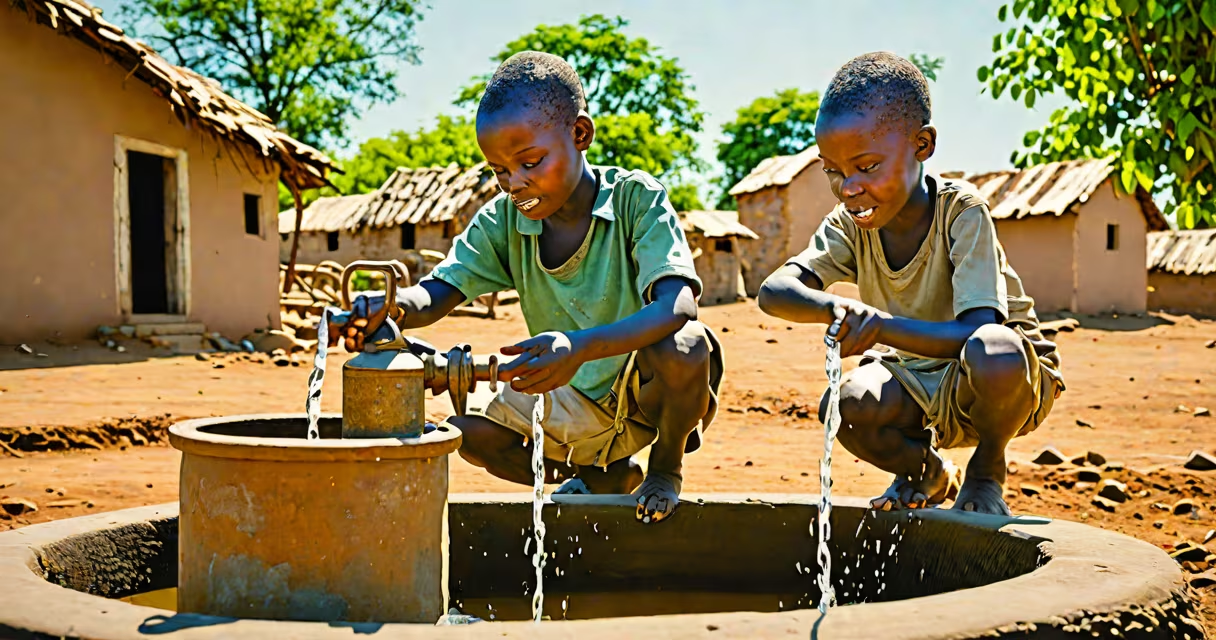
SDG6 is the United Nations' Sustainable Development Goal focused on ensuring universal access to safe drinking water and adequate sanitation by 2030. It addresses water quality, infrastructure, and system protection as core pillars of human health and environmental resilience.
SDG6 is part of the 2030 Agenda for Sustainable Development, adopted by all UN member states in 2015. Its full title is "Ensure availability and sustainable management of water and sanitation for all." The goal includes six specific targets and four indicators monitored globally by the World Health Organization (WHO) and UNICEF.
Progress toward SDG6 is measured through metrics such as the proportion of the population using safely managed drinking water services and the proportion using safely managed sanitation services. As of 2023, 2.2 billion people still lack access to safely managed drinking water, and 3.5 billion lack safely managed sanitation-a gap that undermines public health and economic stability.
SDG6 operates through a structure of measurable targets and indicators designed to track progress across countries. It is not a standalone initiative but integrates with other goals like climate action (SDG13), responsible consumption (SDG12), and reduced inequalities (SDG10).
The goal functions through national policy alignment, international funding mechanisms, and cross-sector collaboration. Governments set national targets aligned with SDG6, while multilateral organizations like the World Bank and UN-Water provide technical and financial support. Local NGOs and community groups implement water safety programs and sanitation infrastructure projects.
For example, in Bangladesh, a joint WHO-UNICEF program improved water quality in 12,000 villages by installing arsenic-safe wells and training local water committees. This project contributed directly to national progress on SDG6 indicator 6.1.1, which tracks access to safely managed drinking water.
SDG6 consists of six targets, each with defined outcomes and monitoring methods:
| Target | Goal | Indicator |
|---|---|---|
| 6.1 | Universal access to safe drinking water | Proportion of population using safely managed drinking water services |
| 6.2 | Sanitation for all | Proportion of population using safely managed sanitation services |
| 6.3 | Improve water quality | Proportion of wastewater safely treated |
| 6.4 | Water efficiency and sustainable withdrawal | Change in water use efficiency |
| 6.5 | Integrated water resources management | Number of countries with water-related policies and plans |
| 6.6 | Protect and restore water-related ecosystems | Change in extent of water-related ecosystems |
Target 6.4 focuses on reducing water waste and improving efficiency in agriculture, industry, and households. In Israel, water recycling rates exceed 90%, with treated wastewater used for irrigation. This system supports agricultural productivity while conserving freshwater supplies-directly advancing SDG6.4.
Target 6.6 emphasizes protecting wetlands, rivers, and groundwater systems. The restoration of the Mesopotamian Marshes in southern Iraq, a UNESCO World Heritage site, began in 2003 after decades of drainage. By 2020, over 1,000 square kilometers had been reflooded, supporting biodiversity and indigenous livelihoods-key outcomes of SDG6.6.
SDG6 is often misunderstood as solely about building toilets or digging wells. While infrastructure is critical, the goal extends beyond physical assets to governance, equity, and environmental protection.
A common error is assuming that "safe" water means "clean" water. Safe drinking water requires acceptable levels of chemical contaminants like lead, fluoride, and nitrates. In Flint, Michigan, tap water was legally compliant with U.S. standards but contained high lead levels-exposing a flaw in regulatory frameworks. This case illustrates that compliance ≠ safety, a key insight behind SDG6's focus on "safely managed" services.
Another misconception is that SDG6 applies only to low-income nations. High-income countries face challenges too. In 2022, the U.S. Environmental Protection Agency reported that 24 million Americans live in communities with unsafe drinking water due to aging pipes and contamination. These cases show that SDG6 is relevant globally-not just in developing regions.
In 2019, Kenya launched a national strategy to achieve SDG6 by 2030. The plan included expanding piped water access in Nairobi slums, establishing water user associations in rural areas, and enforcing regulations on industrial discharges.
By 2023, the country increased access to safely managed drinking water from 58% to 73% in urban areas and from 32% to 51% in rural zones. A pilot project in Kajiado County used solar-powered boreholes and mobile payment systems to manage usage. Households paid $0.05 per 20 liters via M-Pesa, increasing affordability and reducing water theft.
This model demonstrates how SDG6 implementation combines technology, finance, and community engagement. It also shows that progress is measurable: Kenya's 2023 report cited a 22% drop in waterborne diseases in targeted districts-direct evidence of SDG6 impact.
Access to clean water and sanitation prevents disease, reduces child mortality, and increases school attendance. According to WHO, every $1 invested in water and sanitation generates $4.3 in economic returns through healthcare savings and labor productivity gains.
Climate change intensifies water stress. Droughts in California and floods in Pakistan have disrupted water systems, showing that SDG6 is not static-it must adapt to shifting environmental conditions. Countries integrating climate resilience into water planning are better positioned to meet SDG6 targets.
SDG6 is not optional. It is a legal obligation under international agreements like the Paris Agreement and the Convention on the Rights of the Child. Failure to act threatens food security, gender equality (women spend 200 million hours daily collecting water), and long-term sustainability.
Understanding what is sdg6 means recognizing it as a multidimensional challenge requiring science, policy, and civic participation. It is not a single project but a global commitment to shared water security.
SDG6 remains one of the most urgent goals in the 2030 Agenda. Without coordinated action, 2.2 billion people will still lack safe water by 2030. Achieving it demands innovation, investment, and accountability at every level-from city councils to multinational corporations.
What is sdg6? It is a blueprint for equitable, sustainable water and sanitation systems. It defines success not by construction numbers, but by lives saved, ecosystems restored, and communities empowered.