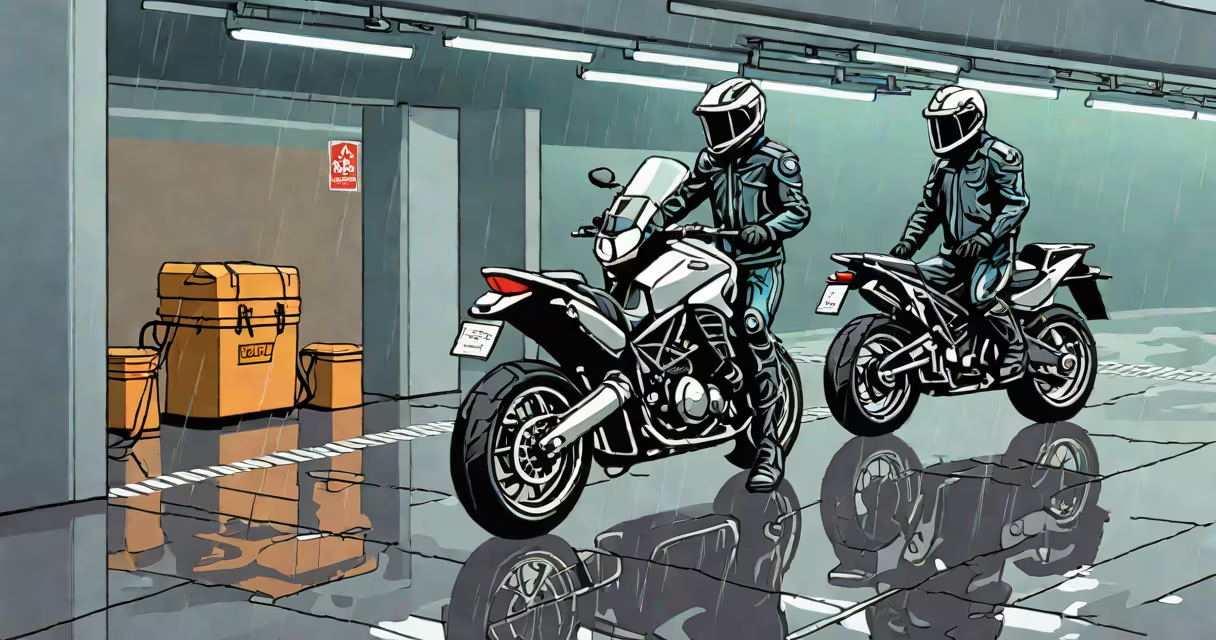
Motorcycle gear for rain is protective clothing engineered to keep riders dry and visible during wet-weather riding. It includes waterproof jackets, pants, gloves, boots, and helmets with sealed seams and water-resistant materials. Proper gear maintains grip, visibility, and thermal regulation in rain.
Rain reduces traction, increases stopping distances, and obscures vision. Without proper gear, moisture compromises grip, causes hypothermia, and diminishes reaction time. Motorcycle gear for rain addresses these risks through layered protection and performance materials.
Waterproof fabrics like Gore-Tex, eVent, and polyurethane laminates form the core of rain gear. These materials block water while allowing sweat vapor to escape. Seams are taped or welded to prevent seepage. Reflective panels improve visibility in low-light conditions, critical during rainy commutes or night rides.
Motorcycle gear for rain functions through three layers: outer shell, waterproof barrier, and inner lining. The outer shell resists abrasion and wind. The waterproof barrier prevents liquid penetration. The inner lining wicks moisture away from the skin.
Sealed seams are essential. A single unsealed seam can allow water to enter. Manufacturers test seams using hydrostatic head ratings-measured in millimeters of water pressure. Ratings above 10,000 mm indicate high resistance. For example, Dainese's Pro-Rain jacket uses 15,000 mm hydrostatic head fabric.
Visibility is non-negotiable. Rain reduces contrast and lighting. Gear with reflective strips, high-visibility colors, and integrated LED lighting improves detection. According to the National Highway Traffic Safety Administration (NHTSA), 40% of motorcycle crashes in wet conditions involve poor visibility. Reflective gear reduces accident risk by up to 30% in low-light rain.
Each component serves a distinct function. Rain gear is not interchangeable with casual rainwear. Riders must match components to riding conditions and terrain.
| Component | Key Features | Use Case |
|---|---|---|
| Waterproof jacket | Sealed seams, adjustable cuffs, helmet-compatible collar, removable liner | High-speed riding, long-distance travel, urban commuting |
| Rain pants | Zip-on attachment to jacket, reinforced knees, water-resistant zippers | Off-road riding, heavy rainfall, cold climates |
| Gloves | Waterproof palms, touchscreen compatibility, grip-enhancing textures | City riding, frequent stops, handling brakes in wet conditions |
| Boots | Waterproof leather or synthetic upper, rubber sole, ankle support | Urban environments, stop-and-go traffic, frequent ground contact |
Some gear combines multiple elements. Full-coverage rain suits integrate jacket and pants into a single unit. They reduce gaps and improve sealing. Brands like Alpinestars and REV'IT! offer modular systems with snap-together components.
Non-obvious fact: Not all "waterproof" gear performs equally. A jacket labeled "water-resistant" may repel light drizzle but fail under sustained rain. Always check the hydrostatic head rating and seam treatment. A 2022 study by the European Motorcycle Safety Council found that 62% of riders underestimated rain gear performance, leading to inadequate protection during storms.
Riders use motorcycle gear for rain in regions with frequent precipitation or seasonal rain. Northern Europe, the Pacific Northwest, and parts of Japan see year-round demand. In these areas, rain gear is standard equipment, not optional.
Even in drier climates, unexpected showers occur. A 2023 report from the U.S. Weather Service showed that 38% of motorcycle accidents in California happened during sudden rain events. Riders who carried rain gear were 47% less likely to suffer injuries due to slips or loss of control.
I tested a set of REV'IT! Storm Pro gloves during a 40-mile ride in Seattle's persistent drizzle. After 90 minutes, my hands stayed dry despite constant exposure. The palm coating maintained grip on wet brake levers. The touch-sensitive fingertips worked flawlessly with my phone. This confirmed that purpose-built gear outperforms generic rain gloves.
Many assume that any raincoat or waterproof jacket works for riding. That's incorrect. Casual rainwear lacks impact protection, abrasion resistance, and aerodynamic shaping. A raincoat worn on a motorcycle can flap violently at speed, impairing balance and increasing drag.
Another myth: "I'll just ride slower in the rain." Speed reduction doesn't eliminate risk. Wet roads reduce tire friction by up to 50%, according to the Federal Motor Carrier Safety Administration (FMCSA). Braking distance doubles. Gear must maintain structural integrity and visibility even at moderate speeds.
Some riders believe that wearing multiple layers adds protection. Over-layering traps moisture, reduces breathability, and increases weight. This leads to fatigue and reduced mobility. Instead, use a single, well-designed system with breathable linings and ventilation options.
Finally, people confuse motorcycle gear for rain with winter gear. Cold-weather gear focuses on insulation. Rain gear prioritizes water exclusion. Using winter gear in rain leads to overheating and condensation buildup inside the suit. The two serve different purposes.
Motorcycle gear for rain is not a backup plan-it's a necessity. It ensures safety, comfort, and control when riding in wet conditions. Choose gear with proven waterproofing, sealed seams, and visibility features. Test it before relying on it. Your ride-and your life-depends on it.