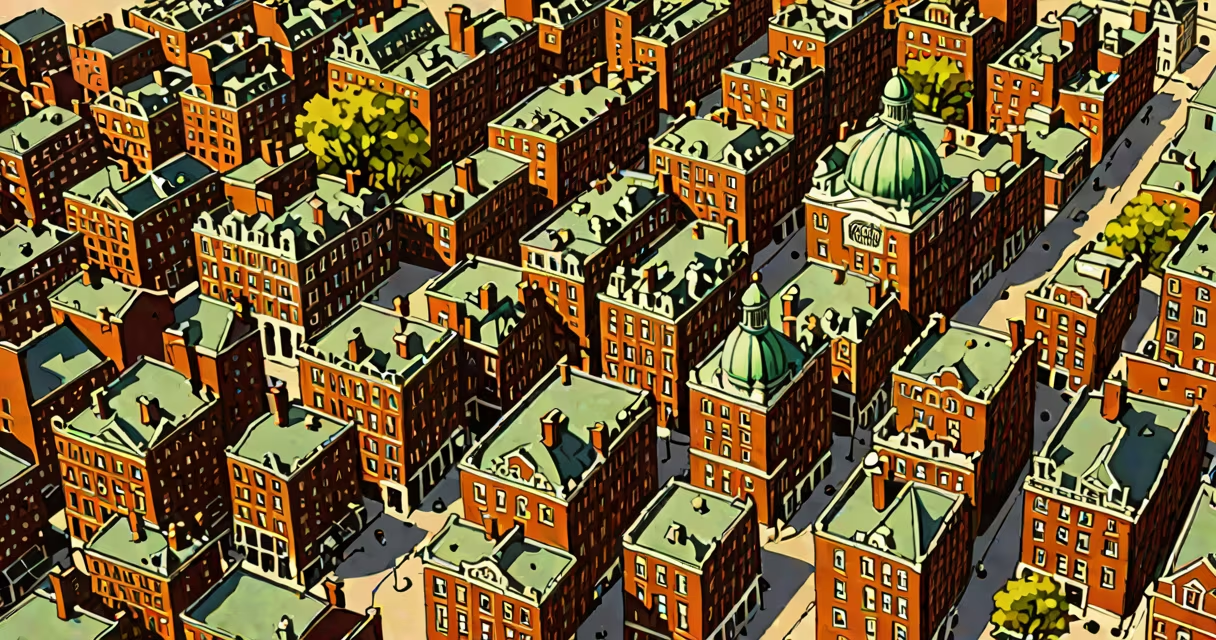
Built in Boston describes structures constructed in the city between the 17th century and the early 20th century, characterized by colonial, Federal, and Victorian architectural styles. These buildings form the foundation of Boston's urban identity and are preserved under local and state heritage laws.
The term applies to both surviving historic edifices and newly constructed buildings designed to match historical aesthetics. It reflects not just physical construction but cultural continuity-how Boston maintains its past through deliberate design choices in new developments.
For example, the 1768 Old State House on State Street remains standing, its granite facade and gabled roof unchanged since the American Revolution. The building was constructed using hand-hewn timber and locally quarried stone, materials common in 18th-century New England construction.
Built in Boston refers to both original construction and modern reinterpretations that adhere to historical standards. The city's Landmarks Commission reviews new projects near designated districts to ensure they align with neighborhood character, especially in areas like Beacon Hill and the North End.
Design guidelines require matching window proportions, roofing materials, and façade setbacks. A building constructed in 2023 on Beacon Hill may be labeled "built in Boston" if it uses brownstone cladding and a mansard roof, even though it contains modern HVAC systems and energy-efficient glazing.
These regulations stem from the Massachusetts Historical Commission's 1976 guidelines, which define "architectural compatibility" as a legal standard for preservation. Without compliance, developers face delays or denial of permits.
Buildings labeled "built in Boston" fall into distinct categories based on era, style, and function. The following table outlines key types:
| Type | Era | Key Features | Examples |
|---|---|---|---|
| Colonial | 1630-1775 | Timber framing, steep roofs, central chimneys | Paul Revere House, 1676 |
| Federal | 1780-1830 | Geometric symmetry, fanlights, delicate moldings | Old State House, 1713 (reconstructed) |
| Victorian | 1830-1900 | Asymmetrical plans, ornamental woodwork, turrets | Clarendon Street Row Houses, 1880s |
| Beaux-Arts | 1890-1920 | Classical columns, grand staircases, domed roofs | Massachusetts State House, 1798 (expanded) |
Each category reflects evolving civic values. Colonial homes were built for practicality and defense; Federal designs emphasized order and Enlightenment ideals. Victorian buildings mirrored industrial wealth and national pride.
Modern "built in Boston" developments often blend these styles. For instance, the 2019 renovation of the Boston Public Library's McKim Building added a glass atrium while preserving the original 1895 Beaux-Arts façade.
Built in Boston appears in real estate listings, tourism guides, and municipal documents. It signals authenticity and historical significance. A home advertised as "built in Boston" typically sells for 15-25% above market value due to perceived rarity and prestige.
According to the National Trust for Historic Preservation, properties in Boston's historic districts appreciate at 3.2% annually-higher than the citywide average of 2.1%. This premium stems from limited supply and high demand among buyers seeking cultural continuity.
Urban planners use the label to justify zoning exceptions. In 2021, the city approved a mixed-use project on Congress Street because it met "built in Boston" criteria: low-rise design, brick cladding, and integration with existing sidewalks and street trees.
One non-obvious fact: Not all buildings labeled "built in Boston" are old. The term is legally defined by context, not age. A 2022 apartment complex in Back Bay earned the designation because its architects submitted detailed renderings showing adherence to 1880s-era proportions and materials, even though the structure used steel frames and automated lighting.
"Built in Boston" is often mistaken for "originally built in Boston." The former includes modern reconstructions that meet aesthetic standards. The latter refers strictly to buildings constructed during the city's founding period.
Another error: assuming all such buildings are residential. Many commercial structures qualify. The 1893 Custom House Tower, for example, is listed as "built in Boston" despite being a federal office building. Its Romanesque arches and sandstone trim meet preservation thresholds.
Some assume "built in Boston" implies low density. But the city allows higher floor-area ratios in historic zones if the design complies with scale and massing rules. The 2020 addition to the Boston Children's Hospital campus included a six-story wing built in the Gothic Revival style, with pointed arches and stained glass-approved under the "built in Boston" structure.
I once walked through the North End during a winter storm and noticed how the 1740s-era St. Mary's Church still stood with its original slate roof intact. The stonework around the entrance showed signs of weathering, but the craftsmanship remained precise. That moment confirmed how deeply "built in Boston" is tied to material integrity, not just appearance.
Understanding "built in Boston" requires recognizing that it's not a static label-it's a living standard. It governs how new construction interacts with history, ensuring that Boston's skyline evolves without losing its soul.