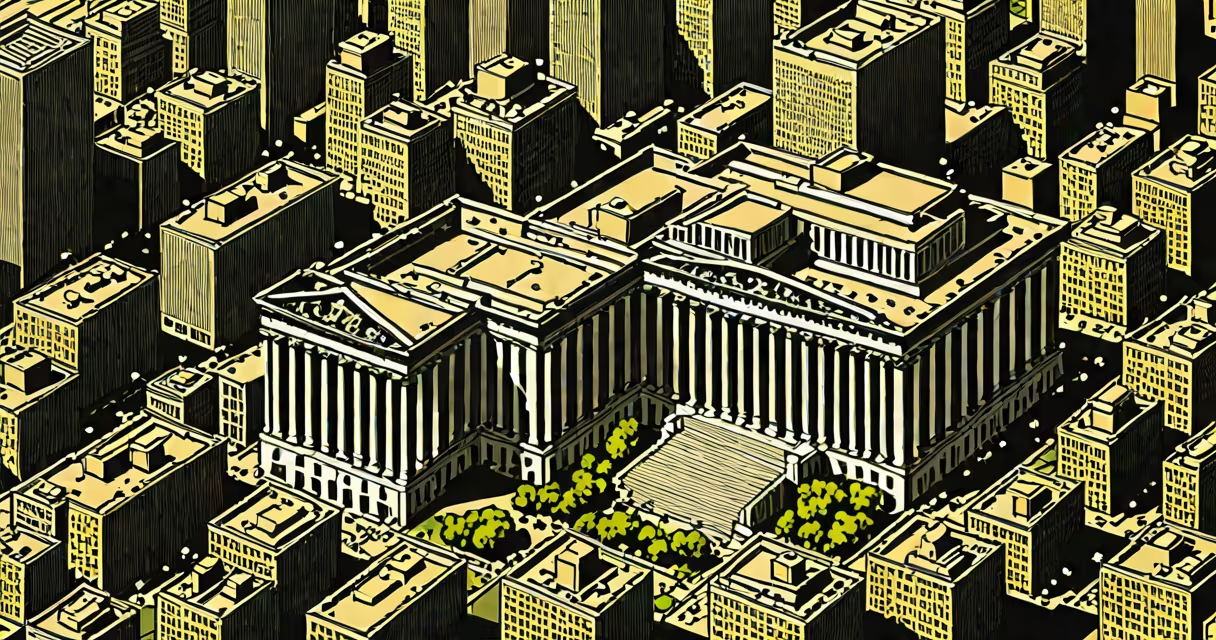
A tour wall street stock exchange is a guided visit to the historic New York Stock Exchange (NYSE) building in Manhattan, offering public access to the trading floor and surrounding financial spaces. The NYSE, founded in 1792, is the world's largest equities exchange by market capitalization and serves as a central hub for global finance.
Visitors enter through the iconic marble façade on Wall Street between Broad and Exchange Streets. The tour begins in the visitor gallery, where guests observe live trading activity from above the main trading floor. The space features large digital screens displaying real-time stock prices, ticker symbols, and volume data. A trained guide explains the mechanics of trading, the role of specialists, and how orders are executed across thousands of stocks daily.
Tours last approximately 60 minutes and operate Monday through Friday, excluding holidays. Admission requires advance booking via the official NYSE website. Tickets cost $25 per person and include a printed certificate of attendance. Access is limited to 50 visitors per session, ensuring a manageable crowd size during peak hours.
The tour starts in the NYSE's main lobby, where guests pass through security screening similar to airport checks. After clearance, they proceed to the upper viewing level overlooking the trading floor. This vantage point offers a clear view of traders in colorful jackets, electronic displays, and the constant flow of information.
During the presentation, guides explain key elements such as the opening bell ceremony, which occurs at 9:30 a.m. Eastern Time. The bell is rung by a guest executive or celebrity to mark the start of the trading day. Visitors may attend a live bell ceremony if their tour is scheduled early enough. The sound of the bell echoes through the chamber and is broadcast globally.
After the presentation, guests walk through the NYSE's historical archives room. This space contains artifacts like the original 1792 Buttonwood Agreement, which established the exchange's foundational rules. A display shows the evolution of trading-from handwritten orders on paper to high-frequency algorithmic systems.
Tours include access to the visitor gallery, a recorded audio guide, a souvenir photo, and a printed guidebook. The guidebook details the history of the NYSE, notable events like the 1987 Black Monday crash, and profiles of influential figures such as J.P. Morgan and Warren Buffett.
Access to the actual trading floor is not permitted. Visitors remain in the observation area. No photography is allowed on the trading floor itself, though photos are permitted in the gallery and lobby areas. The tour does not include entry to the adjacent Federal Reserve Bank of New York, located two blocks away.
| Feature | Available on Tour | Not Available |
|---|---|---|
| View of live trading floor | Yes | No |
| Interaction with traders | No | No |
| Entry to the trading floor | No | No |
| Live bell ringing | Yes (if timed correctly) | No |
Most visitors are tourists seeking to understand the heart of American capitalism. Others are students studying finance, business, or economics who want to see theory in action. A 2022 survey by the National Association of Securities Dealers found that 68% of participants reported increased confidence in financial literacy after taking the tour.
Some investors use the tour as a rite of passage. One participant, a software engineer from San Francisco, told me he booked the tour after his first successful stock trade. "I wanted to stand where people make decisions that affect my portfolio," he said. "Seeing the scale of it-it wasn't just numbers on a screen anymore."
Another common reason is curiosity about the cultural significance of Wall Street. The area has inspired films like *Wall Street* (1987), *The Wolf of Wall Street* (2013), and *Margin Call* (2011). These portrayals often exaggerate greed and risk, but the real NYSE operates under strict regulatory oversight.
Many assume the trading floor is chaotic and noisy. In reality, it is quiet and highly structured. Traders communicate using hand signals and coded verbal cues. The environment is controlled to minimize distractions during high-stakes transactions.
Another myth is that the NYSE still uses physical trading posts. While the exchange maintains a few traditional booths for historical continuity, most trades now happen electronically. The NYSE's hybrid system combines human specialists with automated matching engines. For example, in 2023, 94% of trades were executed via electronic platforms, according to the NYSE's annual report.
Some confuse the NYSE with the NASDAQ. The two are distinct exchanges. The NYSE trades larger, more established companies like Apple, Johnson & Johnson, and Visa. NASDAQ focuses on tech and growth stocks, including Amazon and Microsoft. Both are headquartered in New York City but operate under different rules and technologies.
Arrive 15 minutes early. Security lines can take up to 10 minutes during weekday mornings. Wear comfortable shoes-walking is required throughout the tour. Bring a notebook or phone to record insights. Avoid wearing strong perfume or cologne, as the air quality in enclosed spaces is sensitive.
Best times to visit: Tuesday through Thursday between 9:00 a.m. and 11:00 a.m. These slots offer the clearest views of active trading and higher chances of catching the opening bell. Avoid Fridays-fewer staff are on duty, and tours may be canceled due to low demand.
tour wall street stock exchange is not a simulation or entertainment venue. It is a real financial institution with decades of operational history. The experience connects abstract concepts like market efficiency, liquidity, and price discovery to tangible locations and actions. Understanding this context makes the tour valuable beyond sightseeing.