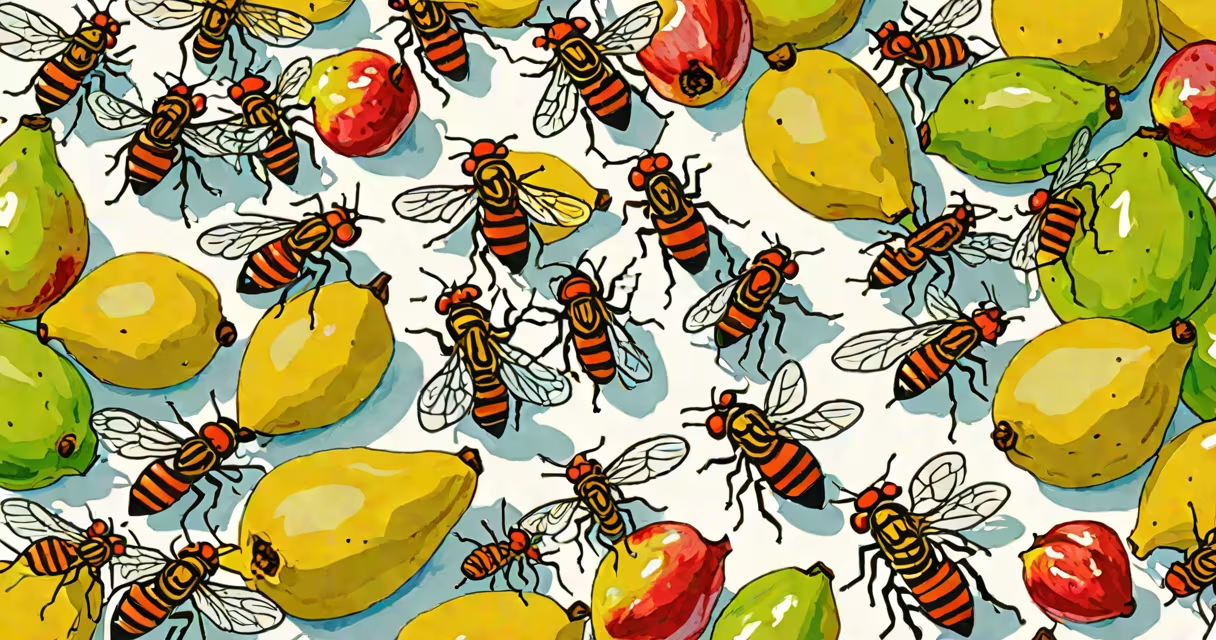
Fruit flies multiply quickly because they thrive in warm, moist environments with fermenting sugars-common in kitchens, compost bins, and overripe produce. Their life cycle from egg to adult takes just 8 to 10 days under ideal conditions, enabling rapid population growth.
These insects belong to the genus *Drosophila*, with *Drosophila melanogaster* being the most common species found indoors. They are drawn to the ethanol and acetic acid produced during fermentation, which signals a food source. A single female can lay up to 500 eggs in her lifetime, often in the crevices of fruit, drains, or damp sponges.
Infestations spike in summer months when temperatures rise and humidity increases. Even small amounts of leftover juice or spilled soda can support a breeding colony. The presence of multiple fruit flies indicates a persistent food source, not random occurrence.
Fruit flies reproduce in stages: egg, larva, pupa, and adult. Eggs hatch within 24 hours. Larvae feed on microbial films on fermenting material, growing rapidly over 3-5 days. Pupation occurs in dry areas nearby, and adults emerge in 4-6 days. This entire cycle lasts less than two weeks.
Adults live 30-50 days, during which time females lay batches of 20-50 eggs every few days. With overlapping generations, populations can grow exponentially. One study from the University of California, Davis, found that a single pair of fruit flies can generate over 10,000 offspring in six weeks under lab conditions.
They don't fly far-typically less than 10 feet-but can spread through ventilation systems, open windows, or on produce brought home from stores. Once established, they're hard to eliminate without removing the breeding site.
Households often overlook hidden breeding grounds. Common culprits include:
A real-world example: A family noticed fruit flies in their kitchen despite cleaning daily. Inspection revealed a forgotten grapefruit rind in a trash can liner. After removing it, the infestation vanished within five days. The fruit fly population had been sustained by the mold and yeast forming on the citrus peel.
Even sealed containers aren't foolproof. Fruit flies can enter through tiny gaps in lids or by laying eggs on the surface of liquid before sealing. A 2021 study published in Journal of Economic Entomology confirmed that *Drosophila* species can penetrate plastic film with micro-tears invisible to the naked eye.
Fruit flies are not the same as fungus gnats, which are attracted to soil moisture in houseplants. While both are small flying insects, fungus gnats lay eggs in potting soil, whereas fruit flies target fermenting organic matter. Confusing them leads to ineffective treatment.
They are also not related to mosquitoes or houseflies. Fruit flies are smaller-about 3 mm long-and have red eyes. Houseflies are larger, grayish, and prefer decaying animal matter. Misidentification delays proper action.
Another misconception: fruit flies do not breed in clean dishes or dry surfaces. They require moisture and fermenting sugar. A dry plate won't sustain a colony. However, a wet sponge left in a sink corner can host hundreds of larvae.
Effective control requires locating and eliminating the breeding site. Vinegar traps are popular but only capture adults. They don't stop reproduction unless combined with sanitation.
Use a mixture of apple cider vinegar, a few drops of dish soap, and a drop of oil in a jar with a funnel-shaped lid. The soap breaks surface tension, trapping flies that land on the liquid. Place near problem areas. Replace every 2-3 days.
For long-term prevention:
I once managed a recurring infestation in a shared office kitchen. Despite daily wiping, fruit flies returned weekly. The root cause was a leaky sink drain covered in dried food particles. After clearing the debris and using a drain cleaner with enzymatic action, the problem stopped entirely. The flies weren't attracted to the food-it was the microbial layer on the clog.
| Method | Effectiveness | Time to Results | Best For |
|---|---|---|---|
| Vinegar trap | Low (captures adults only) | 2-3 days | Short-term reduction |
| Sanitation (cleaning breeding sites) | High (eliminates source) | 5-7 days | Long-term solution |
| Sealed storage (airtight containers) | High | Immediate | Preventing new infestations |
| Enzymatic drain cleaners | Medium-high | 1-2 weeks | Drain-based colonies |
Using vinegar traps alone won't resolve an infestation. Without removing the source, new flies will continue to emerge. The CDC recommends targeting the breeding site as the primary step in pest management.
When fruit fly numbers remain high despite traps, check behind appliances, under sinks, or inside wall voids. Hidden areas can harbor colonies undetected for weeks.
Knowing why there are so many fruit flies allows targeted action. It's not about killing every individual-it's about breaking the reproductive chain. Once the breeding site is gone, the population collapses within two weeks.