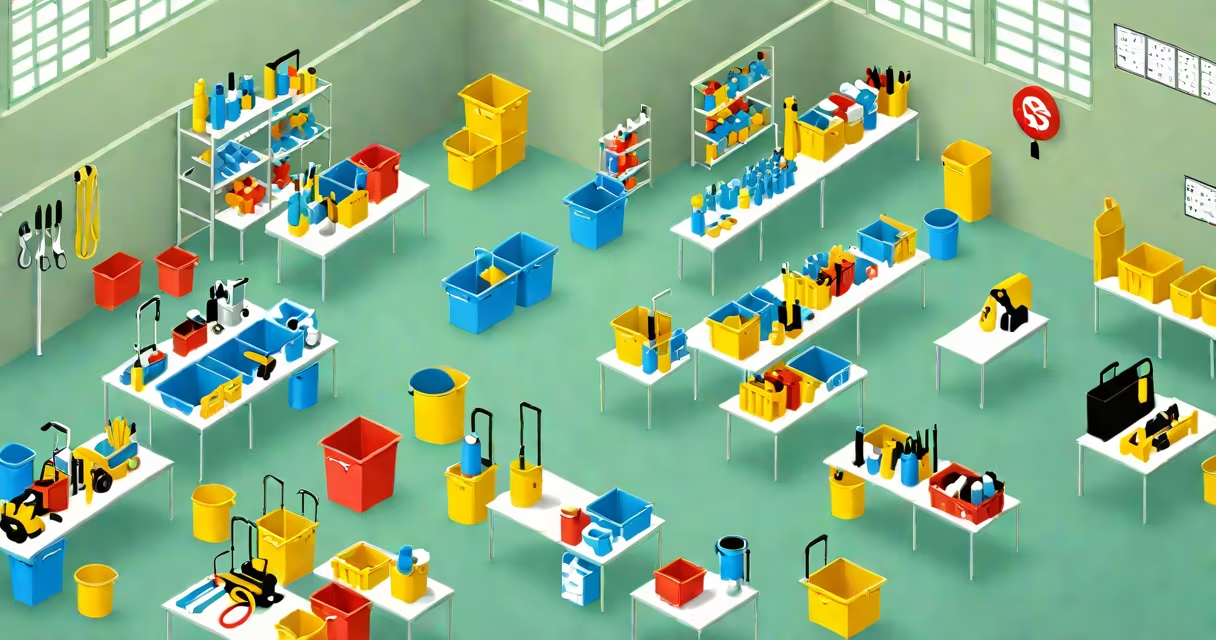
The 5S system is a workplace organization method derived from five Japanese principles-Seiri, Seiton, Seiso, Seiketsu, and Shitsuke-that eliminate clutter, standardize processes, and sustain discipline. It improves safety, efficiency, and quality by making tools, materials, and workflows visible and accessible.
Originally developed in Japanese manufacturing plants during the 1950s, the 5S system became a core component of Lean production. Today, it's used in factories, hospitals, software teams, and even schools. The goal is not just cleanliness-it's operational clarity. A workspace organized under 5S allows employees to find what they need in seconds, reduce errors, and respond faster to changes.
Each S represents a distinct phase. The first four focus on physical setup and maintenance. The fifth, Shitsuke, ensures long-term adherence through habit formation. Without Shitsuke, improvements fade within weeks. The system works because it turns abstract ideals like "efficiency" into measurable actions: remove unused items, label storage, clean daily, set standards, and reinforce routines.
Each S begins with a verb in Japanese, translated into English as a directive. The sequence moves from decluttering to sustaining. Skipping steps leads to failure. For example, cleaning a workstation without removing unnecessary tools invites clutter to return.
Seiri (Sort) removes everything not needed for current tasks. This includes expired supplies, broken tools, duplicate files, and obsolete documents. In a medical lab, this meant eliminating 37 outdated test kits from a single drawer. After removal, only essential items remained, reducing search time by 60%.
Seiton (Set in Order) assigns a specific place for every tool or material. Items are arranged based on frequency of use-most-used items go closest to the worker. Tools are often color-coded or placed on shadow boards. A machine shop in Detroit reduced setup time from 22 minutes to 8 minutes after installing labeled pegboards and floor tape paths.
Seiso (Shine) involves cleaning and inspecting equipment daily. Cleaning isn't just hygiene-it's inspection. Workers notice wear, leaks, or misalignments while wiping down machines. One automotive plant reported a 40% drop in unplanned downtime after introducing 15-minute morning cleaning rituals.
Seiketsu (Standardize) creates consistent rules across departments. Standardized checklists, labeling formats, and signage ensure everyone follows the same process. A hospital in Boston standardized medication storage zones across six wards using color-coded bins and printed flowcharts. Within three months, medication errors dropped by 31%.
Shitsuke (Sustain) builds habits. It's not a one-time event. Leaders conduct weekly audits, celebrate small wins, and involve staff in setting rules. A software team in Austin used 5S to organize their shared development environment. They held biweekly 10-minute review sessions. After six months, team members reported fewer context-switching delays and faster onboarding times.
While the original five steps remain unchanged, organizations adapt them for different environments. Some use modified versions, such as 6S (adding Safety) or 7S (including Sustainability). Others apply 5S to digital spaces.
| Type | Use Case | Key Difference |
|---|---|---|
| Traditional 5S | Manufacturing floors, warehouses | Focuses on physical space and tools |
| Digital 5S | Software teams, remote offices | Applies sorting and labeling to files, folders, and cloud drives |
| 6S | High-risk environments (chemical labs, surgery suites) | Adds Safety as a sixth principle |
| 5S Plus | Service industries, retail stores | Includes customer experience metrics in audits |
Digital 5S is increasingly common. A marketing agency in Seattle applied 5S to their Google Drive. They renamed folders, deleted duplicates, created permission levels, and added file templates. Search time for campaign assets dropped from 14 minutes to 2.7 minutes on average.
One non-obvious fact: 5S is not about perfection. It's about continuous improvement. A factory in Japan reported that teams improved their 5S scores by 18% over six months-not by achieving flawless organization, but by holding regular review meetings and adjusting standards.
5S is most effective in high-volume, repetitive environments where mistakes cost time or money. It's widely adopted in automotive, electronics, food processing, and healthcare. But it also works in knowledge work.
A hospital emergency department in Chicago implemented 5S in their trauma bay. They labeled trays, assigned roles for restocking, and trained staff on daily checks. Over 12 weeks, response times for critical interventions improved by 22%. Staff reported feeling less stressed during emergencies.
Another example: a call center in Denver used 5S to organize agent workstations. They removed personal items, standardized monitor layouts, and created quiet zones. Employee satisfaction rose 37%, and average call handling time decreased by 11%.
Despite its benefits, 5S is often misunderstood. Some companies treat it as a one-off cleanup project. But the system fails without ongoing reinforcement. A study by the National Institute of Standards and Technology (NIST) found that 68% of 5S implementations failed within 12 months due to lack of leadership involvement and inconsistent auditing.
Another common mistake is skipping Seiri. Teams assume "we'll keep it just in case." But unused items take up space, distract workers, and increase risk. One warehouse in Ohio lost $12,000 in inventory after storing 23 obsolete parts in a high-traffic zone. After applying Seiri, they reclaimed 14 square meters of floor space.
People often confuse 5S with general tidying. But 5S is not about aesthetics-it's about function. A clean desk doesn't mean efficient work. The system measures performance, not appearance.
Another misconception: 5S is only for factories. In reality, it applies to any environment where workflow depends on access to tools and information. A university research lab used 5S to manage chemical storage. They labeled containers, created a rotation schedule, and installed spill kits. Accidents dropped by 55% over nine months.
Some think 5S requires expensive tools. It doesn't. A school district in Oregon used masking tape, paper labels, and colored bins to implement 5S in classrooms. Teachers reported better student focus and fewer lost supplies. Total cost: $23 per classroom.
One key distinction: 5S is not a checklist. It's a mindset. It shifts responsibility from managers to teams. When workers participate in setting standards, they're more likely to follow them. A software developer in Portland told me he once spent two hours searching for a missing configuration file. After applying 5S to his local dev environment, he found the file in 17 seconds.
The 5S system is not a quick fix. It's a foundation for continuous improvement. It works because it makes invisible problems visible, and it sustains results through routine and accountability. When properly implemented, it transforms chaos into clarity-one shelf, one folder, one process at a time.