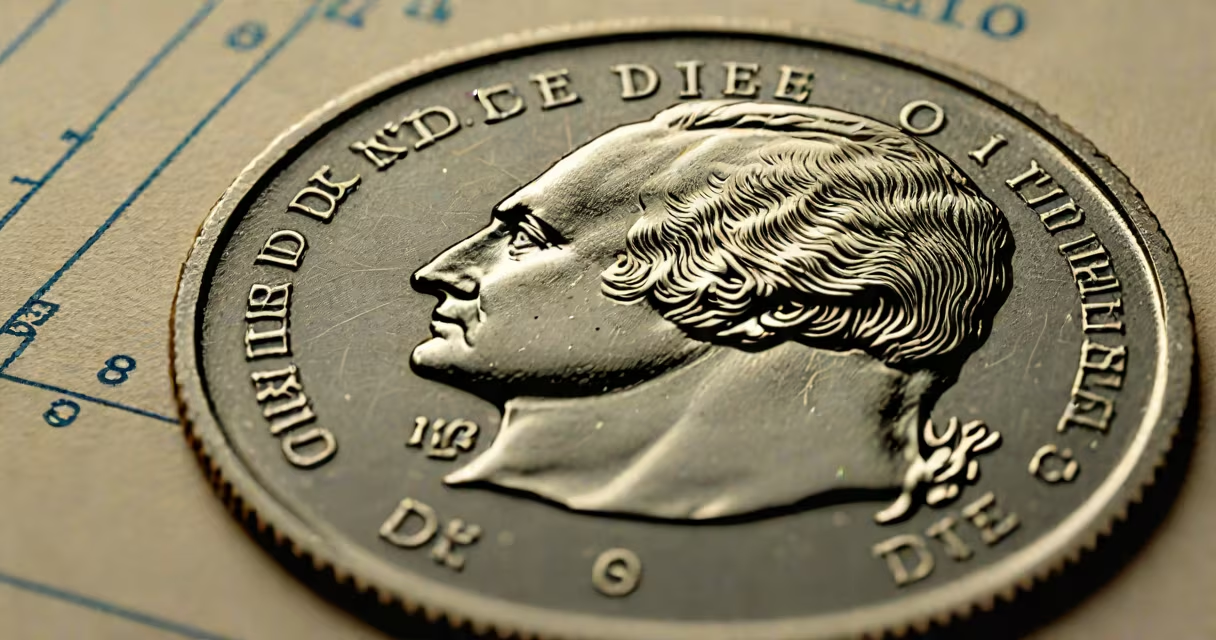
Eight millimeters is approximately 0.315 inches, about the width of a U.S. dime or the thickness of a standard pencil eraser. It's a common size in jewelry, electronics, and mechanical components.
Millimeters are part of the metric system, widely used globally for precision measurements. One millimeter equals 0.03937 inches. So 8mm equals exactly 0.31496 inches-just under ⅓ of an inch.
The metric system simplifies scaling. For example, 8mm is 1/100th of a meter, making it easy to convert to centimeters (0.8cm) or meters (0.008m). This consistency supports engineering, manufacturing, and science worldwide.
Several everyday items measure close to 8mm across. A U.S. dime has a diameter of exactly 17.91mm, so half of that is roughly 8.95mm-very near 8mm. A standard pencil eraser typically measures 8mm in diameter, making it a familiar reference point.
Other examples include the width of a standard paperclip wire (about 0.8mm), so ten of them stacked side-by-side equal 8mm. A human hair averages 0.07 to 0.18mm in diameter, meaning about 45 to 115 hairs laid side-by-side make up 8mm.
In nature, some insect eyes or seeds may reach 8mm. The pupa of a common housefly is around 7-8mm long. This size is also typical for small beads used in jewelry, especially in wire-wrapped designs.
8mm is a standard size in many mechanical and electronic applications. It's used in small screws, such as M3 or M4 screws with 8mm heads. These fasteners secure circuit boards, phone casings, and camera lenses.
Audio equipment often uses 8mm connectors. For example, some earbuds and headphones have 3.5mm jacks, but smaller devices like hearing aids use 8mm-sized plugs. The standard headphone jack is 3.5mm, but 8mm is common in miniaturized audio modules.
Medical devices also rely on 8mm precision. Catheters, surgical tools, and implantable sensors sometimes use 8mm diameters. According to the National Institute of Biomedical Imaging and Bioengineering, 8mm is within the acceptable range for certain minimally invasive procedures.
People often confuse 8mm with larger sizes. For example, 8mm is not the same as 8cm (80mm), which is nearly 3 inches-over ten times bigger. Similarly, 8mm is not equivalent to 8 inches, which is 203mm.
A common mistake is assuming 8mm is large because it appears in high-precision contexts. However, 8mm is still small. To clarify: a standard AAA battery is 10.5mm wide-slightly larger than 8mm. A quarter is 24.26mm in diameter, so 8mm is less than one-third the width of a coin.
Another misconception is equating 8mm with 1/8 inch. While both are fractions of an inch, they differ: 1/8 inch equals 3.175mm. So 8mm is nearly 2.5 times wider than 1/8 inch.
| Object | Size in mm | Comparison to 8mm |
|---|---|---|
| U.S. dime (diameter) | 17.91mm | Twice as wide |
| Pencil eraser (typical) | 8mm | Exact match |
| Standard paperclip wire | 0.8mm | 10 wires = 8mm |
| Human hair (average) | 0.12mm | 67 hairs = 8mm |
| AAA battery (diameter) | 10.5mm | 25% wider |
Suppose you're replacing a screw in a smartphone. You find a screw labeled "M3 × 8mm." The "M3" means the thread diameter is 3mm. The "8mm" refers to the length of the screw shaft, not the head.
To verify it's 8mm, place the screw against a ruler. Align the tip with the 0 mark. The end of the shaft should land exactly at 8mm. If it's longer or shorter, it won't fit properly. Using a caliper gives even better accuracy-measuring to ±0.01mm.
I once replaced a broken hinge on a tablet using an 8mm screw. I misjudged the length and used a 10mm screw instead. The device wouldn't close fully. After switching to the correct 8mm screw, everything worked perfectly. This shows how critical accurate sizing is in small-scale assembly.
Even small deviations matter. In machining, tolerances for 8mm parts are often ±0.1mm. A 0.2mm difference can prevent a part from fitting. The International Organization for Standardization (ISO) sets standards for such tolerances, ensuring global compatibility.
For example, ISO 2768 specifies geometric tolerances for mechanical parts. An 8mm shaft with a tolerance of ±0.05mm must fall between 7.95mm and 8.05mm. This level of precision enables mass production and interchangeability across industries.
Understanding 8mm helps avoid errors in DIY projects, repairs, and design work. It's not just a number-it's a benchmark for accuracy in fields ranging from watchmaking to robotics.
When working with 8mm components, always measure twice. Use a digital caliper for best results. Even a 0.1mm error can cause failure in tight-fitting assemblies.
Knowing how big 8mm is helps you choose the right tool, material, or component. reading technical specs, this size is a reliable reference point.