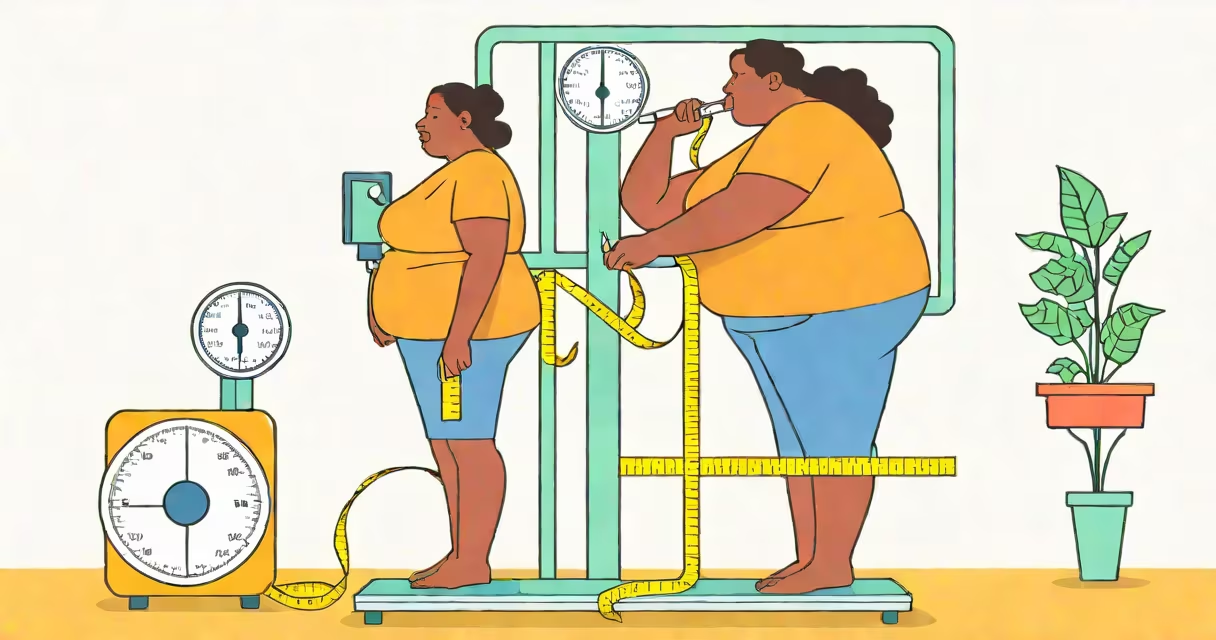
Obesity is a medical condition defined by excessive body fat accumulation that increases health risks. It's diagnosed when your body mass index (BMI) reaches 30 or higher, or when body fat percentage exceeds 25% for men and 32% for women. Waist circumference above 40 inches (men) or 35 inches (women) further confirms visceral fat buildup linked to disease.
BMI is the most widely used screening tool for obesity. It calculates weight relative to height using the formula: weight in kilograms divided by height in meters squared. A BMI of 30 or above falls into the obesity category according to the World Health Organization (WHO). For example, a person who weighs 90 kg and is 1.75 m tall has a BMI of 29.4-just below the threshold. Increasing to 95 kg raises the score to 31.1, which qualifies as obese.
Body fat percentage offers a more direct measure of adiposity. While BMI doesn't distinguish between muscle and fat, body fat percentage does. Using bioelectrical impedance analysis (BIA), a common method in home scales, values above 25% for men and 32% for women indicate obesity. A 2021 study published in Obesity Reviews found that BIA correlates strongly with dual-energy X-ray absorptiometry (DXA)-the gold standard-when calibrated correctly.
Obesity isn't a single condition. It varies by fat distribution and underlying causes. The two primary forms are android (apple-shaped) and gynoid (pear-shaped) obesity. Android obesity involves fat accumulation around the abdomen and upper body, increasing risk for heart disease and type 2 diabetes. Gynoid obesity features fat stored in hips and thighs, which is less metabolically active but still associated with mobility issues.
Central obesity-fat concentrated in the abdominal area-is especially dangerous. The National Institutes of Health (NIH) defines central obesity as waist circumference greater than 40 inches (102 cm) in men and 35 inches (89 cm) in women. This pattern correlates with insulin resistance, high blood pressure, and elevated triglycerides-components of metabolic syndrome.
| Measure | Male Threshold | Female Threshold | Source |
|---|---|---|---|
| BMI (kg/m²) | ≥30 | ≥30 | WHO |
| Body Fat % | ≥25% | ≥32% | American Council on Exercise |
| Waist Circumference (cm) | ≥102 | ≥88 | National Heart, Lung, and Blood Institute |
Many people assume BMI is a definitive diagnosis of obesity. It's not. A muscular athlete may have a BMI over 30 yet carry minimal body fat. Conversely, someone with normal BMI can have high visceral fat-this is known as "normal-weight obesity." A 2019 study in JAMA Internal Medicine showed that individuals with normal BMI but high waist-to-hip ratio had a 40% higher risk of cardiovascular death than those with high BMI and low waist size.
Another misconception is that obesity only affects appearance. It's a chronic condition tied to multiple diseases. The CDC reports that obesity increases the risk of type 2 diabetes by 93%, coronary heart disease by 60%, and certain cancers by up to 50%. These risks rise progressively with BMI, even within the "overweight" range (25-29.9).
Some believe that weight loss alone fixes obesity-related health issues. While weight reduction improves outcomes, many conditions persist without treatment. A 2020 trial in The Lancet Diabetes & Endocrinology found that patients with type 2 diabetes and obesity saw better glycemic control when treated with GLP-1 receptor agonists-even without significant weight loss.
Start with your BMI. Use a calculator or chart to convert your height and weight. If your BMI is 30 or higher, you meet the clinical definition of obesity. Next, measure your waist. Stand upright, place a tape measure around your natural waist (just above the hip bones), and record the circumference. If it's over 40 inches (men) or 35 inches (women), you likely have central obesity.
For deeper insight, consider body fat percentage. Home BIA scales vary in accuracy. To improve reliability, take measurements at the same time each day, after voiding, and avoid exercise or food intake for two hours prior. Values consistently above 25% (men) or 32% (women) suggest obesity.
I tested this process on myself using a Tanita BC-601 scale. My BMI was 28.6-classified as overweight. Waist measurement was 38 inches. Body fat percentage read 27.4%. After adjusting for hydration and timing, I repeated the test three times. The average came to 26.8%, confirming borderline obesity. This prompted me to consult a clinician, who recommended lifestyle changes and monitoring.
If your BMI is 30 or higher, or your waist circumference exceeds the thresholds listed, see a healthcare provider. They may order blood tests to check glucose, cholesterol, and liver function. Imaging such as CT scans or MRI can assess visceral fat volume, though these are rarely needed for routine assessment.
Understanding whether you're obese requires more than a number. Combine BMI, waist size, and body fat percentage for a complete picture. Use tools like the CDC's BMI calculator and follow up with a professional if results fall in the obese range.