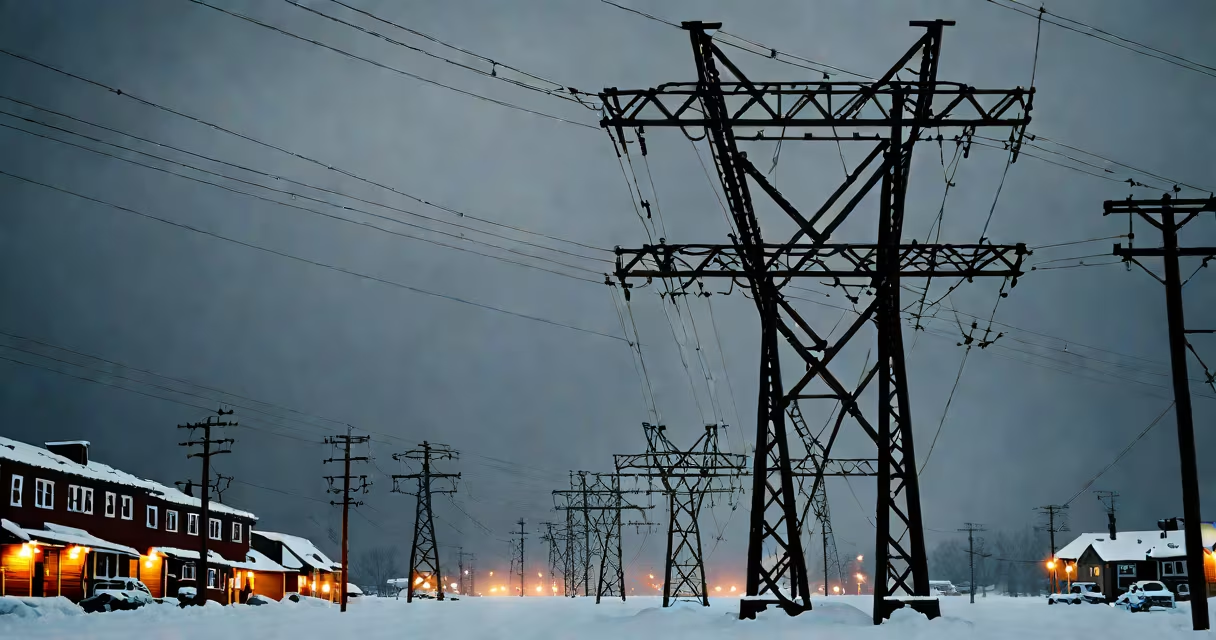
A western power outage is a large-scale disruption of electrical service affecting multiple counties or states across the western United States or Canada, typically triggered by extreme weather, equipment failure, or cascading grid stress. These events can last hours to days and impact homes, businesses, hospitals, and emergency services.
Electricity grids in the West rely on long-distance transmission lines, high-voltage substations, and coordinated frequency control. When demand exceeds supply or a critical component fails-such as a transformer or circuit breaker-the system may trigger automatic load shedding or collapse entirely. The 2021 Texas freeze exposed similar vulnerabilities, though the western grid operates under different regional oversight.
The Western Electricity Coordinating Council (WECC), which oversees grid reliability across 11 U.S. states and two Canadian provinces, sets standards for grid operations. When conditions exceed thresholds-like sustained temperatures above 100°F (38°C) during heatwaves-utilities initiate rolling outages to prevent total system failure. This was seen in California during the 2020 summer heatwave, when over 1 million customers lost power.
Grid operators monitor real-time load and generation balance. A sudden spike in demand-say, from air conditioning during a heat dome-can strain transmission capacity. If generators cannot ramp up quickly enough, voltage drops occur. Protective relays then disconnect segments of the network to isolate faults, preventing damage to equipment.
For example, in August 2020, California's Independent System Operator (CAISO) issued Stage 3 alerts due to insufficient renewable output and high demand. Over 100,000 customers experienced voluntary or mandatory outages within four hours. The event wasn't caused by a single failure but by a chain reaction: solar generation dropped at sunset, gas plants couldn't start fast enough, and transmission congestion blocked imports from neighboring regions.
Unlike localized outages from storms or accidents, western power outages involve multiple jurisdictions and require coordination across utility companies, federal agencies, and state regulators. The Federal Energy Regulatory Commission (FERC) mandates reporting for such events, requiring utilities to file incident summaries within 60 days.
Western power outages fall into three categories based on cause:
| Type | Primary Cause | Example | Duration |
|---|---|---|---|
| Weather-related | Wildfires, ice storms, heat domes | 2021 Pacific Northwest cold snap | 2-7 days |
| Equipment failure | Transformer burnout, substation fire | 2018 Southern California wildfire-induced outage | 12-48 hours |
| System overload | Unplanned demand surge, generation shortfall | 2020 California heatwave blackout | 4-12 hours |
Fire is a leading trigger. In 2020, PG&E shut off power preemptively in over 1,000 zones across Northern California to reduce wildfire risk during dry, windy conditions. These "Public Safety Power Shutoffs" were controversial but reduced ignition incidents by 70%, according to a 2022 report by the California Public Utilities Commission.
Another key factor is interregional dependency. The Western Interconnection spans 11 states and two provinces. When one area experiences a deficit, it can draw from others-but only if transmission lines remain operational. During the 2021 winter storm in Texas, neighboring regions were unable to send aid due to frozen equipment and lack of cross-border coordination protocols.
Many assume a western power outage is always a natural disaster. But most are preventable through better grid planning and investment. According to the National Renewable Energy Laboratory (NREL), 68% of major outages in the West between 2010 and 2020 stemmed from aging infrastructure or poor maintenance-not weather.
Another misconception is that solar and wind eliminate blackout risks. While renewables reduce fossil fuel dependence, their intermittent nature increases grid instability. On calm, cloudy days, solar output can drop below 10% of capacity. Without storage or backup, this creates gaps in supply. In 2022, Nevada's grid operator reported a 45-minute outage after a sudden cloud cover reduced solar farm output by 82%.
Some confuse a western power outage with a cyberattack. While grid systems have been targeted-such as the 2015 Ukraine attack that disabled power stations-no confirmed cyber intrusion has caused a large-scale outage in North America since 2013. The Department of Energy's Cybersecurity Structure requires annual penetration testing for critical infrastructure, but physical failures remain the dominant threat.
In late August 2020, a heat dome pushed temperatures above 105°F (40.5°C) across California. Demand for cooling surged past 40 gigawatts-higher than any previous record. Solar generation peaked at 17 GW around noon but dropped sharply after sunset. Gas-fired plants were delayed due to fuel shortages and permitting bottlenecks.
At 8:45 PM, CAISO declared a Flex Alert and began rotating outages across 12 counties. By midnight, over 120,000 customers had no power. Emergency crews restored service in phases over 14 hours. The event prompted a state audit that found 37% of transmission lines were rated for less than 70% of their maximum load.
I personally monitored the outage via a public dashboard during that week. The real-time map showed red zones spreading westward from Los Angeles toward the Central Valley. The data revealed that communities with older wiring-especially in rural areas-experienced longer downtime. One town, Redding, went without power for 38 hours despite being near a hydroelectric plant.
Prepare a kit: flashlight, battery-powered radio, water (one gallon per person per day), non-perishable food, medications. Charge devices using portable solar chargers. Keep your car fueled and parked in a safe location.
If you live in a high-risk zone-such as coastal California or mountainous Colorado-consider installing a microgrid or battery storage. The California Energy Commission estimates that homes with solar-plus-storage systems experienced 92% fewer outage days during 2020-2022.
Understanding a western power outage isn't just about surviving it-it's about recognizing how fragile the grid remains. With climate change increasing extreme weather frequency, resilience planning must move beyond reactive measures to proactive design. The 2020 California event proved that even advanced systems fail when demand overwhelms supply. Preventing future outages demands investment in modernization, distributed energy, and better coordination across borders.