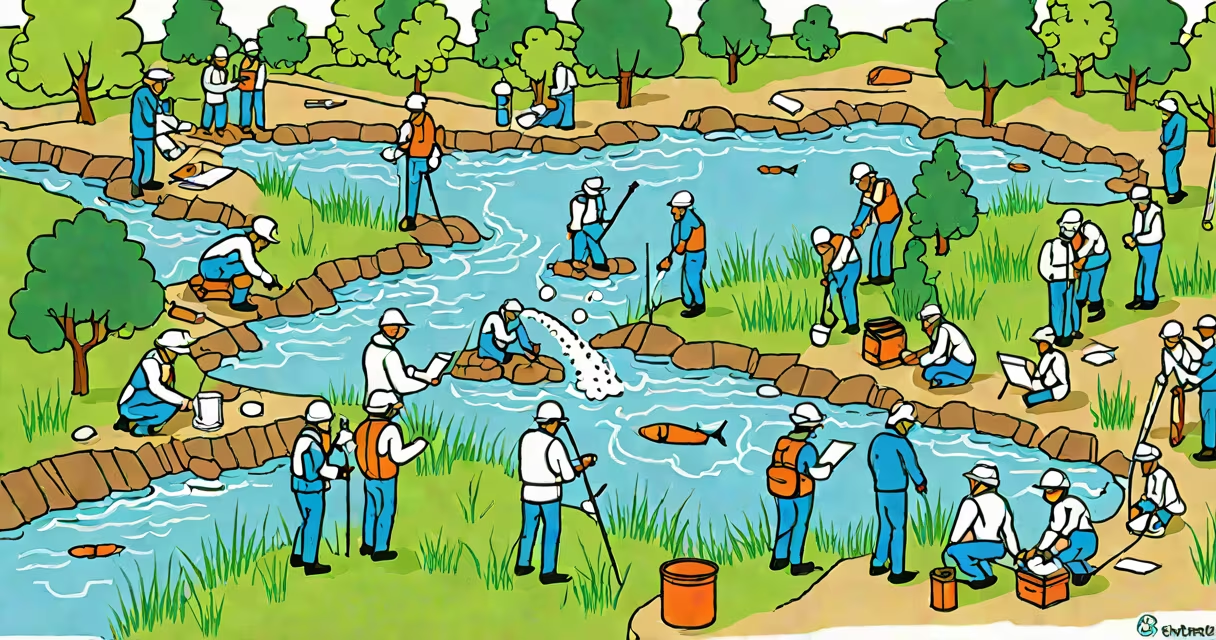
An environmental science degree prepares graduates for careers focused on solving real-world ecological problems through interdisciplinary study of biology, chemistry, geology, and policy. It combines scientific analysis with practical applications in areas like pollution control, habitat restoration, and climate resilience.
Environmental science majors learn to assess environmental risks, interpret data from air, water, and soil samples, and develop solutions that balance human needs with system health. The degree equips students with skills in field sampling, laboratory testing, GIS mapping, and regulatory compliance-tools used daily in government agencies, nonprofits, and private consulting firms.
According to the U.S. Bureau of Labor Statistics (BLS), employment in environmental science and protection roles is projected to grow 8% from 2022 to 2032-faster than average for all occupations. This growth reflects increasing demand for experts who can address climate change, manage natural resources, and enforce environmental regulations.
Environmental science integrates principles from multiple disciplines. A student studying water quality might analyze nitrogen levels in a stream using chemical assays, then model runoff patterns using geographic information systems (GIS). They'd report findings to local regulators or conservation groups to inform land-use decisions.
Fieldwork is central. Students often collect soil cores, measure pH in wetlands, or monitor wildlife populations. These hands-on experiences build technical proficiency and observational rigor. For example, a 2021 study published in *Environmental Management* found that field-based training improved graduates' ability to detect early signs of system degradation.
Graduates apply statistical software like R or Python to analyze long-term environmental trends. One project tracked declining bee populations across five Midwestern states using citizen science data and machine learning models-an effort that informed pesticide regulation changes in Illinois and Iowa.
Jobs with an environmental science degree span public service, private industry, and nonprofit sectors. Below are key roles, required qualifications, and median salaries based on BLS data (2023).
| Career Path | Typical Employer | Median Salary (2023) | Key Skills Used |
|---|---|---|---|
| Environmental Consultant | Private firms, engineering firms | $76,000 | Site assessments, risk modeling, regulatory reporting |
| Conservation Scientist | National parks, state agencies | $72,000 | Habitat analysis, fire ecology, species monitoring |
| Environmental Health and Safety (EHS) Specialist | Manufacturers, construction companies | $74,000 | Compliance audits, incident investigation, safety protocols |
| Climate Data Analyst | Nonprofits, federal agencies | $83,000 | Data visualization, climate modeling, policy impact assessment |
One graduate from the University of Washington landed a role at a Seattle-based firm assessing industrial sites for groundwater contamination. Using her degree's focus on hydrogeology and toxicology, she designed a remediation plan that reduced cleanup costs by 30% compared to standard approaches.
Another example: a recent alumnus from Arizona State University joined the National Park Service to track invasive plant spread in the Sonoran Desert. She used drone imagery and ground-truth surveys to map encroachment zones, helping park managers prioritize removal efforts.
Many assume environmental science leads only to fieldwork or nonprofit work. But nearly half of all environmental science jobs in the U.S. are in private-sector consulting, engineering, or corporate sustainability departments. The BLS reports that 46% of environmental scientists work outside federal or state government.
Another misconception is that the degree lacks quantitative rigor. In reality, coursework includes advanced statistics, experimental design, and computational modeling. A 2022 survey by the American Geosciences Institute found that 78% of employers require applicants to demonstrate proficiency in data analysis tools like Excel, R, or SPSS.
Some confuse environmental science with environmental studies-a related but distinct major. While environmental studies emphasizes policy, ethics, and social justice, environmental science focuses on measurable outcomes and scientific methods. The former may lead to advocacy or law; the latter to lab work, field research, or regulatory enforcement.
After earning a bachelor's in environmental science, many pursue advanced degrees. A master's in environmental management or policy opens doors to leadership roles in city planning, environmental law, or international development. The U.S. Environmental Protection Agency (EPA) requires a master's for most senior technical positions.
For those interested in deeper research, doctoral programs in environmental toxicology or system dynamics prepare individuals for university teaching or high-level advisory roles. One researcher at Stanford's Earth Systems Department used satellite data and field observations to predict wildfire intensity in California-work cited in state emergency response plans.
Even those with a background in computer science can find niches in environmental science. A team at the National Oceanic and Atmospheric Administration (NOAA) developed AI models to identify illegal fishing vessels from satellite images-using algorithms trained on decades of maritime traffic data. This work relies on both programming expertise and environmental domain knowledge.
Understanding what to do with an environmental science degree means recognizing its versatility. Graduates don't just study nature-they protect it, regulate it, and innovate within it. The field demands analytical thinking, ethical judgment, and adaptability. And with climate challenges intensifying, the need for trained professionals continues to grow.