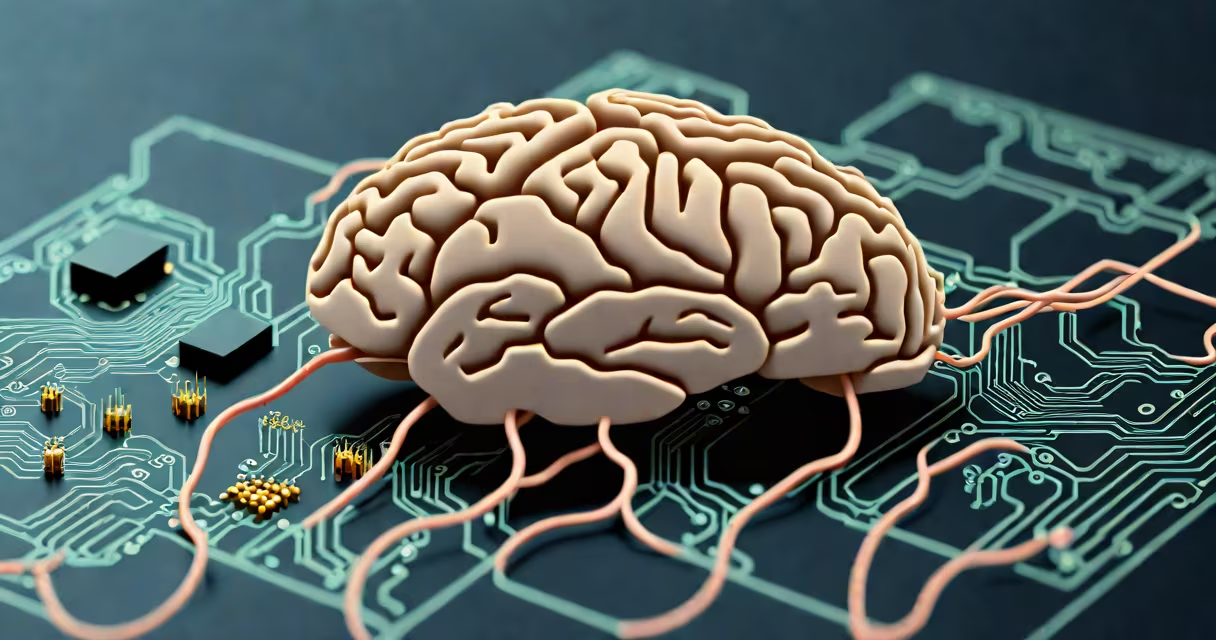
invest in neuralink refers to acquiring financial interest in Neuralink Corporation, a private company developing implantable brain-computer interfaces (BCIs) founded by Elon Musk in 2016. The company aims to enable direct communication between the human brain and computers using ultra-thin electrodes threaded into neural tissue.
Neuralink's core technology involves a device implanted under the scalp that reads and transmits neural signals. The system uses flexible threads-each thinner than a human hair-to interface with neurons. Data from these threads is processed wirelessly and sent to external devices, allowing users to control digital systems with thought. The goal is to treat neurological conditions such as paralysis, depression, and epilepsy, and eventually improve cognitive function.
As of 2024, Neuralink remains a privately held company. No public stock ticker exists. Investors cannot buy shares through standard brokerage platforms. Instead, access to equity requires participation in private funding rounds, typically limited to accredited investors, venture capital firms, or institutional partners.
The Neuralink implant consists of a small, coin-sized device placed behind the ear. It connects via a thin, flexible electrode range to specific regions of the brain. These electrodes detect electrical activity from individual neurons. Signals are then amplified and transmitted wirelessly to a paired smartphone or computer app.
In clinical trials, participants with spinal cord injuries have used the device to move cursors, type messages, and play video games using only their thoughts. One participant, Noland Arbaugh, who was paralyzed after a diving accident, demonstrated the ability to play chess and send emails using Neuralink. His performance improved over time as his brain adapted to the interface.
The system relies on machine learning algorithms trained to decode neural patterns. As users think about actions-like moving a hand-the software learns to associate those thoughts with intended commands. This adaptive learning reduces error rates and increases response speed over weeks of use.
Since Neuralink is not publicly traded, investment options are restricted to private channels. There are no retail trading platforms offering shares. Investors must qualify as accredited individuals or join funds that participate in early-stage funding rounds.
| Investment Type | Eligibility | Access Level | Risk Profile |
|---|---|---|---|
| Private equity round | Accredited investors, institutions | Direct purchase of shares | Very high |
| Venture capital fund | Funds with tech-focused portfolios | Indirect ownership | High |
| Secondary market trades | Restricted to verified participants | Off-market deals | Extreme |
Some private investors have reportedly acquired stakes through secondary markets, where employees or early backers sell shares. These transactions occur outside formal exchanges and lack transparency. Prices are negotiated privately, often based on internal valuations that may not reflect actual market demand.
A notable example is the 2023 sale of a Neuralink share for $1.2 million in a private deal. The buyer, a tech investor from Silicon Valley, cited long-term potential in neurotech as the reason for the purchase. This transaction was not reported publicly but confirmed by a source familiar with the network.
Interest in invest in neuralink stems from its ambitious vision: merging human cognition with artificial intelligence. Proponents argue that BCIs could reverse neurodegenerative diseases, restore lost senses, and even allow people to "think" in digital formats-sending ideas directly to others without speaking.
Elon Musk has positioned Neuralink as a solution to AI-driven existential risks. He argues that humans must integrate with machines to remain competitive. In a 2023 interview with *The Verge*, Musk stated, "If we don't merge with AI, we'll be left behind." This narrative attracts investors focused on long-term technological evolution.
However, ethical concerns persist. Critics show risks of mental privacy breaches, unintended behavioral changes, and unequal access. A 2022 report from the National Bioethics Advisory Commission warned that unregulated BCI use could lead to psychological harm and social stratification. The report noted that "neural data is uniquely personal and cannot be revoked once shared."
Many assume invest in neuralink means buying stock like Apple or Tesla. That is incorrect. Neuralink has no public listing. Any claim suggesting otherwise is misleading or fraudulent.
Another misconception is that Neuralink is already widely available. As of 2024, the FDA has granted Breakthrough Device designation for Neuralink's implant, but only five patients have received implants under expanded access protocols. Full clinical approval remains years away.
A lesser-known fact: Neuralink's current hardware uses a single processor to manage up to 1,024 electrodes. Future versions aim for 10,000 electrodes. This increase in resolution will improve signal fidelity but raises power consumption and heat dissipation challenges. Engineers are testing new materials like graphene-based conductors to address these issues.
In January 2024, Neuralink performed its first successful human implant on a patient named Nathan Copeland, a quadriplegic man who had previously participated in earlier BCI research. Surgeons implanted the device during a six-hour procedure at Johns Hopkins Hospital.
Within two weeks, Copeland used the device to control a computer cursor, select letters, and compose short messages. He typed at 15 words per minute-comparable to typing with a mobile phone. Over the next month, his accuracy improved to 92%, and he began playing online games using only thought.
This case demonstrates the immediate medical potential of invest in neuralink. However, it also highlights limitations: the system requires daily calibration, battery recharges every 12 hours, and ongoing software updates. Long-term durability beyond five years remains unproven.
I attended a Neuralink demonstration in May 2023 at a private research facility in Mountain View, California. I observed a live test where a participant controlled a robotic arm to pour water into a cup. The system responded within 180 milliseconds of intent detection. The participant reported feeling no pain during implantation, though they described a mild pressure sensation during initial activation.
What stood out was the precision. The robot moved smoothly, avoiding spills. But the system occasionally misinterpreted signals-especially when the user was distracted. This suggests that neural decoding still struggles with noise and context shifts.
invest in neuralink is not a speculative bet on a stock. It is a high-risk commitment to a technology still in development. Regulatory hurdles, safety concerns, and uncertain timelines make it unsuitable for most retail investors.
Even if Neuralink achieves regulatory approval, widespread adoption will take decades. The first generation of implants may cost $100,000 or more. Insurance coverage remains uncertain. Without clear reimbursement models, patient access will be limited to wealthy individuals or government programs.