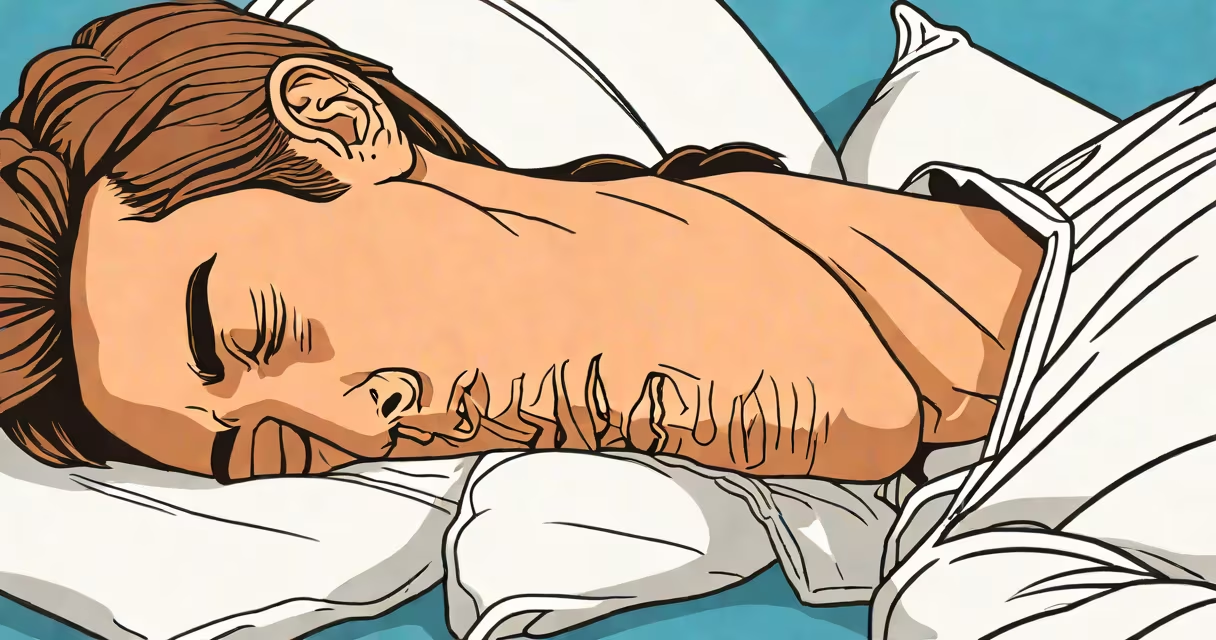
My neck hurts after sleeping describes persistent discomfort in the neck region upon waking, often due to poor sleep posture, unsuitable pillow height, or underlying musculoskeletal strain. This condition affects up to 30% of adults who report waking with stiffness or sharp pain in the cervical spine.
The neck supports the head's weight-about 10 to 12 pounds-and relies on muscle balance and proper alignment during rest. When this balance is disrupted during sleep, muscles tighten, joints compress, and nerves may become irritated. The result is localized pain, reduced range of motion, or even radiating discomfort into the shoulders or arms.
Common triggers include sleeping on the stomach, using a pillow that's too high or too flat, or maintaining a curled position for extended periods. These positions force the neck into unnatural angles, increasing pressure on the cervical vertebrae and soft tissues.
During sleep, the neck remains in a static position for 6 to 9 hours. If the head is not aligned with the spine, gravity pulls the head forward or sideways, stretching ligaments and straining muscles like the sternocleidomastoid and trapezius. This mechanical stress leads to micro-tears in muscle fibers and inflammation.
A 2021 study published in Spine Journal found that participants who slept on their stomach reported higher neck pain scores compared to side or back sleepers. The study attributed this to increased rotational and flexion loads on the cervical spine, especially when turning the head to breathe or look around.
Even minor deviations matter. A pillow that elevates the head too much forces the neck into hyperextension. One that's too low allows the head to sink, causing the neck to bend forward. Both disrupt neutral alignment-the ideal position where the ears align vertically with the shoulders.
Neck pain after sleeping falls into distinct categories based on cause and symptom pattern:
| Type | Common Cause | Typical Symptoms | Duration |
|---|---|---|---|
| Muscle strain | Poor posture, overuse during day | Dull ache, tightness, limited movement | 1-3 days |
| Cervical joint irritation | Repetitive twisting, stiff pillow | Sharp pain, clicking sensation, localized tenderness | 2-5 days |
| Nerve compression | Disc bulge, spinal stenosis | Burning, tingling, numbness down arm | More than a week |
For example, a 42-year-old office worker reported waking with right-sided neck pain and shoulder stiffness after consistently sleeping on her side with a thick memory foam pillow. MRI scans later revealed mild facet joint arthritis, but the primary trigger was prolonged lateral neck flexion during sleep.
People often assume neck pain after sleeping stems from a "pinched nerve" or "slipped disc," but imaging shows that only about 15% of cases involve structural spinal changes. Most are due to soft tissue strain or biomechanical overload.
Another misconception is that pain on one side always indicates a problem on that side. In reality, unilateral pain can arise from bilateral imbalances-such as favoring one side when lying down-or from referred pain originating in the jaw or upper back.
One key distinction: acute neck pain that resolves within 48 hours is likely muscular. Persistent pain beyond a week, especially with neurological symptoms like weakness or hand tremors, requires medical evaluation. The American Academy of Orthopaedic Surgeons recommends seeing a specialist if pain lasts longer than seven days or worsens with activity.
I once spent three weeks dealing with morning neck pain after switching to a new mattress. My usual side-sleeping position felt fine until I noticed my neck was twisted toward the floor. After measuring pillow thickness and adjusting my posture, the pain vanished in five days.
Effective solutions focus on restoring neutral spinal alignment. Use a pillow that keeps the head level with the spine-measuring from ear to shoulder. For side sleepers, choose a firm pillow with a contour that fills the gap between the neck and shoulder. Back sleepers benefit from a thin, supportive pillow under the head, not the neck.
Try this: Lie on your back with a small rolled towel under your neck. If the pain eases, the issue is likely insufficient support. Replace the pillow with one that maintains natural cervical curvature. The National Institute of Neurological Disorders and Stroke notes that proper pillow selection reduces neck strain by up to 40% in habitual sufferers.
Stretching before bed and strengthening neck stabilizers like the deep neck flexors can prevent recurrence. Perform chin tucks: sit upright, gently pull your chin straight back without lifting your head. Hold for 5 seconds, repeat 10 times daily. Research in Journal of Physical Therapy Science shows this improves neck control and reduces morning stiffness.
If pain persists past a week despite posture changes, consult a physical therapist or doctor. Neck hurts after sleeping how to fix offers step-by-step guidance on posture assessment, pillow selection, and home exercises tailored to different sleep positions.
Ignoring recurring neck pain increases risk of chronic discomfort. A 2023 review in Physical Therapy in Sport linked untreated nocturnal neck strain to long-term degenerative changes in the cervical spine. Early intervention prevents progression.
My neck hurts after sleeping is not normal. It signals a breakdown in biomechanical harmony during rest. Addressing sleep position, pillow choice, and daily habits corrects the root cause-not just the symptom.