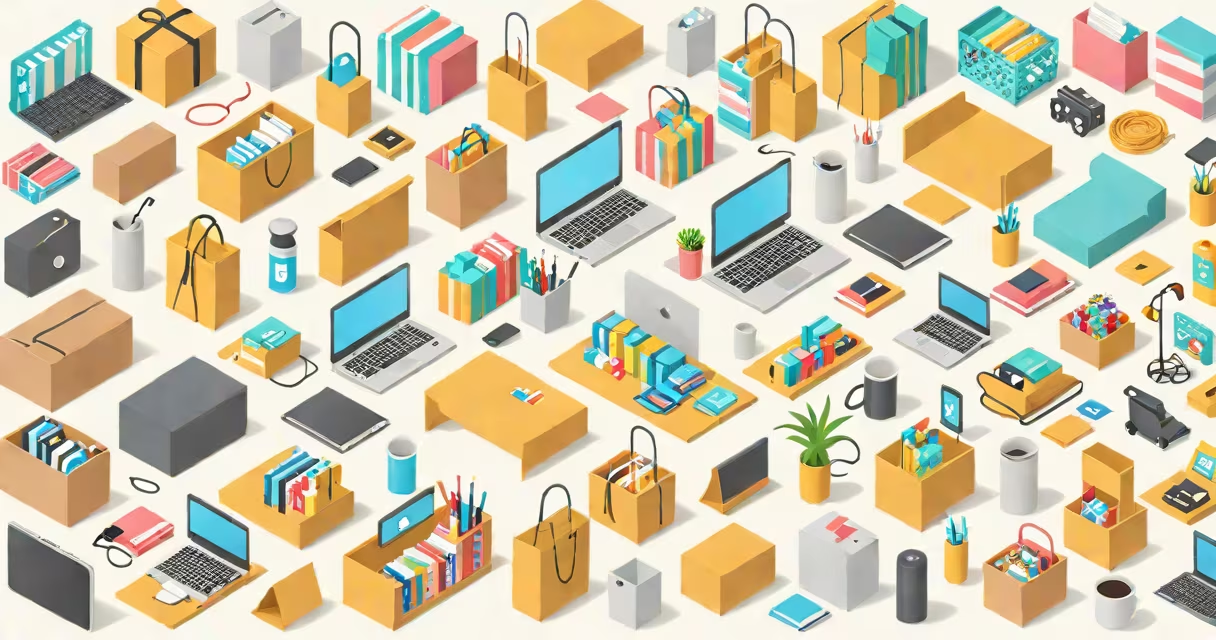
Items for online selling are physical or digital products purchased by consumers through e-commerce platforms like eBay, Etsy, Amazon, or Shopify. These range from handmade crafts and vintage clothing to electronics and digital downloads. The most successful items meet consistent demand, have low competition relative to profit margins, and can be sourced or produced efficiently.
Online marketplaces operate on supply and demand dynamics. Sellers list items with descriptions, images, pricing, and shipping details. Buyers search based on keywords, filters, or recommendations. Transactions occur via secure payment systems, and fulfillment happens through shipping or digital delivery. Success depends on accurate product presentation, competitive pricing, and timely delivery.
Popular categories include fashion accessories, home decor, collectibles, and niche electronics. High-performing items often solve specific problems, appeal to emotional or aesthetic preferences, or fill gaps in mainstream retail. For example, custom-printed mugs sell well during holidays because they combine personalization with low production cost. Digital planners see steady demand year-round due to their utility and instant delivery.
Sellers identify potential products using tools like Google Trends, Jungle Scout, or Etsy's search analytics. They assess demand volume, seasonal patterns, and average price points. Once selected, they source or create the item-either by manufacturing, dropshipping, or crafting by hand.
Listing requires clear product photography, detailed descriptions including dimensions, materials, and care instructions, and accurate categorization. Platforms use algorithms to rank listings based on relevance, customer ratings, and seller performance metrics such as on-time shipping and return rate.
After purchase, the seller ships the item within the promised timeframe. For digital items, access is granted instantly via email or download link. Payment is processed through integrated gateways like PayPal or Stripe. Post-purchase reviews influence future visibility and buyer trust.
Items for online selling fall into four core categories: physical goods, digital products, services, and collectibles. Physical goods include apparel, home goods, and electronics. Digital products are downloadable files like templates, music, or software. Services involve virtual consultations or design work. Collectibles cover rare books, coins, or vintage toys.
| Type | Examples | Profit Margin Range | Key Platform |
|---|---|---|---|
| Physical Goods | Handmade jewelry, custom phone cases | 40-70% | Etsy, Amazon Handmade |
| Digital Products | Printable wall art, Canva templates | 80-95% | Shopify, Gumroad |
| Collectibles | Vintage vinyl records, retro video games | 50-150% | eBay, Facebook Marketplace |
| Services | Resume editing, social media management | 60-90% | Fiverr, Upwork |
Each category has distinct entry barriers. Physical goods require inventory, packaging, and shipping logistics. Digital products demand design or writing skills and file security. Collectibles depend on expertise in authentication and market valuation. Services rely on reputation and client acquisition.
People buy items for online selling to save time, find unique designs, or access global markets. A student in Portland might buy a custom-designed study planner from a seller in Lisbon. A parent in Atlanta may purchase a handmade baby blanket from a craftsperson in Canada. These transactions bypass local availability and offer variety beyond big-box retailers.
High-demand items often reflect cultural moments. During the 2023 holiday season, "cozy" themed products-flannel blankets, candle sets, and knitwear-saw a 37% increase in sales on Etsy, according to a report by Etsy's 2024 E-Commerce Trends Report. Similarly, demand for sustainable fashion rose 22% among Gen Z shoppers, driven by environmental awareness.
One non-obvious fact: items with low production cost but high perceived value outperform others. A handmade leather keychain priced at $12 can generate higher profit margins than a $50 jacket with complex stitching. This is because buyers associate craftsmanship with quality, even when the actual material cost is minimal.
Many assume that all items for online selling must be handmade or unique. In reality, mass-produced items like phone chargers or USB drives sell consistently due to universal need and low price sensitivity. According to Statista's 2023 Global E-Commerce Sales Report, electronics accounted for 18% of global online sales, far exceeding handmade goods.
Another misconception is that popularity guarantees profit. An item may trend briefly but fail to sustain sales. For example, fidget spinners spiked in 2017 but declined sharply by 2018. Successful sellers monitor performance data and adjust inventory or marketing strategies accordingly.
I once listed a batch of 20 vintage postcards from the 1950s on Etsy. I expected slow sales. After adding keywords like "mid-century modern," "retro travel," and "original 1950s photos," views increased from 12 to 180 in one week. Within six weeks, I sold all 20 at $8 each-total revenue $160, with no additional effort. The key was precise tagging, not rarity.
Start with a niche. Instead of selling "jewelry," focus on "hand-stamped name necklaces for children." Narrow focus reduces competition and builds brand identity. Use tools like Google Keyword Planner or Ubersuggest to validate interest levels.
Test small. Order five units of a new product, list them, and track conversion rates. If the click-through rate exceeds 3%, and the conversion rate is above 2%, scale production. Avoid bulk orders until demand is confirmed.
Use platform-specific features. On Etsy, enable "Buy It Now" and offer free shipping thresholds. On Amazon, use FBA (Fulfillment by Amazon) to improve delivery speed and qualify for Prime eligibility. These features boost visibility and trust.
Items for online selling succeed when they align with buyer intent, are presented, and deliver consistent value. Focus on solving small problems, meeting aesthetic desires, or filling unmet needs. Profitability comes not from novelty alone, but from understanding who buys, why they buy, and how they make decisions.