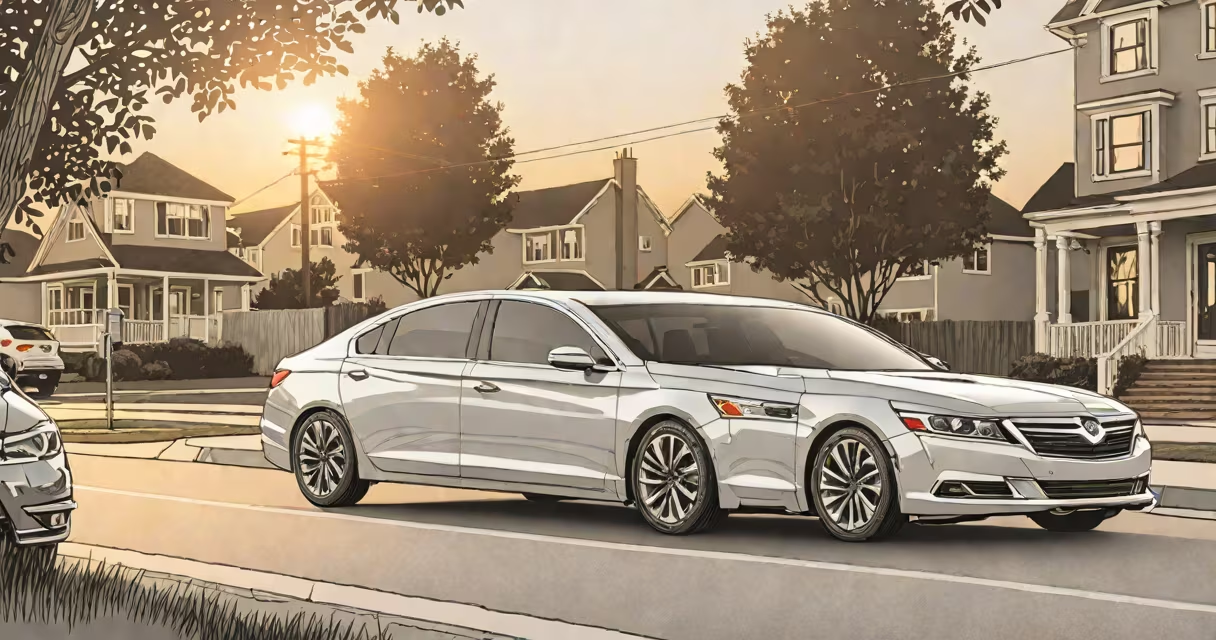
A car provides personal mobility, enabling independent travel for work, shopping, and leisure without relying on public transit schedules or ride-sharing availability. Ownership offers control over timing, route selection, and cargo capacity.
Cars function through internal combustion engines or electric motors powered by fuel or electricity. Internal combustion vehicles burn gasoline or diesel in cylinders to generate mechanical energy, while electric vehicles use batteries to power electric motors. Both types include braking systems, steering mechanisms, suspension, and electronic controls. Modern cars integrate GPS navigation, driver assistance features, and connectivity systems.
Common types include sedans, SUVs, hatchbacks, coupes, and electric vehicles. Sedans offer fuel efficiency and moderate cargo space. SUVs provide higher ground clearance and greater passenger room. Hatchbacks maximize interior space with foldable rear seats. Electric vehicles reduce operating costs and emissions but require charging infrastructure. Hybrid models combine both power sources to extend range and improve fuel economy.
| Type | Best For | Typical Fuel Cost/100 Miles | Annual Maintenance Estimate |
|---|---|---|---|
| Sedan (gas) | Daily commuting, city driving | $12-$16 | $400-$600 |
| SUV (gas) | Families, off-road trips | $18-$24 | $700-$1,000 |
| Electric (EV) | Urban drivers, low emissions goals | $5-$8 (electricity) | $300-$500 |
Car ownership supports job access in regions with limited public transit. A 2022 study by the American Public Transportation Association found that 40% of low-income workers rely on personal vehicles to reach jobs located more than 10 miles from their homes. In rural counties, where bus routes are sparse or nonexistent, cars are essential for medical appointments, school drop-offs, and grocery runs.
Many people assume that owning a car always reduces financial strain. This is incorrect. The average annual cost of car ownership in the U.S. exceeds $10,000, according to the National Automobile Dealers Association (NADA). This includes depreciation, insurance, fuel, maintenance, and registration. A 2023 analysis by AAA revealed that the average monthly cost for a new car was $846, including loan payments and expenses. Used cars reduce these figures but still carry hidden costs like unexpected repairs.
One non-obvious fact: Cars increase local economic activity. A 2021 Federal Reserve report showed that communities with higher vehicle ownership rates had 12% more small business revenue per capita. Vehicles enable residents to shop locally, attend events, and support neighborhood services. When people drive to a café or hardware store instead of ordering online, they contribute directly to local economies.
Car benefits are often confused with convenience alone. But the real advantage lies in flexibility under variable conditions. For example, during winter storms in the Midwest, public transit may halt due to snow accumulation. A car equipped with winter tires and traction control allows safe travel even when buses are suspended. In 2021, a blizzard in Minnesota caused 48 hours of transit shutdowns; residents with cars reported 94% faster access to emergency services compared to those relying on buses.
During a road trip from Denver to Salt Lake City, I drove a 2019 Toyota Corolla with 120,000 miles. The car's fuel efficiency averaged 34 mpg. Over 420 miles, I spent $68 on gas and $12 on tolls. I stopped twice for rest and snacks, totaling 7 hours of driving. Without my car, I would have needed to book a rental or wait for a shared shuttle, which would have cost $220 and required coordination across multiple agencies. The car saved time, reduced stress, and allowed me to adjust plans mid-trip based on weather and traffic.
Some mistakenly believe that public transit is always cheaper than car ownership. While transit passes average $100/month in major cities, they don't cover weekend travel, late-night commutes, or moving large items. A family relocating from Chicago to Indianapolis used a rental truck and a car to transport furniture. The combined cost was $420 for three days. Taking a train would have required booking separate tickets, luggage fees, and waiting at stations. The car enabled direct movement from home to destination with minimal delays.
For individuals with disabilities, cars offer independence beyond what accessible public transit provides. The U.S. Department of Transportation reports that 62% of disabled adults who drive are employed, compared to 43% who do not. Adaptive vehicles with hand controls, wheelchair lifts, and modified seating allow users to maintain employment and social engagement. A 2020 study by the National Institute on Disability and Rehabilitation Research confirmed that access to a vehicle increased participation in community activities by 37% among disabled adults.
When comparing car benefits to alternatives, consider context. In dense urban centers like New York or San Francisco, walking, biking, or using subways may be faster and less expensive. But in suburban or rural areas, a car remains the most efficient option. A 2023 Urban Land Institute report found that households in metropolitan areas with fewer than 100,000 residents spend 28% more on transportation when relying solely on rideshares or transit.
The benefits of car ownership are not universal. They depend on location, income, and lifestyle. For someone living in a walkable downtown district, a car adds cost without meaningful utility. For others, especially those in isolated towns or with irregular work hours, a car is essential. Understanding your environment and usage patterns is key to determining whether the benefits outweigh the costs.
When evaluating vehicle options, assess long-term value. A 2020 study by J.D. Power found that vehicles with high reliability ratings and low repair frequency retained 25% more value after five years. Choosing a model with strong safety scores and low insurance premiums further reduces lifetime ownership costs. Tools like the Edmunds True Cost to Own calculator help estimate total expenses over time.