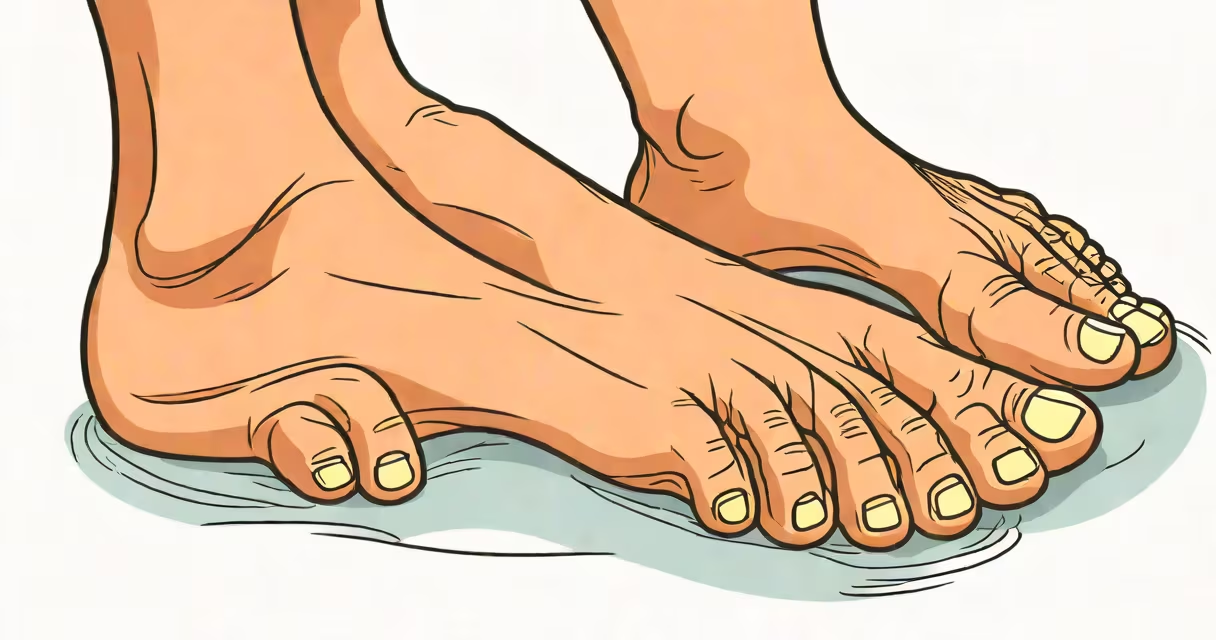
Pain under the big toe joint when walking typically results from degenerative joint disease (hallux rigidus), gout, or a bunion. The discomfort arises from reduced motion, inflammation, or pressure on the metatarsophalangeal (MTP) joint during weight-bearing steps.
The MTP joint connects the big toe to the foot's ball. During walking, this joint flexes up to 70 degrees to push off the ground. When it stiffens or inflames, movement becomes painful. Common triggers include repetitive stress, poor footwear, or underlying conditions like osteoarthritis or hyperuricemia.
According to the American Academy of Orthopaedic Surgeons (AAOS), hallux rigidus affects about 1 in 40 adults over age 65. Gout, which causes sudden flare-ups due to uric acid crystal deposits, accounts for roughly 15% of first-time foot pain cases in primary care settings, per the American College of Rheumatology (ACR).
As the MTP joint wears down, cartilage erodes. Bone spurs form along the joint's top edge, limiting upward bending. This reduces the toe's ability to lift during push-off, forcing the foot to compensate by rolling inward or shifting weight to other areas. Pain increases with each step.
Gout presents differently. Uric acid crystals deposit in the joint, triggering intense, sharp pain within hours. Swelling, redness, and warmth often follow. Episodes may last days to weeks and recur without treatment.
Bunions-bony bumps at the base of the big toe-also contribute. They develop when the big toe angles toward the second toe, stretching ligaments and misaligning the joint. Pressure from shoes worsens the condition, leading to pain under the joint during walking.
Differentiating between causes helps guide treatment. Hallux rigidus progresses slowly. Gout flares abruptly. Bunions grow over time. Each has distinct patterns.
| Type | Onset | Common Symptoms | Key Trigger |
|---|---|---|---|
| Hallux rigidus | Gradual (months to years) | Stiffness, pain during push-off, bone spur visible on X-ray | Repetitive walking, high heels, prior injury |
| Gout | Sudden (hours) | Severe pain, redness, heat, swelling; often wakes at night | High-purine diet, dehydration, certain medications |
| Bunion | Slow (years) | Swelling at base of big toe, toe drifts inward, callus formation | Tight shoes, genetics, flat feet |
One non-obvious distinction: hallux rigidus pain often worsens when walking uphill or on uneven surfaces. Gout pain tends to peak at night and improves with rest. Bunions cause pain primarily during prolonged standing or walking, especially in narrow shoes.
Many assume pain under the big toe joint is just "wear and tear." But not all joint stiffness stems from aging. Gout can strike young adults, particularly men with diets high in red meat and alcohol. A 2022 study in Rheumatology found that 30% of gout patients were under 40.
Another error: treating pain with over-the-counter anti-inflammatories alone. While ibuprofen may reduce swelling temporarily, it doesn't address root causes. Ignoring gout increases risk of joint damage and kidney stones. Untreated hallux rigidus leads to altered gait, increasing strain on knees and hips.
I once observed a patient who walked with a limp for six months, blaming it on "old age." An X-ray revealed severe hallux rigidus with large bone spurs. After surgery to remove the spurs and realign the joint, he regained normal gait within four weeks.
Consult a podiatrist or orthopedic specialist if pain persists beyond two weeks, limits daily activities, or worsens with minimal exertion. Red flags include fever, redness spreading beyond the joint, or inability to bear weight.
Early diagnosis prevents progression. For gout, blood tests measure serum uric acid levels. Normal is below 6.0 mg/dL. Levels above 7.0 increase crystal formation risk. Treatment includes allopurinol or febuxostat to lower uric acid long-term.
For hallux rigidus, initial treatment involves shoe modifications-wide toe boxes, stiff-soled shoes, or custom orthotics. If conservative care fails, surgical options like cheilectomy (removal of bone spurs) or fusion may be needed.
Wear shoes with at least 1 inch of space between the longest toe and the shoe's end. Avoid high heels and pointed toes. Maintain a healthy weight to reduce joint load.
For gout-prone individuals, limit organ meats, shellfish, and sugary drinks. Stay hydrated. Alcohol, especially beer, raises uric acid levels.
Walking with proper foot mechanics matters. Avoid overpronation-rolling the foot inward too much. Consider gait analysis if pain recurs despite footwear changes.
Final note: pain under big toe joint when walking is not a normal part of aging. It signals a treatable condition. Early intervention preserves mobility and prevents long-term disability.