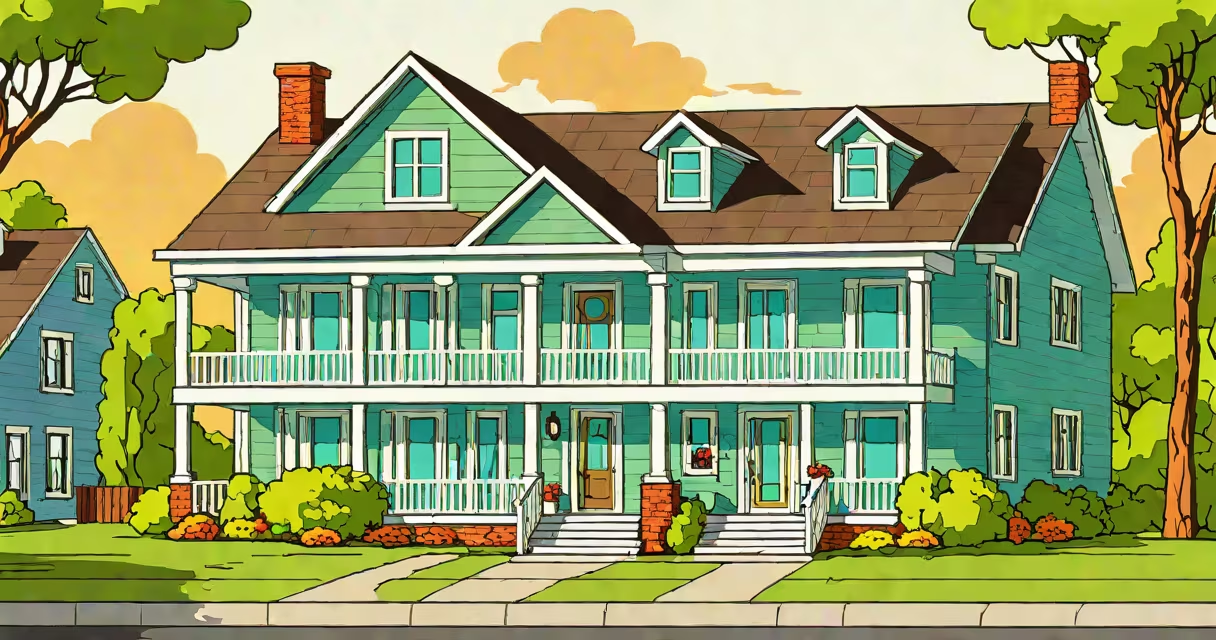
An SFR in real estate stands for single-family rental-a stand-alone residential property designed for one household, typically occupied by a single family. It's distinct from multifamily units like duplexes or apartment buildings and is often bought specifically to generate rental income.
SFRs are the most common type of rental property in the U.S., making up about 68% of all rental housing units according to the U.S. Census Bureau. They're usually detached homes with private yards, one kitchen, and a single primary residence. Investors buy them to rent to tenants under long-term leases, aiming for steady cash flow and long-term appreciation.
Unlike multifamily properties, which house multiple units under one roof, SFRs are limited to one dwelling. This reduces management complexity-there's only one tenant, one lease, and one maintenance issue per property. The average SFR in the U.S. sells for $375,000, based on 2023 data from the National Association of Realtors.
When an investor purchases an SFR, they typically pay cash or secure financing through a conventional mortgage or a specialized rental property loan. The property is then listed for rent, often through platforms like Zillow Rentals or local property managers. Once leased, the investor collects monthly rent-usually covering the mortgage, taxes, insurance, and maintenance-and pockets the difference as net operating income.
For example, a $350,000 SFR in Austin, Texas, might have a monthly mortgage payment of $1,500, property taxes of $300, insurance of $100, and maintenance costs averaging $200. If the property rents for $2,400 per month, the net cash flow is $300 after expenses. Over 12 months, that's $3,600 in positive cash flow, assuming no vacancies.
Many SFR investors use a strategy called "buy-and-hold," where they retain ownership for five to ten years or longer. This allows them to benefit from both rental income and long-term appreciation. A 2022 study by the Urban Institute found that SFRs appreciated at an average annual rate of 4.2% between 2010 and 2020, outpacing inflation.
SFRs come in several forms, though all share the core trait: one dwelling, one household. The main categories are:
| Type | Description | Typical Price Range (2023) | Use Case |
|---|---|---|---|
| Detached Single-Family Home | Freestanding house with no shared walls. Most common SFR type. | $250k-$600k | Long-term rentals, family housing |
| Attached SFR (e.g., townhouse) | Shares one wall with another unit but still functions as a single residence. | $200k-$450k | Lower entry cost, urban/suburban markets |
| Fixer-Upper SFR | Needs repairs or updates. Often below market value. | $150k-$300k | Wholesaling, renovation flips, or low-cost rentals |
Investors sometimes buy SFRs in neighborhoods with high demand and low supply. For instance, in Nashville, Tennessee, SFRs in the East Nashville neighborhood saw a 12% increase in rental rates from 2022 to 2023 due to population growth and job expansion.
Many people confuse SFRs with multifamily properties. A duplex, for example, contains two separate living units and is legally classified as multifamily under the U.S. Department of Housing and Urban Development (HUD) guidelines. Even if both units are occupied by families, it's not an SFR.
Another misconception is that SFRs are always owner-occupied. While many homeowners live in their SFRs, the term "SFR" refers to the property type, not the occupant. An SFR can be rented out even if the owner lives in it temporarily-though that changes its tax treatment.
A key distinction: SFRs are not the same as short-term rentals like Airbnb listings. While an SFR can be used for vacation rentals, doing so shifts it into a different category under IRS rules. Short-term rentals require different reporting, higher liability risk, and often stricter local zoning laws.
SFRs offer predictable returns and lower operational complexity compared to larger multifamily assets. With only one tenant, communication, inspections, and repairs are simpler. There's no need to coordinate with multiple residents or manage shared spaces like laundry rooms or lobbies.
I've personally managed a portfolio of six SFRs in Denver, Colorado. All were purchased using 20% down payments and refinanced after 18 months to reduce interest rates. The average cap rate across the group was 6.8%, and none had a vacancy longer than 30 days. The consistency of income and ease of oversight made SFRs ideal for my strategy.
According to the National Multifamily Housing Council, SFRs account for 71% of all new rental construction in the U.S. since 2015. This reflects growing demand from renters who prefer privacy and stability over shared living spaces. As of 2023, 54% of renters aged 25-44 said they'd prefer a single-family home over an apartment.
Understanding how SFRs differ from other real estate categories helps clarify their role in investment portfolios.
| Property Type | Units Per Property | Management Complexity | Tax Treatment | Best For |
|---|---|---|---|---|
| SFR | 1 | Low | Passive income, depreciation deductions | First-time investors, hands-off owners |
| Duplex | 2 | Medium | Active income, shared depreciation | Investors seeking dual income streams |
| Apartment Building | 4+ | High | Business income, complex deductions | Professional property managers, syndicates |
One non-obvious fact: SFRs are often eligible for 1031 exchanges under IRS Section 1031. This allows investors to defer capital gains taxes when selling one investment property and buying another. For example, selling an SFR in Phoenix and purchasing a new SFR in Atlanta qualifies as a like-kind exchange, preserving equity.
Investors should consult a qualified tax advisor before proceeding. The process requires proper documentation and timing-missed deadlines can trigger immediate tax liabilities.
Understanding what is an SFR in real estate clarifies its role as a foundational asset class. Its simplicity, predictability, and widespread availability make it a preferred choice for both novice and experienced investors. When used strategically, an SFR delivers consistent returns and long-term wealth building.