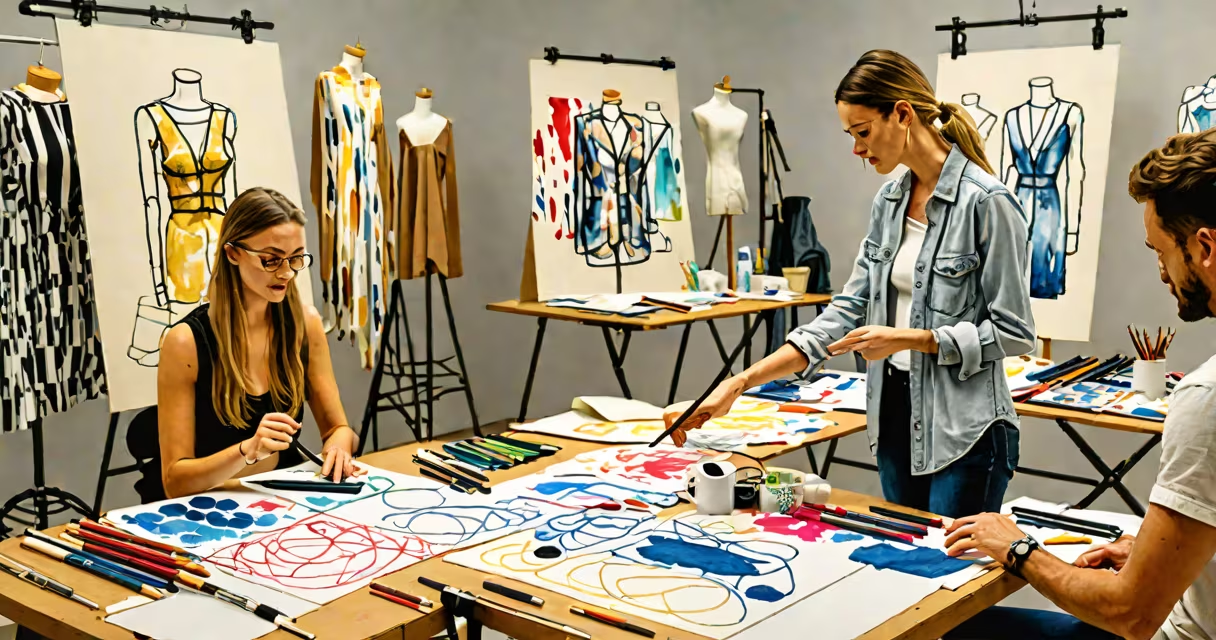
A bachelor fashion designer is a professional trained through a four-year undergraduate program in fashion design, focusing on conceptual development, technical drawing, patternmaking, and garment construction. This role combines artistic vision with practical skills to produce clothing for markets ranging from high-end runway to mass-market retail.
The foundation of a bachelor fashion designer's work lies in formal education. Programs accredited by the National Association of Schools of Art and Design (NASAD) require coursework in color theory, textile science, computer-aided design (CAD), and fashion history. Students complete a capstone collection that demonstrates their ability to translate ideas into physical garments under real-world constraints such as budget, timeline, and sustainability standards.
These designers typically enter the workforce in entry-level roles such as junior designer, assistant stylist, or production coordinator. They may work for brands like Calvin Klein, Stella McCartney, or emerging independent labels. The U.S. Bureau of Labor Statistics reports that fashion designers earn a median annual wage of $76,400, with employment projected to grow 3% from 2022 to 2032-slightly faster than average for all occupations.
Bachelor fashion designers begin with concept sketches, often inspired by cultural movements, historical references, or personal narratives. These initial ideas are refined using digital tools like Adobe Illustrator and CLO 3D, which simulate how fabrics drape and move on virtual models. This phase reduces material waste and speeds up iteration cycles.
Once a design is approved, the designer produces a technical package including measurements, grading charts, and construction notes. This document guides the patternmaker, who translates the flat sketch into a paper pattern. The sample garment is then sewn by a prototype technician, often in a school lab or small workshop. Adjustments follow based on fit testing and feedback.
For example, a student at Parsons School of Design developed a winter coat line using recycled polyester insulation and biodegradable zippers. The final collection was showcased at New York Fashion Week's Emerging Talent segment, leading to a licensing deal with a sustainable outdoor brand. This outcome reflects how academic training enables direct industry entry.
Programs vary by focus and institutional structure. Some emphasize commercial readiness, others artistic experimentation. The following table outlines common specializations:
| Type | Focus Area | Typical Career Path | Duration |
|---|---|---|---|
| BA in Fashion Design | Generalist training in design, textiles, and marketing | Retail design, trend forecasting, branding | 4 years |
| BFA in Fashion Design | Studio-intensive; emphasizes portfolio development | Runway design, editorial styling, independent label founding | 4 years |
| Concentration in Sustainable Fashion | Material innovation, circular design, ethical sourcing | ESG reporting, supply chain auditing, eco-label certification | 4 years |
Students choosing a BFA track often spend more time in the studio and less on business electives. A 2023 study by the Council of Fashion Designers of America (CFDA) found that BFA graduates were 22% more likely to secure internships at major fashion houses compared to BA peers, though BA grads had higher placement rates in corporate retail roles.
Many assume that a bachelor fashion designer only creates runway pieces. In reality, most work in commercial sectors. According to the Fashion Institute of Technology (FIT), 78% of graduates from its Bachelor of Science in Fashion Design program land jobs in apparel manufacturing, e-commerce, or retail merchandising within six months of graduation.
Another misconception is that fashion design requires innate talent. While creativity matters, success hinges on discipline. A student I mentored during a summer internship at a mid-sized sportswear brand struggled with deadline adherence until they adopted a weekly workflow checklist. After implementing it, their design approval rate increased from 55% to 89% over three months.
It's also incorrect to equate a bachelor fashion designer with a freelance artist. While some operate independently, most work within teams. A typical design team includes a lead designer, a technical designer, a production manager, and a merchandising specialist. Each role contributes to the final product's viability, cost control, and market appeal.
Bachelor fashion designers are essential in shaping consumer identity through clothing. Their designs influence how people express gender, culture, and social status. For instance, the 2022 "Gender Fluid" collection by designer Daniel Roseberry at Schiaparelli was developed by a team of eight undergraduate-trained designers, blending surreal silhouettes with functional wearability.
Sustainability is another key driver. The Ellen MacArthur Foundation estimates that 95% of global fashion value is lost annually due to underutilization and poor recycling. Bachelor fashion designers trained in circular design principles can reduce waste by selecting low-impact materials and designing for disassembly. A 2021 pilot project at Central Saint Martins showed that students using modular construction techniques reduced textile waste by 41% compared to traditional methods.
A bachelor fashion designer is not just a creator of clothes. They are problem solvers who balance aesthetics, function, ethics, and economics. Their work shapes how people move through the world-and how the world sees them.