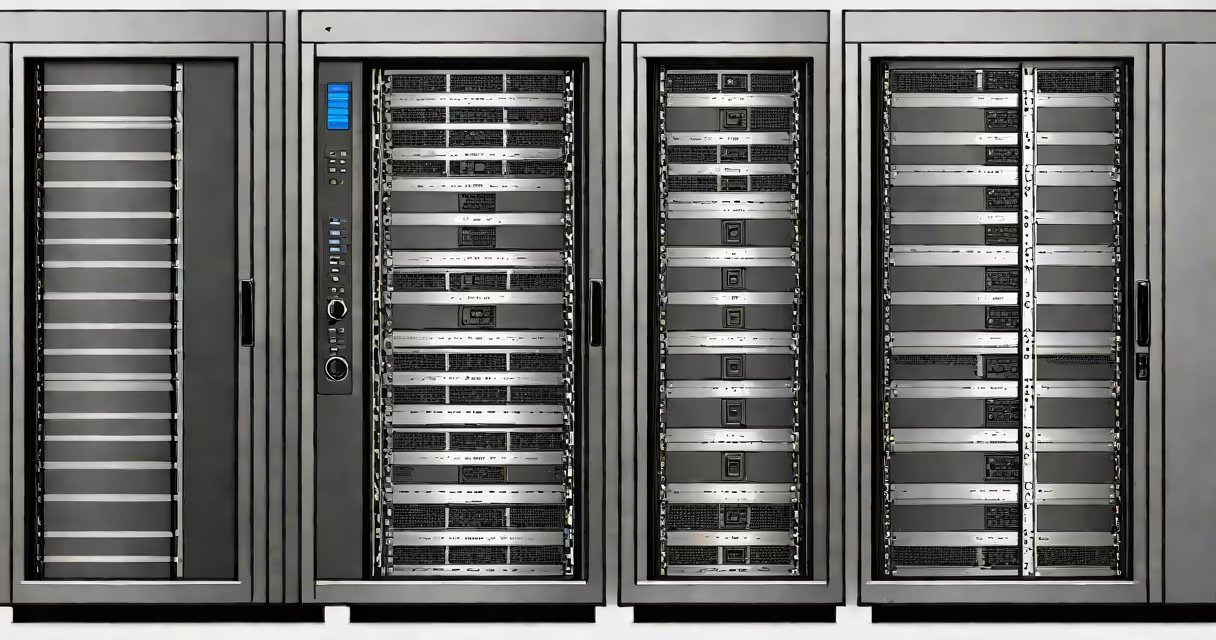
Virtual machines (VMs) run software on emulated hardware within a host system, while bare metal servers provide direct access to physical processors, memory, and storage without virtualization layers. This distinction defines performance, cost, and operational control in IT infrastructure.
VMs operate through hypervisors-software that partitions a single physical server into multiple isolated virtual environments. Each VM runs its own operating system and applications, sharing underlying resources like CPU, RAM, and disk. This enables efficient resource utilization across many workloads on a single machine. Bare metal, by contrast, dedicates an entire physical server to one workload. No abstraction layer exists between the application and the hardware.
For example, a web hosting company running 50 websites might deploy them on five physical servers using VMs. Each server hosts ten VMs, each with its own OS and allocated resources. In a bare metal setup, those same 50 websites would require 50 separate physical servers-one per site-each with full access to its own processor, memory, and disk.
When a VM runs, the hypervisor manages scheduling, memory allocation, and I/O operations. The guest OS inside the VM believes it controls physical hardware, but it's actually interacting with virtualized representations. This abstraction allows live migration-moving a VM from one physical server to another without downtime-and snapshotting for backups.
Bare metal systems bypass this layer entirely. Applications interact directly with the CPU, GPU, RAM, and storage controllers. There's no overhead from virtualization, which improves determinism and reduces latency. A database server requiring consistent response times under load benefits from bare metal because it avoids interference from other VMs on the same physical host.
For instance, a financial trading platform processing 10,000 transactions per second requires predictable low-latency responses. Running on bare metal helps CPU cycles aren't shared or delayed by competing VMs. On a VM, even with high CPU reservation, timing jitter can occur due to hypervisor scheduling decisions.
The choice between VM and bare metal depends on workload demands. Here's how they compare across key dimensions:
| Factor | Virtual Machines (VMs) | Bare Metal Servers |
|---|---|---|
| Resource Allocation | Shared via hypervisor; changing scaling | Dedicated; no sharing |
| Latency | Higher due to virtualization overhead | Lower; direct hardware access |
| Cost per Unit | Lower upfront; pay-per-resource | Higher initial cost; fixed capacity |
| Scalability | Fast horizontal scaling; automated provisioning | Slower; requires physical deployment |
| Security Isolation | Good; VMs isolated by hypervisor | Best; no shared kernel or hardware |
Some hybrid models exist. Cloud providers offer "dedicated instances" that isolate VMs on physical hardware but still use virtualization. These are not bare metal-they're VMs with enhanced isolation-but they bridge the gap between flexibility and performance.
Many assume VMs are always cheaper. That's not true. While VMs reduce capital expenditure by consolidating workloads, they increase operational complexity and licensing costs. For example, Microsoft Windows Server licenses often charge per core, and VMs may run multiple cores across several VMs on one physical host. This can result in higher software licensing fees than deploying the same workloads on bare metal.
Another myth is that bare metal is always faster. Performance depends on the workload. A web application with variable traffic benefits from VM elasticity-scaling up during peak hours and down at night. Bare metal lacks this agility. Reconfiguring a physical server takes time and manual effort. VMs can scale in seconds using orchestration tools like Kubernetes.
A third misconception is that bare metal is inherently more secure. While isolation from other tenants improves security, bare metal doesn't eliminate risk. A compromised root account on a bare metal server grants full system access-just like a VM with root privileges. Security relies on configuration, patching, and monitoring, not the underlying hardware model.
High-frequency trading firms use bare metal for their order matching engines. These systems process trades in microseconds. Even a 10-microsecond delay from virtualization can cause missed opportunities. According to a 2021 study by the National Institute of Standards and Technology (NIST), bare metal deployments reduced average latency by 37% compared to VMs in financial transaction processing.
Conversely, startups building microservices-based platforms often choose VMs. They need rapid deployment, auto-scaling, and easy rollback. AWS EC2 instances, which are VMs, allow teams to spin up new environments in minutes. A SaaS company I helped migrate used VMs to deploy 120 services across four regions. The ability to replicate environments quickly was critical during testing and release cycles.
Here's a concrete example: A media streaming service handles 5 million concurrent users. During peak hours, it scales its video transcoding jobs. Using VMs on Google Cloud Platform, it automatically spins up 200 new instances during peak viewing times. After the event, it shuts them down. This model saves $18,000 monthly compared to maintaining 200 bare metal servers running 24/7.
I once audited a data center where a client ran a machine learning training cluster on bare metal. The team claimed better performance. But after profiling, we found that the actual bottleneck was disk I/O-not CPU or memory. The bare metal nodes had slower SSDs than the VMs hosted on high-performance NVMe-backed cloud instances. The VMs delivered 28% faster training times despite virtualization overhead. The lesson: hardware quality matters more than the abstraction layer.
VM vs bare metal isn't about superiority-it's about fit. VMs excel in flexibility, cost efficiency, and scalability. Bare metal wins in raw performance, predictability, and control. Choose based on your workload's latency sensitivity, traffic patterns, and budget constraints.
For mission-critical, low-latency applications, bare metal remains essential. For development, testing, and variable-demand production systems, VMs offer unmatched agility. Hybrid strategies-using both-deliver optimal results across diverse environments.
Understanding the trade-offs between vm vs bare metal helps avoid costly misalignment. optimizing an existing one, the right choice hinges on workload behavior, not ideology.