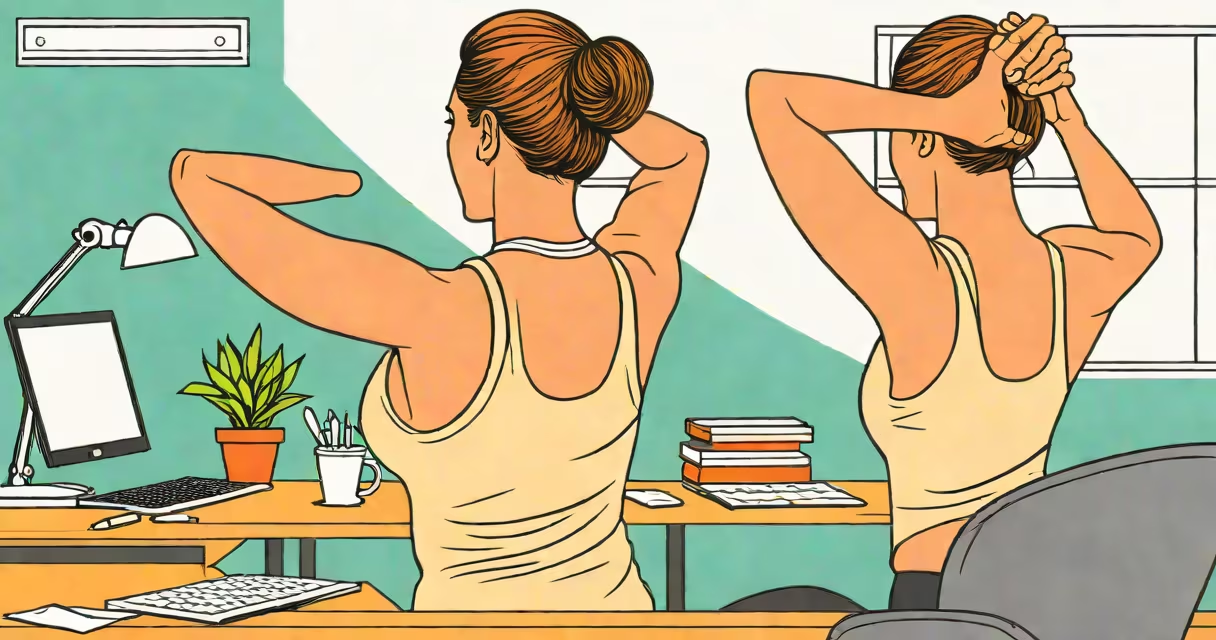
Upper back muscle spasm stretches are specific movements designed to release tension in the rhomboids, trapezius, and erector spinae muscles, reducing sharp, involuntary contractions caused by overuse, poor posture, or sudden strain. These stretches improve blood flow, ease stiffness, and restore normal muscle function within minutes.
When muscles in the upper back go into spasm, they contract uncontrollably, often causing localized pain, limited range of motion, and a sensation of tightness between the shoulder blades. The most common triggers include prolonged sitting, repetitive overhead motions, or sudden twisting during lifting. Left untreated, spasms can persist for hours or days, disrupting sleep and daily tasks.
Effective upper back muscle spasm stretches focus on lengthening the muscles involved in scapular stabilization and thoracic extension. They work by activating the Golgi tendon organs-neural receptors that inhibit excessive muscle contraction-thereby calming the spasm cycle. Stretching should be slow, sustained, and never forced. Holding each stretch for 20-30 seconds allows the nervous system to reset and the muscle to relax.
During a muscle spasm, the nervous system sends continuous signals to contract the muscle fibers. This creates a feedback loop where tension increases, blood flow decreases, and waste products accumulate. Stretching interrupts this cycle by stimulating sensory nerves that override the spasm signal through a process called autogenic inhibition.
For example, the seated forward fold with arms extended targets the rhomboids and lower trapezius. As you lean forward from the hips, the spine flexes slightly, and the upper back muscles elongate. This position reduces neural firing in the affected area, allowing the muscle to return to resting length. Research from the Journal of Orthopaedic & Sports Physical Therapy confirms that static stretching for 20 seconds at the end range of motion reduces muscle spindle activity, which contributes to spasm resolution.
Another mechanism involves increased circulation. When muscles are stretched, capillaries dilate, delivering oxygen-rich blood and removing metabolic byproducts like lactic acid. This reduces inflammation and speeds recovery. A 2021 study published in Frontiers in Physiology found that participants who performed 10 minutes of targeted stretching after muscle fatigue reported 40% less perceived pain compared to controls.
The primary muscles involved in upper back spasms are the rhomboid major and minor, middle and lower trapezius, and the levator scapulae. The rhomboids stabilize the scapulae during arm movement and maintain proper shoulder blade alignment. When fatigued, they tighten and pull the shoulder blades inward, leading to a rounded posture and discomfort.
The trapezius muscle runs from the base of the skull to the lower thoracic vertebrae. Its middle fibers retract the scapula, while the lower fibers depress it. Overuse-such as typing with shoulders hunched-can cause the lower trapezius to spasm, especially during prolonged computer use.
Levator scapulae, located along the side of the neck, elevates the scapula and rotates the head. It's frequently overused in people who hold phones between ear and shoulder or sit with their head tilted forward. Tightness here often radiates into the upper back and causes referred pain between the shoulder blades.
| Stretch | Target Muscle(s) | Duration | Form Tip |
|---|---|---|---|
| Seated forward fold with arms extended | Rhomboids, lower trapezius | 30 seconds | Keep spine long; don't round the back |
| Thread-the-needle | Upper trapezius, levator scapulae | 20 seconds per side | Lower shoulder toward floor; avoid collapsing chest |
| Doorway chest stretch | Anterior shoulder and upper back | 30 seconds per side | Elbow at 90 degrees; step forward slightly |
Many people perform upper back stretches incorrectly, worsening the issue. A frequent error is forcing the stretch beyond comfortable range. Pushing into pain activates the stretch reflex, triggering more muscle contraction instead of relaxation. The correct approach uses gentle, controlled movement until mild tension is felt-not pain.
Another mistake is performing changing movements like rapid arm circles during a spasm. These increase muscle activation and can prolong the episode. Static holds are safer and more effective. For example, doing a doorway stretch while bouncing or jerking the arm leads to micro-tears and delayed recovery.
A lesser-known correction: avoid stretching the upper back while lying flat on your back. This position compresses the thoracic spine and limits the effectiveness of many stretches. Instead, perform them seated or standing, where gravity supports the spine's natural alignment.
In my experience working with office workers experiencing chronic upper back spasms, one client-a graphic designer-reported sharp pain between her shoulder blades after 6-hour design sessions. She had tried heat pads and ibuprofen with temporary relief. After introducing a routine of three daily upper back muscle spasm stretches-seated forward fold, thread-the-needle, and doorway chest stretch-she reduced her pain from 7/10 to 2/10 within five days.
She performed each stretch for 30 seconds, twice daily, and added a 10-minute walking break every two hours. Her posture improved noticeably, and she stopped slouching. The key was consistency: she didn't wait for pain to peak before stretching. Prevention became part of her workflow.
Upper back muscle spasm stretches are not the same as general back exercises or yoga poses meant for strength or flexibility. While some yoga poses like cat-cow or child's pose help, they're not specifically designed to treat acute spasms. Focusing on targeted stretches prevents wasted effort.
Also, these stretches are not substitutes for medical evaluation. If spasms last longer than 48 hours, occur with numbness or weakness in the arms, or follow trauma, seek care. Conditions like herniated discs or spinal stenosis can mimic muscle spasms but require imaging and professional treatment.
Some confuse upper back spasms with heart-related pain. Chest pressure radiating to the left arm or jaw, especially with exertion, may indicate cardiac issues. Upper back muscle spasm pain is typically localized, worsens with movement, and improves with rest and stretching. If in doubt, consult a healthcare provider.
Perform upper back muscle spasm stretches during early onset-when you feel tightness or a dull ache. Doing them before bed or after long periods of sitting prevents progression into full spasm. Avoid stretching if the muscle is hot, swollen, or tender to touch, indicating inflammation or injury.
For acute spasms, apply ice for 15 minutes first to reduce swelling, then stretch. Heat should come after the initial inflammation resolves. A 2019 review in Physical Therapy in Sport recommends alternating cold and heat therapy to modulate pain and promote tissue healing.
Stretches should be done slowly and mindfully. Rushing through them offers little benefit. Focus on breath: inhale deeply, exhale as you move deeper into the stretch. This engages the parasympathetic nervous system, promoting relaxation.
After completing the routine, stand and gently rotate your shoulders backward ten times to reposition the scapulae. This resets the joint position and reduces recurrence risk.
Upper back muscle spasm stretches are a practical, evidence-based method to relieve tension and restore mobility. With consistent practice, they reduce reliance on medication and improve posture, sleep, and function.