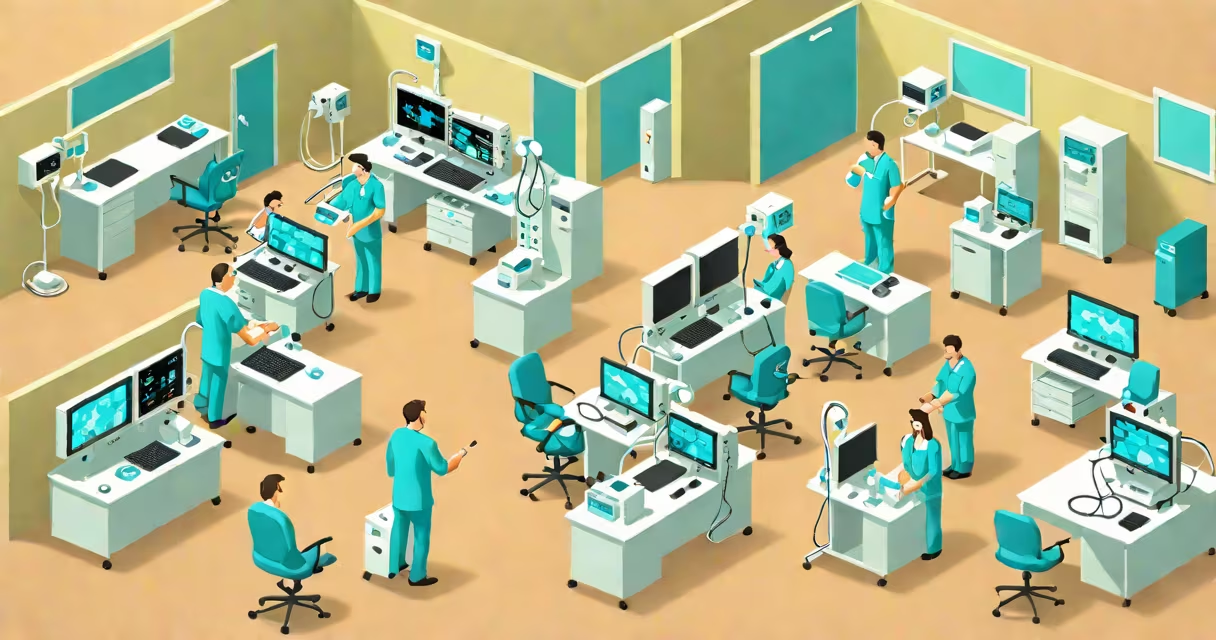
The "itu" medical abbreviation stands for intensive care unit, a specialized hospital department that provides advanced life support and continuous monitoring for patients with severe or life-threatening conditions.
Intensive care units treat patients who require constant observation and intervention due to instability in important functions such as breathing, blood pressure, or heart rhythm. These units are equipped with advanced monitoring systems, ventilators, infusion pumps, and trained staff including intensivists, nurses, respiratory therapists, and pharmacists.
ITU is commonly used in electronic health records, physician notes, and hospital signage. It appears in discharge summaries, transfer documents, and interdepartmental communications. The term is standardized across U.S. hospitals and recognized by the American Society of Anesthesiologists and the Society of Critical Care Medicine.
Patients admitted to an ITU are continuously monitored using devices that track heart rate, oxygen saturation, blood pressure, respiratory rate, and intracranial pressure. Important signs are displayed in real time on central screens, allowing rapid response to changes.
For example, a patient with septic shock may have a blood pressure reading drop below 90 mmHg systolic. A nurse detects this via the monitor and alerts the ICU team. Within minutes, medications like norepinephrine are administered through a central line to stabilize circulation. This level of responsiveness is only feasible in an ITU setting.
Each ITU bed typically includes a dedicated ventilator for patients unable to breathe independently. Ventilator settings are adjusted based on arterial blood gas results, lung compliance, and oxygenation levels. A single adjustment can prevent further organ damage.
While "itu" refers broadly to intensive care, different levels exist based on the intensity of support required:
| Level | Support Provided | Common Conditions |
|---|---|---|
| Step-down (Intermediate) | Continuous monitoring, IV medications, limited ventilation | Post-op recovery, unstable arrhythmias |
| Medical ICU | Advanced hemodynamic monitoring, mechanical ventilation | Sepsis, acute respiratory distress syndrome (ARDS) |
| Surgical ICU | Post-op neurologic and cardiovascular surveillance | Major trauma, post-cardiac surgery |
| Neuro ICU | ICP monitoring, seizure detection, neuromuscular control | Severe head injury, stroke, status epilepticus |
Not all ITUs are the same. A surgical ICU at a Level I trauma center handles more complex cases than a medical ICU in a community hospital. The staffing ratio also varies: most U.S. ICUs maintain a 1:1 or 1:2 nurse-to-patient ratio during peak hours.
Some confuse "itu" with "icu," but they are interchangeable in clinical use. "ITU" is the preferred spelling in British English and many international medical systems. In the U.S., "ICU" is standard, though "ITU" still appears in academic literature and global health reports.
A frequent error is assuming all ITU patients are on ventilators. Only about 60% of ICU admissions require mechanical ventilation, according to a 2022 study published in Critical Care Medicine. Many patients receive vasopressors, dialysis, or sedation without intubation.
Another misconception is that ITU admission guarantees survival. Mortality rates in U.S. ICUs average 12-18%, depending on patient severity and underlying illness. A 2021 analysis from the National Institute of Health found that patients with sepsis and multiorgan failure had a 34% mortality rate in the ITU.
In March 2023, a 68-year-old man was transferred to the ITU after a massive pulmonary embolism. His oxygen saturation dropped to 82% on room air. Upon arrival, he was placed on high-flow oxygen and started on intravenous thrombolytics.
His vitals were monitored every 15 minutes. Within two hours, his SpO2 improved to 94%. He remained intubated for 48 hours due to persistent hypoxia. After extubation, he was moved to a step-down unit.
This case illustrates the changing nature of ITU care: decisions are made rapidly based on real-time data. The term "itu" appears throughout the chart-on the admission form, in the progress note, and on the discharge summary.
Understanding "itu" is easier when contrasted with similar terms:
These abbreviations appear alongside "itu" in clinical documentation. Misreading them can lead to errors. For example, confusing "itu" with "aod" could result in misclassifying a patient's condition and delaying appropriate treatment.
During my time working in a regional hospital's emergency department, I witnessed a junior resident write "ITU" on a transfer slip for a patient with mild dehydration. The error was caught during handoff, preventing a misallocation of resources. This highlights the importance of accurate abbreviation use in high-stakes environments.
Standardized medical abbreviations reduce communication gaps among healthcare providers. The Joint Commission requires that all facilities use approved abbreviations to prevent errors. "ITU" is on the list of acceptable terms for intensive care units.
When you see "itu" in a medical record, it signals a critical phase in patient care. It is not a label-it is a system designed to save lives through precision, speed, and coordination.
Understanding the "itu medical abbreviation" is essential for anyone involved in healthcare, whether as a provider, patient, or family member. It represents a hub of advanced medical intervention where every second counts.