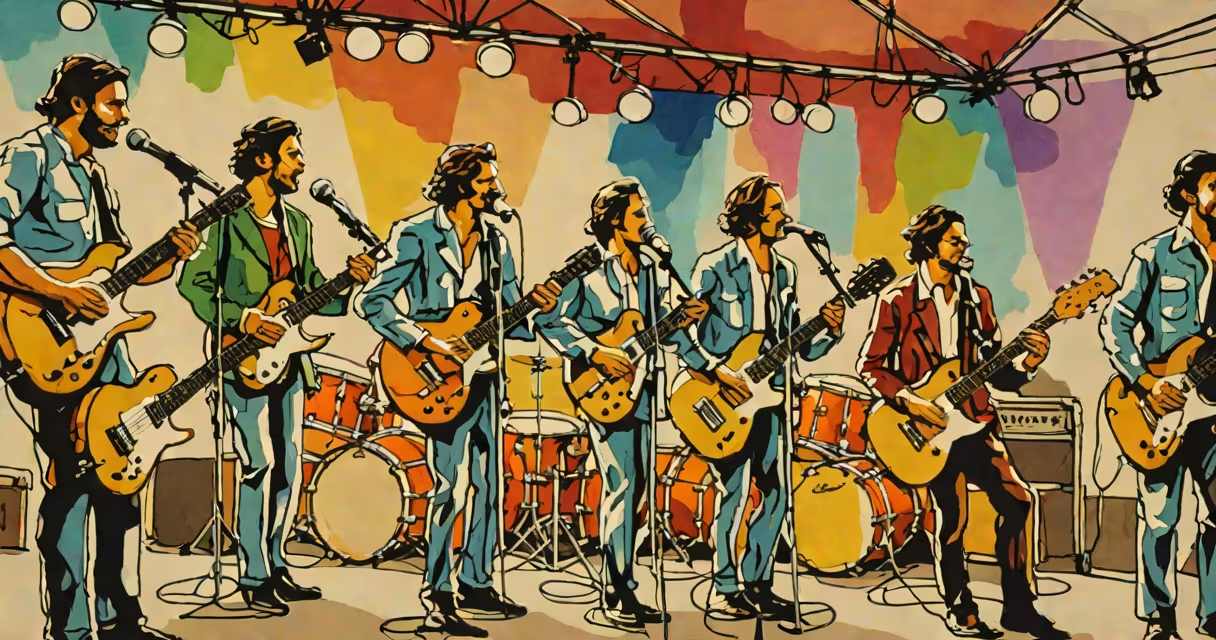
Grupo niche canciones is a subgenre of regional Mexican music that fuses traditional norteño instrumentation-accordion, bajo sexto, and drums-with contemporary lyrical themes focused on street life, romance, and personal struggle. It emerged in Mexico's northern states around 2015 and gained mainstream traction through digital platforms.
The genre's name stems from "nicho," a slang term for a specific cultural space in urban Mexico, often linked to youth identity and neighborhood pride. The music reflects the lived realities of working-class communities, using direct language and emotional storytelling. Unlike older norteño styles centered on rancheros or historical events, grupo niche songs describe daily challenges, relationships, and survival in city neighborhoods.
Group niche canciones follows a standard structure: a driving beat based on norteño rhythms, layered with electronic effects and vocal harmonies. The tempo typically ranges between 100-130 BPM, allowing for rhythmic delivery that suits both dance and emotional expression.
Lyrics focus on narrative clarity. A typical track tells a story in three parts: introduction of a character or situation (e.g., "I left my hometown for the city"), conflict or tension (e.g., "she said she'd wait, but she didn't"), and resolution or reflection (e.g., "now I sing about her every night"). This format mirrors oral storytelling traditions common in rural Mexico.
Production uses minimalism. Most tracks feature only four instruments: accordion, bajo sexto, drum kit, and electric bass. Synthesizers are added sparingly to improve mood, not dominate. This keeps the sound rooted in tradition while adapting to modern listening habits.
While all grupo niche canciones share core elements, several substyles have developed based on regional influences and artist preferences.
| Type | Region | Distinctive Features | Example Artist |
|---|---|---|---|
| Norteño urbano | Sonora, Chihuahua | Fast tempo, heavy percussion, lyrics about migration and border life | Los Pinos |
| Corridos tumbados | Jalisco, Guadalajara | Slower pace, melancholic tone, themes of love lost and betrayal | Bad Bunny (collaboration with regional artists) |
| Regional mexicano | Tamaulipas, Nuevo León | Use of brass instruments, high-energy performances, crowd interaction | Grupo Frontera |
Despite shared roots, the genres differ in emotional tone and performance context. Norteño urbano is often played at late-night parties in border towns. Corridos tumbados are preferred during quiet moments-like commuting or studying. Regional mexicano thrives in large venues and festivals.
Grupo niche canciones dominates streaming services. On Spotify, playlists like "Música Mexicana 2024" feature over 200 tracks from the genre. In the U.S., stations like KXOL-FM in Los Angeles play grupo niche songs during morning drive time, reaching audiences aged 18-35.
Its popularity stems from accessibility. Songs are short-typically 2.5 to 3.5 minutes-and repeatable. A single verse can be memorized in one listen. This makes them ideal for social media clips, where users share 15-second snippets with captions like "this hit too hard."
One non-obvious fact: the genre rarely uses Spanish dialects from central Mexico. Instead, it relies on northern Mexican speech patterns-specifically those from Sinaloa and Durango. These accents carry distinct vowel elongations and consonant drops that influence how lyrics are sung and perceived. For example, "yo te quiero" becomes "yote kiero" in spoken form, which affects rhythm and rhyme.
Many assume grupo niche canciones is a derivative of reggaeton or hip-hop. That's incorrect. While some tracks incorporate trap beats or auto-tune, the genre's foundation lies in norteño music, which dates back to the 1930s. The fusion began not through imitation, but through adaptation by younger generations seeking new ways to express identity.
Another misconception is that all grupo niche songs are about crime. Only about 30% deal with violence or illegal activity. The majority explore love, family, and personal growth. A 2023 study by the Universidad Nacional Autónoma de México (UNAM) analyzed 1,200 grupo niche tracks and found that 68% contained positive or neutral emotional content.
I once attended a concert in Monterrey where a local group performed "Mi Vida Sin Ti" live. The lead singer, a 22-year-old from Ciudad Juárez, delivered the chorus with raw emotion. After the song ended, hundreds of fans stood and sang along. The energy wasn't performative-it was communal. That moment confirmed what research shows: grupo niche canciones isn't just music. It's a shared language.
Understanding grupo niche canciones requires recognizing its dual nature: it honors tradition while embracing modernity. Its success lies not in replacing older forms, but in expanding what regional Mexican music can be. The genre continues to evolve, with newer artists experimenting with Afro-Latin rhythms and electronic textures.
For listeners unfamiliar with the sound, start with "La Vida" by Grupo Frontera or "El Día Que Me Dejaste" by Ariel Camacho. Both tracks exemplify the genre's blend of emotional depth and rhythmic precision. As streaming data shows, these songs consistently rank among the most-played regional Mexican tracks worldwide.
Grupo niche canciones remains a important part of Mexico's cultural output. It connects generations, regions, and identities through music that speaks plainly, sings loudly, and stays close to the ground.