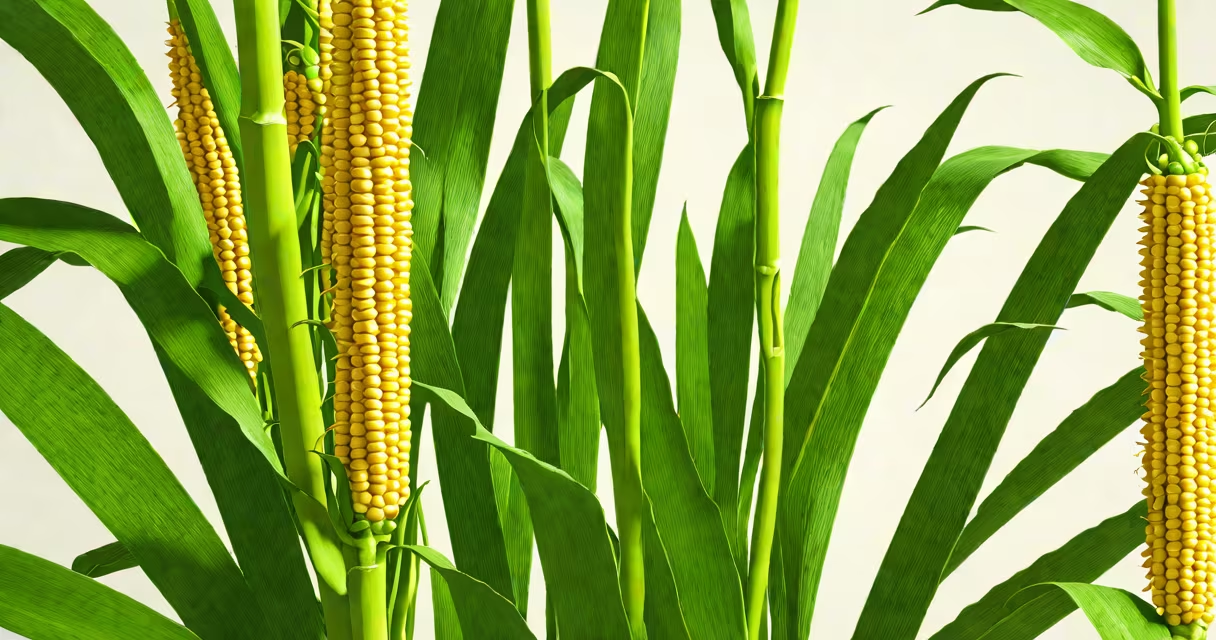
Maize plant identification is the process of recognizing specific structural features and developmental stages of Zea mays to distinguish it from similar grasses and assess crop health, growth phase, and potential threats. Accurate identification begins at germination and continues through vegetative, reproductive, and maturity stages.
Maize, commonly known as corn, is a monocotyledonous cereal crop with distinct morphological traits. Identification relies on visual cues such as leaf arrangement, stem structure, tassel formation, and ear development. These features appear sequentially during growth, allowing farmers, agronomists, and researchers to track progress and intervene when needed.
Proper maize plant identification supports timely decisions on fertilization, irrigation, pest control, and harvest timing. Misidentification can lead to incorrect treatment, reduced yields, or unnecessary chemical use. For example, confusing maize with volunteer weeds like foxtail or crabgrass may result in ineffective herbicide application.
Identification occurs through observation of consistent anatomical markers that emerge at predictable intervals after planting. The process starts with seedling emergence, marked by two cotyledons and the first true leaf. As the plant grows, nodes form along the stem, and leaves develop in a spiral pattern around the central axis.
Each growth stage adds new identifiers. By the V6 stage (six visible leaf collars), the stem thickens, and the first internode becomes visible. At VT (tasseling), the male inflorescence appears at the apex, while the female ear forms in the axil of a leaf near the middle of the plant. Pollen shed from the tassel lands on silks emerging from the ear's tip, initiating kernel development.
Environmental conditions influence the rate of development. In temperate zones, maize typically progresses from VE (emergence) to R6 (physiological maturity) in 90-120 days, depending on variety and growing conditions. Monitoring daily heat units (growing degree days) helps predict stage transitions and aligns identification with actual field conditions.
The following table outlines major maize plant components and their significance in identification:
| Structure | Appearance | Stage of Development | Identification Value |
|---|---|---|---|
| Cotyledon | Single, flat, translucent leaf | Germination (VE) | Confirms species presence; distinguishes from broadleaf crops |
| Leaf collar | White band at base of leaf blade | V1-V15 | Used to count vegetative stages; critical for timing applications |
| Tassel | Branching, feathery cluster at apex | VT (tasseling) | Signals readiness for pollination; indicates peak pollen shed window |
| Silk | Long, thread-like strands extending from ear tip | R1 (silking) | Shows female flowering; pollination success depends on silk receptivity |
| Ear | Developing kernel cluster enclosed in husk | R2-R6 | Indicates grain fill stage; used to estimate yield potential |
One non-obvious fact: maize leaves grow in a distichous pattern-meaning they emerge on opposite sides of the stem-but the visible leaf collar alignment creates a false impression of whorled growth. This misalignment often leads to incorrect stage counting among beginners.
Another common confusion arises between maize and sorghum. Both are tall, upright grasses with narrow leaves. However, maize has a solid, pithy stem, while sorghum stems are hollow., maize tassels are long and branched, whereas sorghum tassels are compact and spike-like. These differences are important in regions where both crops are grown together.
Beginners frequently mistake young maize seedlings for grassy weeds like barnyard grass or green foxtail. Early-stage maize has a single cotyledon and a V-shaped leaf base, while many weeds have two cotyledons and a different leaf orientation. Using a magnifier to examine the coleoptile (protective sheath) can confirm identity.
A frequent error is assuming that all ears are ready for harvest at the same time. In reality, ears mature at different rates due to genetic variation and microclimate differences within fields. A field may show R1 (silking) in one area and R5 (dough stage) in another. Scouting multiple locations ensures representative sampling.
I once observed a farmer applying a fungicide at V6 based on a misidentified plant. The crop was actually a volunteer wheat, which has a different growth pattern and disease susceptibility. The treatment failed and wasted resources. This incident reinforced the need for training in visual identification before making field interventions.
Accurate identification enables precision agriculture practices. For example, nitrogen application timing is most effective when applied at V4-V6, when the plant's demand peaks. Applying fertilizer too early or late reduces uptake efficiency and increases leaching risk.
Early detection of pests like the European corn borer or diseases such as gray leaf spot depends on recognizing symptoms at the correct stage. Gray leaf spot lesions appear on leaves during the V6-V8 period and spread rapidly under humid conditions. Identifying them early allows for targeted fungicide use, reducing environmental impact.
According to the USDA National Agricultural Statistics Service, mismanagement due to poor plant identification contributes to 10-15% yield loss in U.S. maize fields annually. The University of Illinois Extension notes that trained scouts achieve 92% accuracy in stage determination, compared to 67% for untrained individuals.
For those managing crop records or applying for federal programs, proper identification supports compliance. The I-9 identification process requires verifying documents, much like confirming plant identity ensures valid data entry in farm management systems.
Mastering maize plant identification improves decision-making across the growing season. It turns vague observations into actionable insights, increasing efficiency and sustainability.