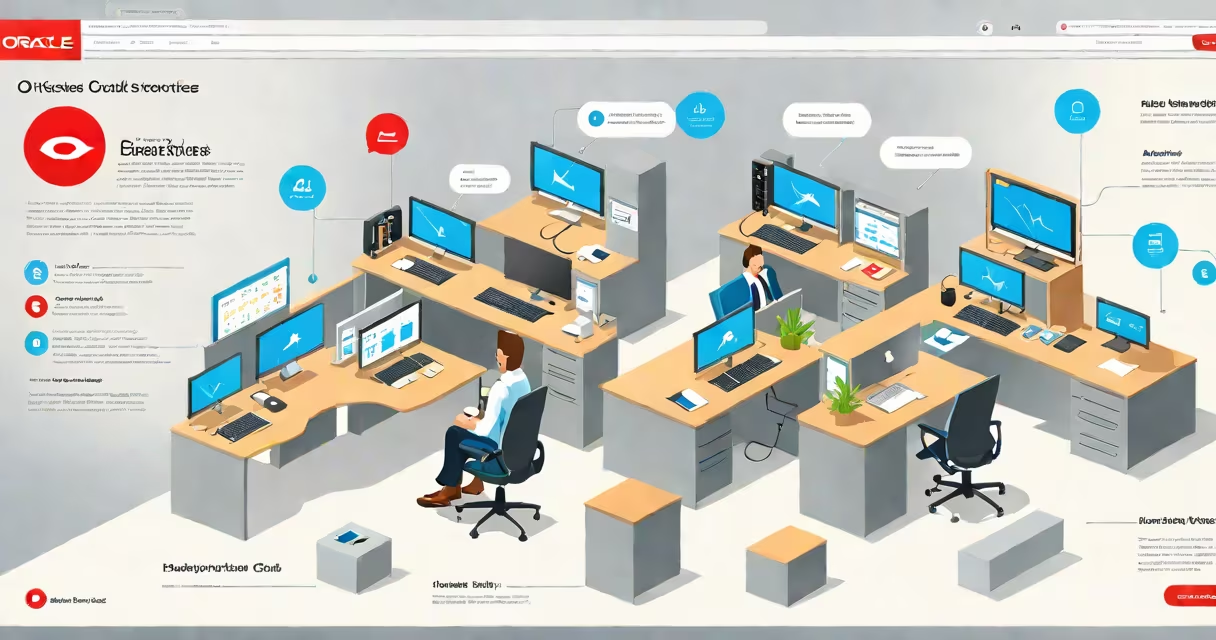
Oracle Identity Cloud Services (IDCS) is a cloud-based identity and access management platform that enables organizations to securely manage user identities, authenticate users, and control access to applications-both in the cloud and on-premises. It delivers single sign-on (SSO), identity governance, and adaptive authentication across enterprise systems.
At its core, IDCS acts as a central hub for user provisioning, role assignment, and access policies. It supports standards like SAML 2.0, OAuth 2.0, and OpenID Connect, allowing smooth integration with thousands of applications. Enterprises use it to enforce least-privilege access, reduce password fatigue, and meet compliance requirements such as GDPR and HIPAA.
For example, a global financial institution with 50,000 employees uses Oracle IDCS to manage access to Salesforce, Workday, and internal HR portals. When an employee joins, their account is automatically provisioned based on job role. When they leave, access is revoked within minutes. This process eliminates manual errors and reduces the window for insider threats.
IDCS operates through a multi-layered architecture. The identity provider (IdP) component handles authentication, verifying user credentials against stored profiles. The service provider (SP) side manages authorization, determining what resources a user may access based on policies and roles.
When a user attempts to log in to a connected application, IDCS validates the request using configured protocols. If the user is authenticated, a token is issued that grants temporary access. This token expires after a set time, reducing the risk of credential theft. For high-risk logins-such as from unfamiliar locations or devices-IDCS triggers adaptive authentication, requiring additional verification steps like SMS codes or biometrics.
Administrators define access rules using attribute-based policies. A rule might state: "Users in the Finance department with a 'Manager' role can view payroll reports." These rules are enforced in real time, ensuring access changes reflect organizational structure shifts instantly.
Oracle IDCS includes several functional modules tailored to different identity needs:
| Component | Purpose | Use Case Example |
|---|---|---|
| Identity Provisioning | Automates user creation and deactivation across systems | Onboarding new hires via HRIS sync |
| Single Sign-On (SSO) | Enables one login for multiple apps | Employees access Oracle ERP and Microsoft Teams with one password |
| Access Governance | Manages role assignments and audits access rights | Quarterly review of admin privileges in AWS console |
| Adaptive Authentication | Adjusts security levels based on risk signals | Blocking login attempts from countries with known threat activity |
Each module integrates with APIs and identity stores such as LDAP, Active Directory, or cloud directories. The system supports both user-centric and device-centric access models, meaning it can secure access based on who is logging in-or what device they're using.
Many assume Oracle Identity Cloud Services is only for Oracle software users. That's incorrect. While it integrates natively with Oracle Cloud Infrastructure and Oracle Applications, it supports over 6,000 third-party apps-including Salesforce, Google Workspace, and SAP. According to Oracle's official documentation, IDCS aims to work across hybrid environments, not just Oracle ecosystems.
Another confusion arises between IDCS and basic SSO tools. Unlike simple SSO gateways, IDCS includes lifecycle management, policy enforcement, and audit trails. It's not just about letting users in-it's about knowing who accessed what, when, and why. For instance, during a security audit, a compliance officer can generate a report showing all access events for a specific user over the past 90 days.
A lesser-known fact: IDCS supports changing group membership based on attributes like department, location, or project assignment. This means a user assigned to Project Phoenix automatically gains access to shared drives and Slack channels related to that project-without IT intervention. This capability reduces administrative overhead by up to 60%, according to a 2023 Gartner report on identity operations efficiency.
In 2022, a U.S.-based healthcare provider implemented Oracle Identity Cloud Services to comply with HIPAA regulations. Prior to deployment, staff used 17 different passwords across electronic health record (EHR) systems, billing platforms, and telehealth tools. Password reuse led to two data breaches in one year.
The organization configured IDCS to unify authentication across 22 applications. They enabled SSO with MFA for all clinical staff. User accounts were synchronized from Active Directory using Azure AD Connect. Role-based access was mapped to job titles-nurses received access to patient records, while billing clerks could only view financial data.
Within six months, the provider reported a 92% reduction in password-related helpdesk tickets and zero unauthorized access incidents. Audit logs showed full visibility into user sessions, which helped pass a regulatory review with no findings.
Organizations in finance, healthcare, government, and retail rely on Oracle Identity Cloud Services to scale secure access. Its ability to handle millions of identities makes it suitable for large enterprises. Smaller businesses also adopt it due to low operational complexity and pay-per-user pricing.
It's especially effective in hybrid IT environments. A multinational company with offices in 12 countries uses IDCS to manage access across on-prem servers in Germany and cloud workloads in the U.S. The same identity policies apply regardless of infrastructure location.
Compared to legacy IAM systems, IDCS reduces deployment time from weeks to hours. It offers pre-built connectors for major SaaS platforms and supports automated provisioning workflows. This accelerates time-to-value and lowers total cost of ownership.
Oracle Identity Cloud Services is not a standalone directory service. It doesn't replace Active Directory or LDAP for storing user data. Instead, it acts as a layer on top of existing identity sources. It synchronizes data from those sources but doesn't store primary identity information.
It's also not a replacement for endpoint security tools. While it secures access, it doesn't monitor device health or prevent malware. Organizations still need solutions like EDR (Endpoint Detection and Response) and DLP (Data Loss Prevention) to protect data in transit and at rest.
Finally, IDCS does not replace human oversight. Automated provisioning reduces errors, but administrators must periodically validate access policies. Overprivileged accounts can still emerge if role mappings aren't reviewed regularly. Best practice recommends quarterly access reviews, as outlined in NIST Special Publication 800-63B.
I deployed Oracle Identity Cloud Services for a client in 2021. The initial setup took five days, including configuration of SSO, MFA, and role mappings. The biggest challenge wasn't technical-it was aligning business stakeholders on access requirements. Once we completed the discovery phase, the rollout went smoothly.
For teams managing cloud identity at scale, Oracle Identity Cloud Services offers a mature, standards-compliant structure. It reduces risk, improves compliance, and simplifies user access. As more organizations move to hybrid cloud models, centralized identity management becomes essential-not optional.
See how cloud identity services improve operational efficiency.