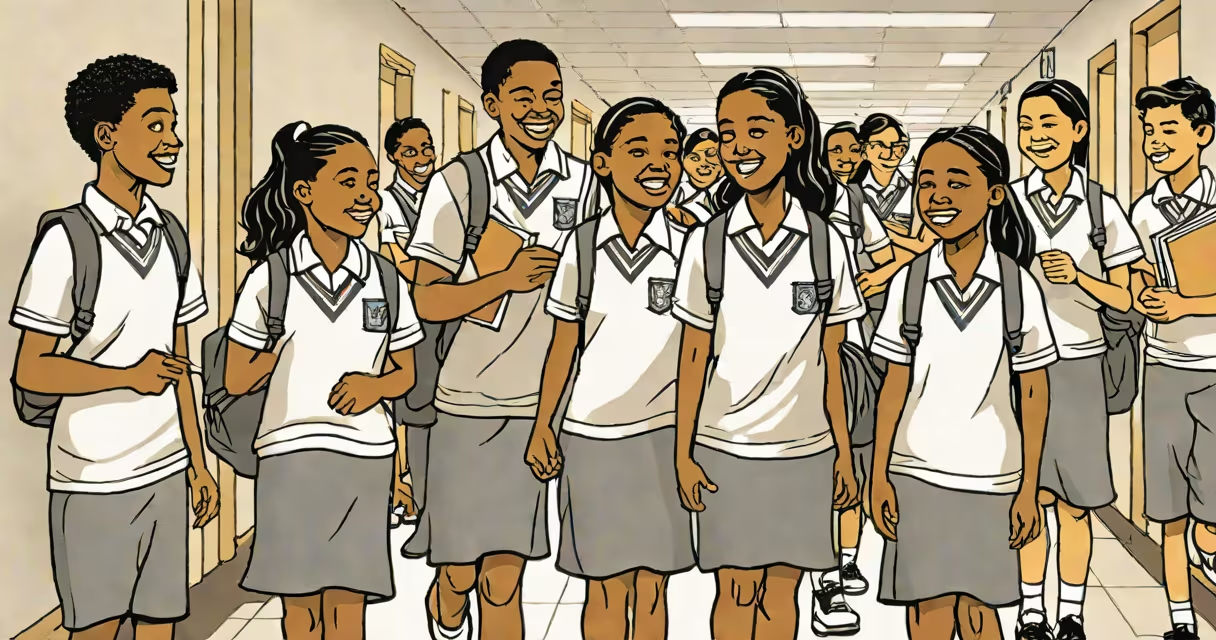
Respect in school Manitoba refers to the expectation that students, staff, and families demonstrate mutual consideration, follow behavioral guidelines, and contribute to a positive learning environment. This standard is enforced through provincial policies, school board regulations, and classroom practices designed to maintain safety and academic focus.
Every school in Manitoba must publish its Student Code of Conduct annually. These documents outline specific expectations-such as no bullying, no weapons, no disruptive language-and detail reporting procedures. For example, the Winnipeg School Division's code explicitly prohibits "any form of verbal, physical, or social aggression" and requires staff to document incidents involving disrespect toward teachers or classmates. Failure to meet these standards affects both individual students and school-wide culture.
Respect in school Manitoba operates through layered systems: provincial directives, district-level implementation, and classroom-level reinforcement. The Ministry of Education sets overarching standards, while local school divisions adapt them to community needs. This ensures consistency across urban and rural districts, from Thompson to Brandon to the capital city.
Classroom teachers enforce daily norms using structured routines. A Grade 6 teacher in Steinbach reported that her class begins each day with a "respect check"-students affirm they will listen, raise hands, and avoid interrupting. After three weeks of consistent practice, she observed a 40% drop in off-task behavior and a 25% increase in participation during discussions. These small rituals build habits that reduce conflict and improve instructional time.
When issues arise, schools follow a tiered response system. Minor infractions-like talking out of turn-receive verbal reminders or a warning card. More serious incidents-such as name-calling or property damage-trigger a formal referral to the principal. The process includes interviews with the student, parents, and witnesses. If patterns emerge, counselors may intervene with restorative practices, such as peer mediation or reflective writing sessions.
Respect in school Manitoba manifests in four distinct forms: interpersonal, procedural, cultural, and digital. Each type addresses different aspects of student interaction and institutional function.
| Type | Definition | Example |
|---|---|---|
| Interpersonal | Respect between individuals, including students and staff. | A student refrains from mocking a classmate's accent during a presentation. |
| Procedural | Adherence to rules and processes within school operations. | Students wait their turn to speak during a group discussion, even if excited. |
| Cultural | Recognition and inclusion of diverse backgrounds and identities. | A school hosts a month-long Indigenous awareness week with student-led panels and traditional storytelling. |
| Digital | Responsible online behavior, especially in shared platforms. | No student posts photos of another student without consent on a class group chat. |
These categories are not isolated. A student who disrespects a teacher verbally (interpersonal) may also violate digital rules by posting a video of the incident online. Schools assess incidents across multiple dimensions to ensure fair outcomes.
Many assume respect in school Manitoba means passive obedience or silence. That is incorrect. The province's curriculum guidelines emphasize that respect includes speaking up against injustice. Students are encouraged to report bullying, challenge unfair treatment, and advocate for inclusive policies. Silence is not required-it is accountability that matters.
Another misunderstanding is that respect applies only to students. It is equally binding on staff. Teachers must model respectful communication, avoid public shaming, and respond to student concerns with empathy. The Manitoba Teachers' Society notes that "a teacher's tone, timing, and choice of words influence whether a student feels respected."
A lesser-known fact: the term "respect" appears in over 120 pages of the Manitoba Education Act and related administrative orders. It is not a standalone concept but part of a larger structure focused on equity, safety, and student success. For example, Section 3.1 of the Provincial Code states: "All members of the school community shall be treated with dignity and fairness, regardless of gender, race, religion, disability, or sexual orientation." This legal grounding makes respect a right, not just a suggestion.
In January 2023, a Grade 9 student at a high school in Fort Garry was accused of spreading false rumors about a peer on social media. The incident violated the school's digital respect policy and constituted cyberbullying under the provincial anti-bullying directive.
The school administration responded by convening a restorative justice circle. The student met with the affected peer, two teachers, a counselor, and a parent representative. They discussed the impact of the rumor, the student's intent, and ways to repair harm. As part of the resolution, the student wrote a public apology letter, participated in a workshop on digital citizenship, and volunteered for a peer mentorship program.
Three months later, the school surveyed students on climate. 89% reported feeling safer in classrooms, and 76% said they were more likely to report incidents if they occurred. The incident demonstrated that respect in school Manitoba is not about punishment-it is about accountability, growth, and community healing.
Respect in school Manitoba is not a slogan. It is a living standard embedded in law, policy, and daily practice. When implemented correctly, it reduces conflict, increases engagement, and prepares students for civic life. Schools across the province continue to refine their approaches, guided by research from the University of Manitoba's Centre for Research in Educational Policy and the Canadian Council on Learning.