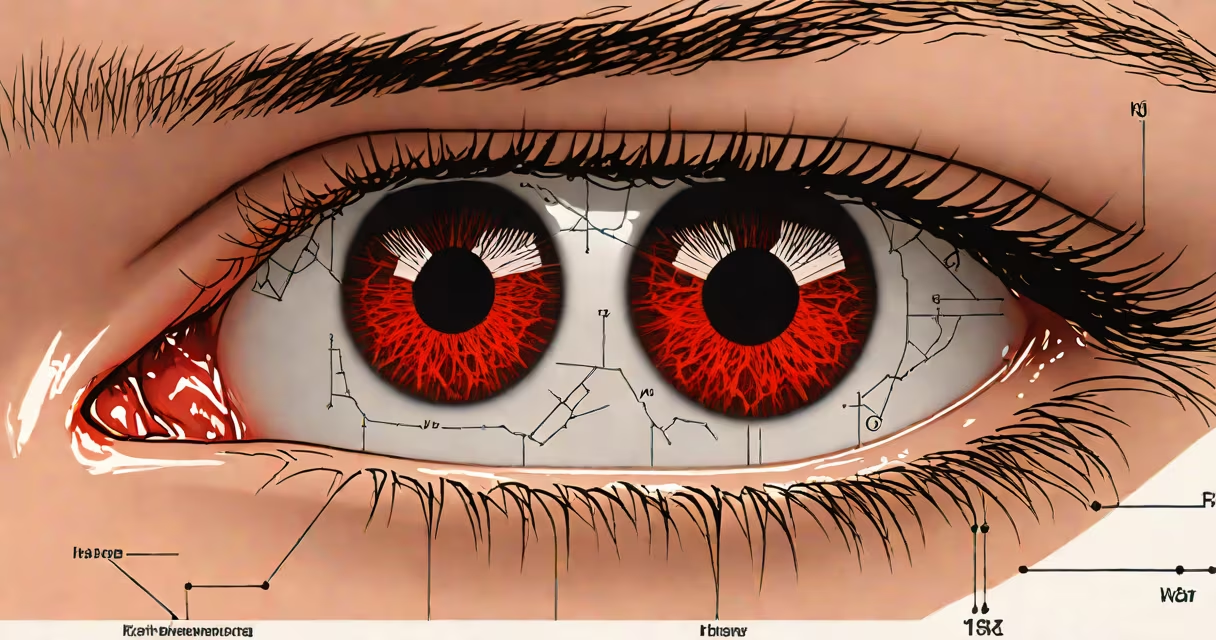
A persistent red appearance in your left eye typically results from dilated blood vessels in the conjunctiva, the clear membrane covering the white of the eye. This condition, known as conjunctival hyperemia, can arise from dryness, allergies, infections, or trauma. Redness localized to one eye is less likely to be systemic and more often tied to local triggers.
Redness in one eye-especially if it's constant or worsening-signals that something is affecting the ocular surface or underlying tissue. Unlike generalized redness from fatigue or screen strain, unilateral redness suggests a focused cause such as a foreign body, corneal abrasion, or localized inflammation. The eye's vascular network responds quickly to irritants, making redness one of the earliest signs of ocular distress.
While occasional redness is common and usually harmless, ongoing redness in a single eye demands attention. It may indicate an underlying issue requiring medical evaluation. Ignoring symptoms can lead to complications like corneal scarring or vision loss. If your left eye remains red despite rest and hydration, consult an ophthalmologist.
The eye's white portion, or sclera, contains a dense network of tiny blood vessels beneath the transparent conjunctiva. When this layer becomes inflamed or irritated, the vessels widen and fill with blood, creating a red or pink hue. This response is part of the body's defense mechanism, increasing blood flow to deliver immune cells and nutrients to damaged areas.
Factors that trigger vessel dilation include mechanical stress (rubbing, contact lenses), environmental irritants (smoke, dust), allergens (pollen, pet dander), and pathogens (viruses, bacteria). Infections like viral conjunctivitis (commonly called "pink eye") often begin in one eye and spread to the other within 24-48 hours. If redness stays isolated to the left eye beyond 48 hours, it's less likely to be infectious and more likely due to another cause.
Chronic redness may also stem from dry eye syndrome. A 2021 study published in Cornea found that 60% of patients with persistent unilateral redness had clinically diagnosed dry eye. Reduced tear production or poor tear quality leads to surface damage, triggering inflammation and visible redness. Artificial tears can relieve symptoms, but untreated dry eye increases risk of corneal erosion.
Several conditions frequently cause redness in one eye. Below are the most prevalent, ranked by likelihood based on clinical data from the American Academy of Ophthalmology (AAO).
| Condition | Prevalence | Key Symptoms | When to Seek Care |
|---|---|---|---|
| Dry eye syndrome | ~40% of cases | Burning, gritty sensation, intermittent redness | Redness lasting >3 days despite lubrication |
| Allergic conjunctivitis | ~25% | Itching, watery discharge, bilateral swelling | Redness with sneezing or nasal congestion |
| Corneal abrasion | ~15% | Pain, light sensitivity, blurred vision | History of eye trauma or foreign object exposure |
| Bacterial conjunctivitis | ~10% | Yellow-green discharge, crusting eyelids | Discharge persists past 24 hours |
| Uveitis (anterior) | <10% | Severe pain, photophobia, blurred vision | Redness with vision changes or eye pain |
Redness confined to the left eye is rarely due to systemic diseases like lupus or rheumatoid arthritis unless accompanied by joint pain or rash. These conditions typically affect both eyes symmetrically. If redness appears suddenly with severe pain, nausea, or halos around lights, it may indicate acute angle-closure glaucoma-a medical emergency requiring immediate treatment.
Many assume redness in one eye means an infection. While infections are possible, they're less likely than dryness or allergies. Viral conjunctivitis usually affects both eyes within 24 hours. If only the left eye is red, and symptoms haven't spread, infection is improbable.
Another misconception is that redness always indicates injury. A 2020 review in Eye & Contact Lens reported that 38% of patients with unilateral redness had no history of trauma. Dry eye and allergic reactions were the leading causes. Rubbing the eye can worsen redness but doesn't initiate it alone.
Redness does not always correlate with pain. Some conditions, like mild dry eye or early-stage uveitis, cause redness without discomfort. Relying solely on pain to assess severity can delay diagnosis. Always evaluate redness alongside vision changes, discharge, and light sensitivity.
In 2022, a 34-year-old office worker reported persistent redness in her left eye for five days. She used artificial tears daily but saw no improvement. Her primary care provider initially suspected allergies. However, upon referral to an ophthalmologist, slit-lamp examination revealed corneal epithelial defects consistent with a minor abrasion from a loose eyelash. The patient had not noticed the lash during the day.
Treatment included antibiotic ointment and a protective patch. Redness resolved in 72 hours. This case illustrates that even minor foreign bodies can cause prolonged redness without obvious trauma. The absence of pain delayed care-highlighting that redness alone warrants evaluation.
Redness lasting longer than 72 hours, especially with pain, vision changes, or discharge, requires prompt evaluation. The American Academy of Ophthalmology advises seeking care if redness follows eye surgery, contact lens wear, or exposure to chemicals.
If you experience sudden onset of redness with headache, nausea, or blurred vision, go to an emergency room. These signs may indicate acute glaucoma, which can cause permanent vision loss within hours if untreated.
Do not ignore chronic redness. Your left eye's color change is a signal-not a side effect. Address it with professional care.