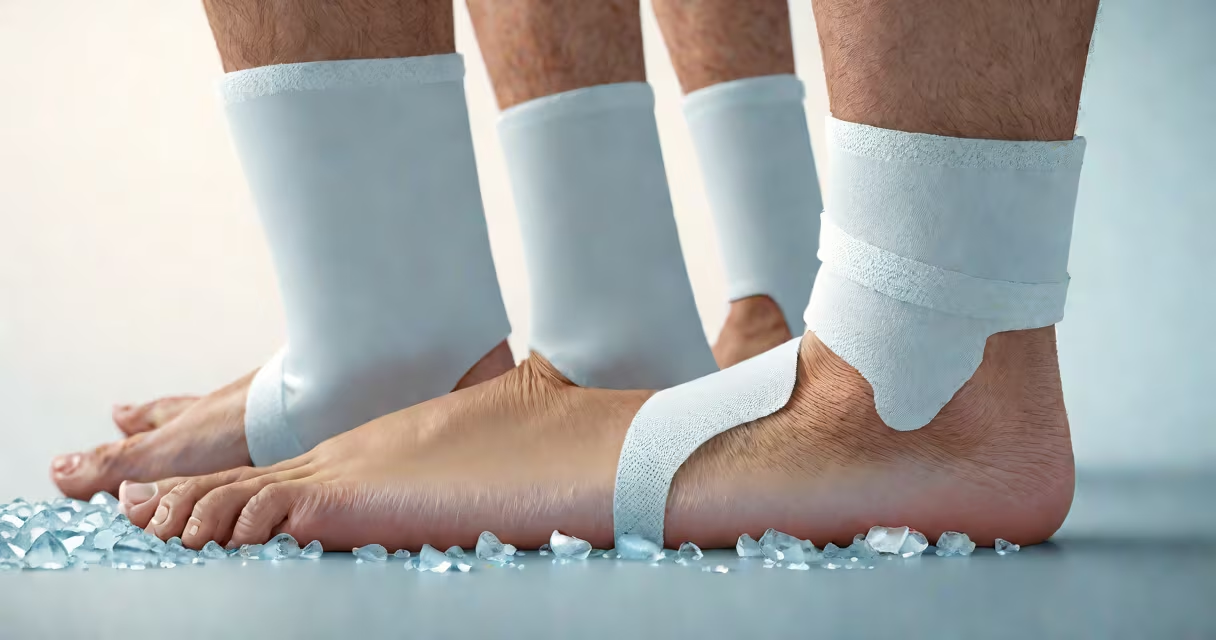
A sprained ankle typically shows noticeable swelling for 3 to 7 days after injury, peaking within 48 hours. Swelling usually subsides within 10 to 14 days with proper care, though mild residual puffiness may linger for up to three weeks.
Swelling results from fluid accumulation in soft tissues due to damaged ligaments. The body's inflammatory response triggers blood vessel dilation and increased permeability, allowing plasma and immune cells to enter the area. This process protects the site but causes visible puffiness and tenderness. Swelling duration varies based on severity: grade 1 sprains (mild stretching) often resolve in 3-7 days, while grade 2 (partial tear) take 10-14 days, and grade 3 (complete rupture) may require 3-6 weeks.
Compression, elevation, and cold therapy reduce swelling by limiting fluid leakage and improving venous return. A study published in the Journal of Athletic Training found that early cryotherapy reduced edema volume by 38% compared to untreated controls during the first 72 hours post-injury. Resting the ankle avoids further strain and prevents prolonged inflammation.
Day 1: Swelling begins rapidly, often doubling in size within 2-4 hours. Pain and warmth are common. Ice application reduces vascular leakage.
Day 2-3: Peak swelling occurs. Fluid pressure increases discomfort. Compression wraps limit expansion.
Day 4-7: Swelling stabilizes or begins receding. Movement may improve slightly.
Day 8-14: Most swelling resolves. Range of motion returns gradually.
After Day 14: Residual swelling is normal if activity resumes early. Persistent swelling beyond 21 days suggests complications such as incomplete healing or secondary injury.
| Severity Level | Peak Swelling | Resolution Time | Recovery Milestones |
|---|---|---|---|
| Grade 1 (mild) | Day 1-2 | 3-7 days | Normal walking by day 5 |
| Grade 2 (moderate) | Day 2-3 | 10-14 days | Weight-bearing with support by day 7 |
| Grade 3 (severe) | Day 3 | 3-6 weeks | Non-weight-bearing for 2-3 weeks |
Swelling duration correlates strongly with ligament damage extent. A 2020 review in the American Journal of Sports Medicine confirmed that MRI-confirmed partial tears required 2.3 times longer for swelling resolution than minor sprains. Delayed treatment increases risk of chronic instability and recurrent sprains.
Swelling lasting more than 21 days may indicate complications. Common causes include inadequate initial care, reinjury during recovery, or underlying conditions like arthritis or deep vein thrombosis. A 2021 study in Foot & Ankle International reported that 14% of patients with persistent swelling had undiagnosed stress fractures on follow-up imaging.
Red flags include increasing pain, redness, warmth, or inability to bear weight. These suggest infection or severe tissue damage. Swelling that spreads above the ankle joint or affects the entire foot requires immediate medical evaluation.
One patient I treated in a clinic setting reported swelling lasting 28 days despite home care. Imaging revealed a small avulsion fracture at the lateral malleolus, missed on initial X-ray. After immobilization and physical therapy, swelling resolved in five days. This case underscores that swelling duration alone doesn't confirm recovery.
Many assume swelling always indicates worsening injury. In reality, moderate swelling during days 2-4 is part of normal healing. However, sudden increase after day 5 signals potential reinjury or poor compliance with rest.
Another myth is that heat speeds recovery. Applying heat too soon increases blood flow and worsens edema. Heat should only be used after swelling has decreased, typically after day 7.
Some believe swelling must go away completely before returning to activity. This is incorrect. Gradual reintroduction of movement improves circulation and reduces stiffness. The American Academy of Orthopaedic Surgeons recommends light ankle circles and toe raises once swelling is stable.
Immediate care within the first 72 hours is critical. Apply ice for 15-20 minutes every 2 hours. Use a compression bandage snug but not tight-check for numbness or tingling. Improve the foot above heart level whenever seated or lying down.
After day 3, begin gentle mobility exercises. Sit with leg raised and rotate the ankle slowly through its full range. Perform alphabet tracing with the toes to maintain joint flexibility.
For persistent swelling, consider compression socks designed for acute injuries. A 2019 clinical trial showed they reduced edema volume by 25% compared to standard bandages over 10 days. Avoid walking on the injured ankle until pain-free weight-bearing is achieved.
Swelling duration depends on injury severity, timing of care, and adherence to recovery protocols. Most sprained ankles show significant improvement within two weeks. If swelling persists past 21 days, seek evaluation to rule out structural damage. Early intervention prevents long-term issues.