Substances of concern are chemicals legally restricted or monitored because they pose significant risks to human health or the environment. These substances are subject to regulation under U.S. federal laws such as the Toxic Substances Control Act (TSCA) and the Clean Air Act.
These chemicals are not automatically banned, but their use, handling, and disposal are tightly controlled. Regulatory agencies assess toxicity, persistence, bioaccumulation potential, and exposure routes before classifying a substance as of concern. The list includes known carcinogens, reproductive toxins, endocrine disruptors, and persistent pollutants.
For example, benzene-a solvent used in industrial processes-is classified as a substance of concern due to its link to leukemia. The Environmental Protection Agency (EPA) requires manufacturers to report production volumes above 10,000 pounds annually and mandates exposure limits in workplaces.
Regulatory bodies like the EPA and the Occupational Safety and Health Administration (OSHA) use scientific data to determine which chemicals qualify as substances of concern. They evaluate long-term health effects, environmental fate, and exposure pathways through controlled studies and real-world monitoring.
The EPA maintains the TSCA Chemical Substance Inventory, which lists over 86,000 chemicals. Of these, approximately 2,000 have undergone formal evaluation under TSCA's risk evaluation process. Substances found to present unreasonable risk are subject to restrictions or bans.
OSHA sets permissible exposure limits (PELs) for airborne concentrations of hazardous substances. For instance, formaldehyde has a PEL of 0.75 parts per million (ppm) averaged over an 8-hour workday. Exceeding this limit triggers mandatory engineering controls, personal protective equipment, and employee training.
Substances of concern fall into several distinct categories based on hazard profile:
| Hazard Category | Examples | Regulatory Structure |
|---|---|---|
| Carcinogens | Benzene, asbestos, vinyl chloride | TSCA, OSHA PELs |
| Reproductive Toxins | Lead, mercury, phthalates | EPA Risk Assessment, REACH (EU) |
| Endocrine Disruptors | Bisphenol A (BPA), dioxins | Food Quality Protection Act (FQPA) |
| Persistent Organic Pollutants (POPs) | Polychlorinated biphenyls (PCBs), DDT | Stockholm Convention (international) |
Not all substances of concern are banned outright. Some are permitted under strict conditions. For example, PCBs were phased out in the U.S. after 1979 but remain regulated under the Toxic Substances Control Act due to their persistence in ecosystems and tendency to accumulate in food chains.
A lesser-known fact: the EPA uses a "high-priority" designation for substances undergoing rapid risk evaluation. As of 2023, 15 substances-including certain flame retardants and perfluoroalkyl substances (PFAS)-were listed as high-priority under TSCA. This triggers accelerated review and public comment periods.
Many people assume that "substance of concern" means a banned chemical. That's incorrect. A substance may be flagged for risk without being prohibited. For example, trichloroethylene (TCE), a degreasing agent, remains in use in some industrial settings despite being classified as a substance of concern due to its neurotoxicity and carcinogenic potential.
Another confusion arises between "substances of concern" and "regulated hazardous waste." While both involve oversight, the former focuses on chemical properties and exposure risk, while the latter pertains to disposal and transport. A substance can be a substance of concern without being classified as hazardous waste under RCRA (Resource Conservation and Recovery Act).
Also, not all labeling systems agree. The Globally Harmonized System (GHS) defines specific hazard classes, but a substance may meet GHS criteria without being formally designated as a substance of concern under U.S. law. For instance, ethanol is classified as flammable under GHS but is not considered a substance of concern due to low toxicity at typical exposure levels.
In 2022, a plastics manufacturer in Ohio discovered that one of its raw materials-nonylphenol ethoxylate (NPE)-was a substance of concern due to its endocrine-disrupting effects and environmental persistence. The company had used NPE in cleaning solvents for decades.
Upon detection, the facility conducted a full inventory audit using SDS data and supplier declarations. They cross-referenced the chemical against the EPA's TSCA inventory and confirmed it was under active evaluation. Internal risk assessments showed worker exposure levels near the threshold for biological monitoring.
As a result, the company replaced NPE with a biodegradable alternative approved under the Green Chemistry Initiative. They submitted a revised safety plan to OSHA and updated their internal training modules. This change reduced reporting obligations under TSCA and lowered insurance premiums tied to environmental risk.
This case illustrates that identifying a substance of concern isn't just about compliance-it drives innovation in safer alternatives.
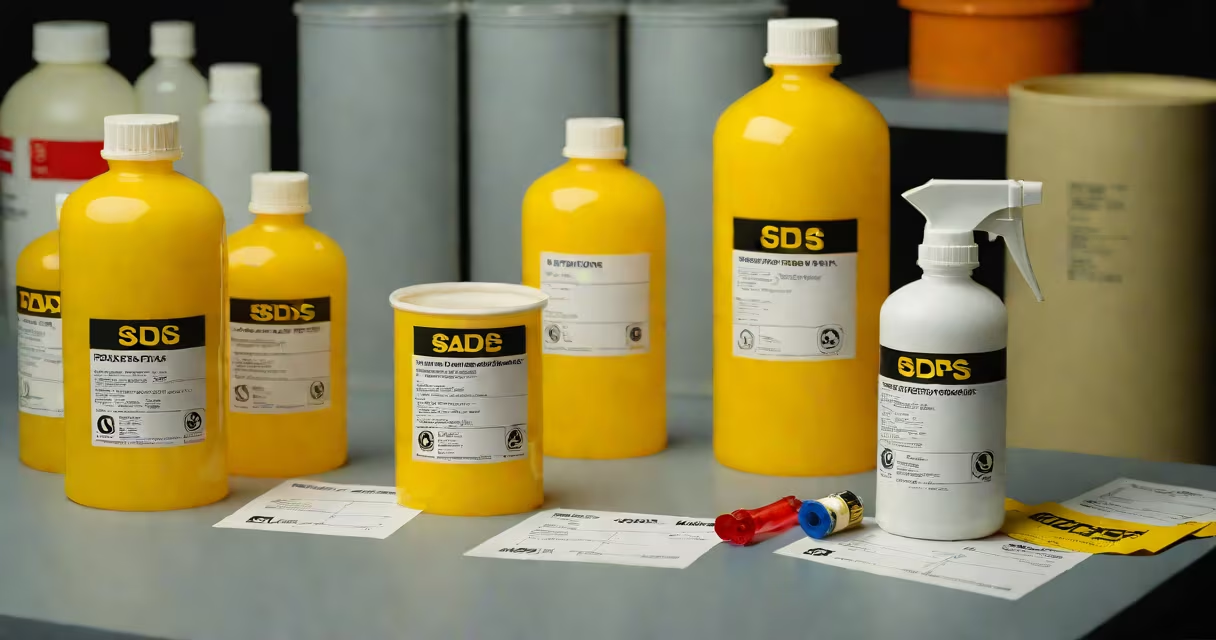
Employers must disclose substances of concern in workplace safety documentation. Under OSHA's Hazard Communication Standard (HCS), employers must provide Safety Data Sheets (SDS) for all hazardous chemicals used on-site. If a substance is listed as a substance of concern, the SDS must include specific guidance on exposure control and emergency response.
Manufacturers and importers must report new substances to the EPA within 90 days of first commercial manufacture or import. Failure to report can result in civil penalties up to $75,000 per violation, according to EPA enforcement records from 2021.
For organizations handling sensitive information, disclosure may extend beyond legal requirements. A letter to whom this may concern, often used in academic or corporate contexts, may reference a substance of concern when requesting access to restricted data or facilities. Such letters serve as formal acknowledgment of risk and responsibility.
When drafting such a letter, ensure it references the correct regulatory structure. For example, a letter concerning PFAS contamination in drinking water should cite the Safe Drinking Water Act and the EPA's proposed maximum contaminant level (MCL) of 4 parts per trillion (ppt).
During a site inspection, an inspector from the EPA's Office of Compliance found that a printing plant had failed to update its SDS for a solvent containing n-butyl acetate. Although not a substance of concern under TSCA, the solvent was listed under California's Proposition 65 due to reproductive toxicity concerns. The plant was fined $12,000 for inadequate disclosure, highlighting that state-level regulations can impose stricter requirements than federal ones.
Substances of concern are not simply dangerous chemicals-they are those whose risks have been formally assessed and documented under U.S. law. Their classification triggers reporting, labeling, and control requirements across industries.
Understanding the difference between hazard classification and regulatory status prevents missteps in compliance. A chemical may be hazardous under GHS but not yet designated as a substance of concern under TSCA.
Proactive management of substances of concern reduces liability, protects workers, and supports sustainable operations. Use tools like the EPA's Chemical Safety Information, Service, and Systems (CHISS) database to verify current designations.