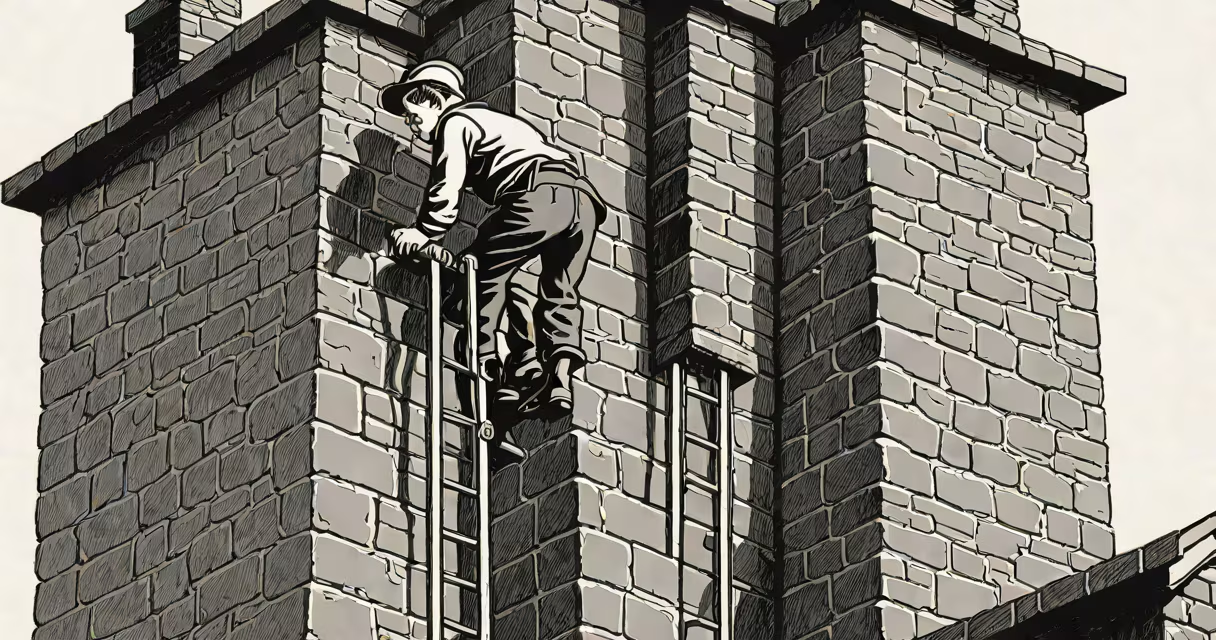
The chimney sweeper William Blake is a central figure in a poem from William Blake's 1789 collection Songs of Innocence, portraying a young boy sold into dangerous chimney-cleaning work. The poem uses stark imagery and irony to expose the exploitation of children in 18th-century Britain, where poverty and industrial demand led to widespread use of child labor.
Blake wrote the poem during a period when chimney sweeping was a common occupation for boys under ten. Families often sold their children to master sweepers, who paid little or nothing for their labor. These boys crawled through narrow flues, risking suffocation, burns, and long-term lung damage. The poem reflects this reality while embedding religious imagery to critique institutional complicity.
Blake's work is not a literal biography of a single individual but a literary representation of systemic injustice. The boy in the poem speaks in innocence, believing his suffering will be rewarded in heaven-a belief Blake challenges through irony. His death is framed as a spiritual victory, yet the poem reveals the tragedy of a society that accepts such suffering as normal.
The poem is written in quatrains with a simple AABB rhyme scheme, mimicking nursery rhyme cadence. This contrast between form and subject intensifies the emotional impact. The speaker is a young boy, likely seven or eight, whose father sold him into service after his mother died.
He begins with a dream: "I was locked in a tomb." He sees other boys in coffins, which represent both their literal fate and the metaphorical imprisonment of childhood. When he wakes, he finds himself in a churchyard, where the sweepers are "brought out" to clean chimneys. The church, a place of salvation, becomes a site of moral failure-its rituals do not protect the vulnerable.
Blake uses biblical language to subvert expectations. The boy says, "And so my soul was saved," suggesting that faith offers comfort. But the line is undercut by context: salvation is promised in the afterlife, not in this life. The poem doesn't offer redemption-it exposes the lie that suffering is justified by divine plan.
Blake included two versions of the chimney sweeper-one in Songs of Innocence (1789) and another in Songs of Experience (1794). They differ in tone and perspective.
| Version | Publication Year | Tone | Key Contrast |
|---|---|---|---|
| Songs of Innocence | 1789 | Naïve, hopeful | Boy believes God will reward him; suffering is temporary. |
| Songs of Experience | 1794 | Cynical, bitter | Boy knows he's trapped; religion is a tool of oppression. |
The Experience version shows a boy who has lost faith. He says, "They clothed me in rags," implying that even basic dignity is denied. The church is not a sanctuary but a place where children are "baptized" into servitude. The difference between the two poems illustrates Blake's view of how innocence is corrupted by social structures.
The poem remains widely taught in schools and universities as a critique of child labor and religious hypocrisy. It appears in anthologies of British Romantic poetry and is referenced in discussions about social justice, labor rights, and the ethics of art.
Modern adaptations include theatrical performances, visual art exhibitions, and documentary films. For example, the 2018 BBC series Blake's London featured a dramatization of the poem, showing how historical conditions shaped Blake's vision. The episode highlighted that in 1780, over 200 children were estimated to die annually from chimney accidents.
Academic analysis confirms Blake's accuracy. According to historian British History Online, chimney sweeps were legally required to undergo inspections, but enforcement was weak. Many boys were apprenticed without consent, and records show that some were kept in bondage until adulthood.
Many assume the poem is autobiographical. Blake never worked as a chimney sweeper. He was born in 1757 to a hosier and studied art in London. His exposure came through observation and reading-not personal experience. Yet he captured the emotional truth of child labor with precision.
Another misconception is that the boy in the poem dies. The text does not state his death explicitly. The line "And so my soul was saved" suggests survival, but the ambiguity is intentional. Blake leaves open whether salvation is real or a delusion. This uncertainty forces readers to confront their own assumptions about suffering and grace.
A lesser-known fact: Blake originally illustrated the poem with engravings. In the original 1789 edition, the boy is shown standing in a field, wearing a red cap and carrying a brush. The image contrasts the boy's youth with the grimness of his task. The red cap was a marker of status among sweepers-visible from afar, a sign of their trade.
I once stood before the original 1789 print of The Chimney Sweeper at the Morgan Library & Museum in New York. The ink was faint, the paper thin. The boy's face was rendered with delicate lines-eyes wide, mouth slightly open. There was no smile. No joy. Just quiet endurance. That moment confirmed how powerfully Blake compressed grief, hope, and accusation into a single image.
The chimney sweeper William Blake is not a historical person. He is a literary construct. Other poets, such as William Wordsworth and Elizabeth Barrett Browning, wrote about child labor, but none matched Blake's fusion of lyrical form and political urgency.
Some confuse Blake's poem with Charles Dickens' Oliver Twist, published in 1837. While both address child exploitation, Dickens presents a narrative with plot and resolution. Blake's poem is fragmented, dreamlike, and unresolved. It refuses closure-just as the system it critiques refuses to reform.
Understanding the chimney sweeper William Blake requires seeing beyond the surface. The poem is not just about a boy cleaning chimneys. It is about silence, complicity, and the cost of turning away. Its enduring power lies in asking, not answering: Who benefits when children suffer?