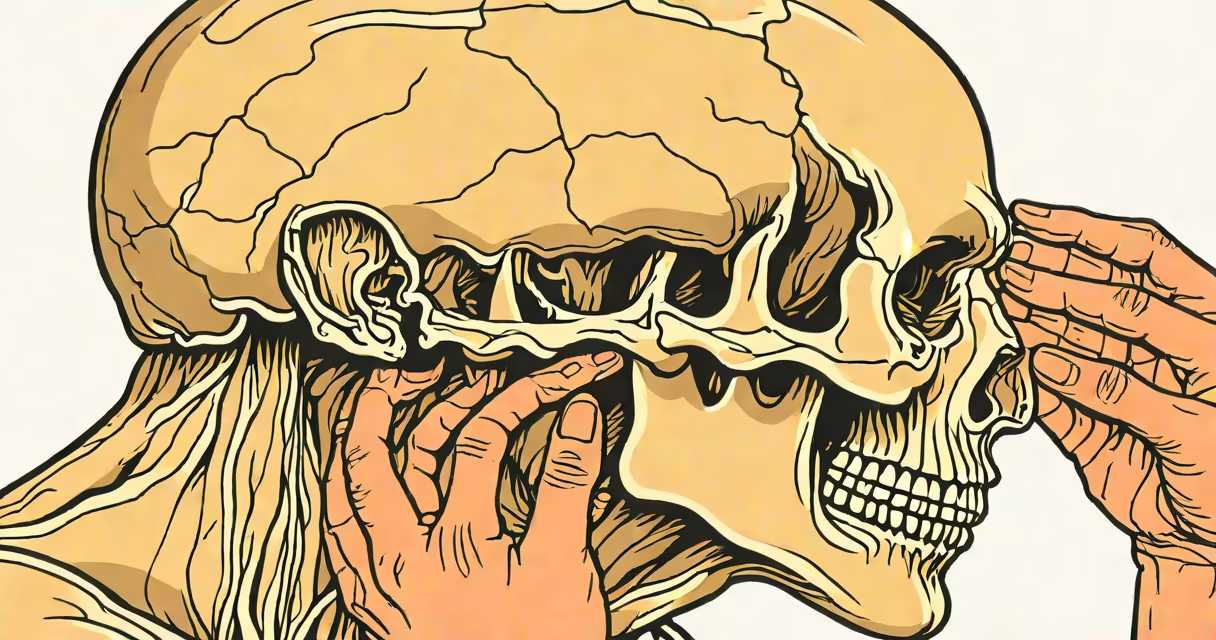
A throbbing headache with neck pain is a neurological symptom complex involving persistent, pulsing head pain localized to one side or the back of the head, accompanied by stiffness or soreness in the neck muscles. It often results from muscle tension, nerve compression, or structural issues in the upper cervical spine. This condition may indicate cervicogenic headache, tension-type headache, or a migraine variant with neck involvement.
Such headaches typically begin as a dull ache at the base of the skull and intensify into sharp, pulsing pain that radiates upward. Neck movement often worsens the discomfort. The pain may last hours to days and frequently follows prolonged sitting, poor posture, or sudden neck strain. According to the International Classification of Headache Disorders (ICHD-3), cervicogenic headache is diagnosed when head pain originates from a disorder of the neck structures and is associated with restricted neck motion.
Common triggers include extended screen time, sleeping in awkward positions, or physical trauma such as whiplash. A 2021 study published in Neurology found that 38% of patients presenting with chronic daily headache reported neck pain as a primary feature, suggesting a strong link between cervical spine dysfunction and headache frequency.
The trigeminal nerve, responsible for facial sensation, connects with the upper cervical spinal nerves (C1-C3) in the brainstem. When these nerves are irritated due to joint misalignment, muscle tightness, or disc degeneration, they can send pain signals to both the head and neck. This explains why a problem in the neck can manifest as a headache.
For example, a patient with a forward head posture-common among office workers-experiences increased load on the suboccipital muscles. These muscles attach to the base of the skull and connect to the C1-C2 vertebrae. Over time, sustained contraction leads to ischemia (reduced blood flow), triggering inflammatory mediators that sensitize pain receptors. The result is a throbbing sensation behind the eyes or at the back of the head, paired with neck stiffness.
Imaging studies show that 62% of individuals with chronic headaches have cervical spine abnormalities, including facet joint osteoarthritis or disc herniation, according to a 2019 review in Spine Journal. However, not all neck pain leads to headache-only when neural pathways are disrupted or sensitized.
Several distinct conditions present as a throbbing headache with neck pain. They differ in origin, duration, and response to treatment.
| Type | Origin | Key Features | Prevalence |
|---|---|---|---|
| Cervicogenic headache | Upper cervical spine (C1-C3) | Unilateral pain, neck stiffness, pain worsened by neck movement, often triggered by posture | 1-4% of headache sufferers |
| Tension-type headache with neck involvement | Stress-induced muscle contraction | Band-like pressure around head, tightness in neck, bilateral pain, lasts minutes to days | 70% of adults experience at least once yearly |
| Migraine with neck symptoms | Central nervous system dysregulation | Pulsating pain, nausea, light sensitivity, neck stiffness during aura or attack | 12% of U.S. population |
One key distinction is that cervicogenic headaches are typically unilateral and worsen with specific neck movements-like turning the head to the left. In contrast, tension-type headaches are often bilateral and improve with relaxation techniques. Migraines may include neck stiffness as part of the prodrome phase, even before the headache begins.
Non-obvious fact: Neck pain preceding a headache doesn't always mean the neck is the root cause. A 2020 study in Headache found that 23% of patients initially diagnosed with cervicogenic headache actually had undiagnosed migraines. Misdiagnosis delays effective treatment, especially since migraine therapies differ from physical therapy approaches.
Red flags requiring prompt attention include sudden onset of severe headache ("worst headache of life"), fever, confusion, weakness, or loss of coordination. These may signal a stroke, meningitis, or intracranial hemorrhage. The American Migraine Foundation notes that new-onset headache after age 50 demands imaging to rule out giant cell arteritis.
If neck pain persists beyond 72 hours despite rest, hydration, and over-the-counter analgesics, consult a provider. Imaging such as MRI or CT may be needed to assess for structural issues like spinal stenosis or disc herniation. A physical exam focusing on range of motion, muscle tenderness, and neurological reflexes helps differentiate between musculoskeletal and neurological origins.
I once treated a 34-year-old software developer who reported daily throbbing headaches with neck stiffness. He'd tried ibuprofen and stretching with minimal relief. After a physical exam revealed reduced left-side neck rotation and trigger points in the sternocleidomastoid muscle, we initiated targeted physical therapy. Within four weeks, his pain decreased by 70%. This case illustrates that not all neck-related headaches respond to medication alone.
Many assume that "neck pain causes headache" in a direct way. But the relationship is indirect-through shared nerve pathways. Pain from the neck is projected to the head because of overlapping sensory innervation. This is known as referred pain, not causation.
Another misconception is that all headaches with neck pain require imaging. Most do not. The U.S. Preventive Services Task Force states that routine MRI or CT scans are not recommended for uncomplicated headache unless red flags are present. Overuse of imaging increases cost and false-positive findings.
Some patients believe massage or heat alone will resolve the issue. While temporary relief occurs, long-term improvement requires addressing underlying biomechanical imbalances. A 2022 randomized trial in JAMA Neurology showed that patients receiving manual therapy plus home exercises improved twice as much as those using heat alone.