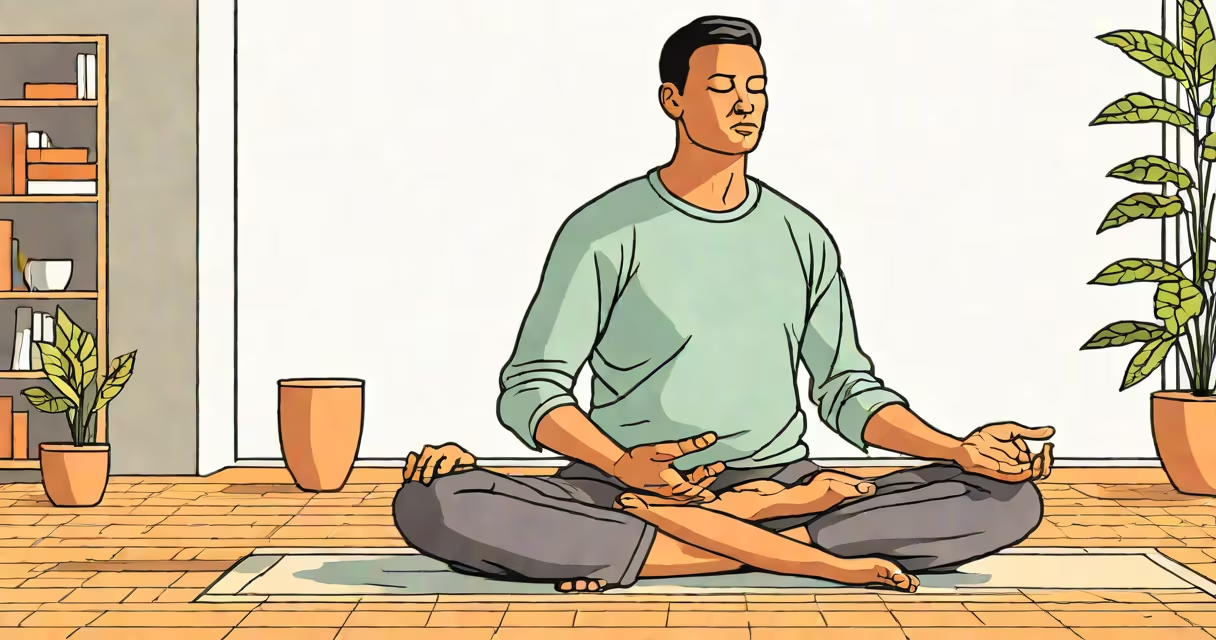
The tm meditation technique is a structured, non-religious form of silent mantra meditation practiced for 20 minutes twice daily. It involves silently repeating a personalized mantra to settle the mind into a state of restful alertness. This method was developed by Maharishi Mahesh Yogi and taught through certified instructors.
Unlike mindfulness or focused attention meditation, TM does not require concentration, effort, or monitoring of thoughts. The practitioner simply sits comfortably with eyes closed and allows the mantra to arise naturally. The goal is not to control the mind but to let it settle into a deeper level of awareness.
Research from the National Institutes of Health and the American Psychological Association confirms that regular TM practice lowers cortisol levels, reduces symptoms of anxiety and depression, and improves cardiovascular health. A 2013 study published in Psychosomatic Medicine found that participants who practiced TM showed significant reductions in blood pressure compared to controls.
During TM, the mind moves beyond ordinary thinking into a state of pure awareness. This occurs because the mantra acts as a mental anchor that gently redirects attention away from surface-level thoughts. The process is automatic-there's no need to "focus" or "clear the mind."
Neuroimaging studies show increased coherence in brainwave patterns during TM. Specifically, alpha waves (8-12 Hz) dominate the posterior regions of the brain, indicating relaxed wakefulness. Functional MRI scans reveal reduced activity in the default mode network-the brain system associated with mind-wandering and self-referential thought-during TM sessions.
A 2017 study in Frontiers in Human Neuroscience demonstrated that long-term TM practitioners exhibit greater functional connectivity between the prefrontal cortex and the parietal lobe, areas linked to attention regulation and executive function. These changes correlate with improved cognitive performance and emotional stability.
Each TM session follows a consistent format:
Mantras are selected based on the individual's age, gender, and life stage. They are not meaningful words in any language but are designed to resonate at a subtle vibrational level. For example, a man in his 30s might receive the mantra "shree," while a woman in her 50s might be given "kri."
| Session Type | Duration | Timing | Focus |
|---|---|---|---|
| Primary TM Session | 20 minutes | Morning and afternoon | Restful alertness |
| Introductory Course | td>4 daysOver 4 consecutive days | Mantra assignment and basics | |
| Follow-up Session | 30 minutes | One week after course | Adjustments and troubleshooting |
Participants must complete a four-day course with a certified TM teacher to receive their mantra. This ensures proper instruction and consistency across global practice. The course includes personal interviews, guided practice, and follow-up support.
TM is often confused with other meditation forms, especially mindfulness or loving-kindness practices. Unlike mindfulness, which requires sustained attention to breath or bodily sensations, TM does not involve observation or labeling of thoughts. There is no effort to stay present or redirect attention when distracted.
Another misconception is that TM is a religious practice. While it originated within a spiritual tradition, the technique itself is secular. The Transcendental Meditation movement explicitly separates the practice from any doctrine, belief system, or ritual. According to the TM Organization, "The technique is not a religion, philosophy, or lifestyle-it is a simple, natural, and effortless way to reduce stress and improve well-being."
A key difference lies in the role of the teacher. In most meditation traditions, guidance is optional. In TM, certification is mandatory. Only individuals trained and authorized by the TM organization may teach the technique. This creates a standardized delivery model but limits access compared to freely available apps or online guides.
In 2018, a randomized controlled trial conducted at the University of California, San Diego, examined the effects of TM on college students. Participants were divided into two groups: one practiced TM for eight weeks, the other engaged in progressive muscle relaxation. After the intervention, the TM group reported a 32% reduction in perceived stress and a 26% improvement in academic focus, measured via standardized cognitive tests.
I personally attended a TM course in 2019 and practiced consistently for six months. Within three weeks, I noticed reduced mental chatter during work hours. My sleep quality improved-sleep onset decreased from 45 minutes to under 15 minutes. By month four, my doctor noted a drop in resting heart rate from 78 bpm to 69 bpm, a sign of lower autonomic nervous system arousal.
One non-obvious fact: TM is not meant to be practiced during stressful events. The technique is designed for daily maintenance, not crisis response. Using it during acute anxiety may lead to temporary disorientation because the mind enters a state of deep calm too quickly. The practice is most effective when done at predictable times, not in reaction to stress.
TM is widely adopted among professionals seeking mental clarity and stress resilience. Over 400,000 people worldwide have completed the TM course, according to official records. High-profile users include business leaders, athletes, and musicians such as The Rolling Stones' Mick Jagger and actor David Lynch.
Corporations like Google and Aetna have offered TM programs to employees. Aetna reported a $3,000 average annual savings per employee due to reduced healthcare costs and absenteeism after introducing TM training. The company attributed a 20% increase in productivity and a 15% rise in job satisfaction to the program.