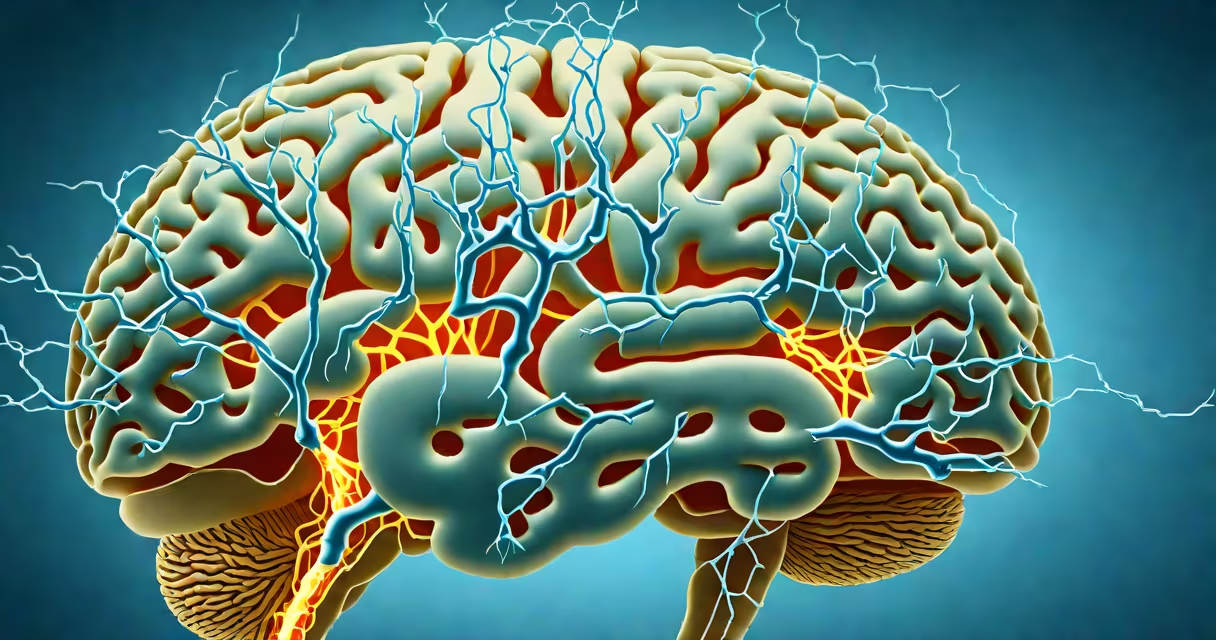
Mentation refers to the internal cognitive processes involved in thinking, reasoning, perception, memory, and decision-making. Clinicians use this term to describe observable or inferred mental states during evaluation, particularly in psychiatry and neurology.
The term appears in diagnostic manuals such as the DSM-5 (Diagnostic and Statistical Manual of Mental Disorders, Fifth Edition), where it helps define symptoms related to altered consciousness, attention, or executive function. For example, a patient reporting "I can't focus" may be described as having impaired mentation, indicating difficulties in sustained attention or processing speed.
Mentation is not a standalone diagnosis. Instead, it's a descriptor used within clinical assessments to characterize mental state changes. It often appears in structured interviews, mental status exams, and electronic health records to document shifts in cognitive performance over time.
Clinicians evaluate mentation through direct observation and standardized tools. A typical mental status exam includes questions about orientation (who, where, when), memory recall, attention span, and ability to follow commands. These components collectively reflect mentation.
For instance, a doctor might ask a patient: "What is the current date?" or "Repeat these three words after me." A failure to correctly identify the day or forget the words indicates impaired mentation. The results are documented using formal scales like the Mini-Mental State Examination (MMSE) or the Montreal Cognitive Assessment (MoCA).
Neuroimaging and neuropsychological testing further support objective assessment. Functional MRI scans can show reduced activity in prefrontal regions during tasks requiring working memory-common findings in patients with depression or early-stage dementia.
Abnormal mentation manifests in several forms, each linked to distinct underlying conditions. The most common categories include:
| Type | Description | Common Causes |
|---|---|---|
| Impaired attention | Difficulty focusing or sustaining concentration | ADHD, sleep deprivation, traumatic brain injury |
| Disorganized thinking | Speech or thought patterns lack logical flow | Schizophrenia, severe mood episodes |
| Reduced processing speed | Slower response times to cognitive tasks | Aging, multiple sclerosis, hypothyroidism |
| Memory deficits | Inability to retain or retrieve information | Alzheimer's disease, stroke, substance use |
Each category requires different diagnostic pathways. For example, disorganized thinking may prompt a psychiatric evaluation, while memory deficits often lead to neurology referral and imaging.
Mentation is frequently confused with mood or affect. Mood refers to emotional state-"I feel sad"-while mentation addresses cognitive function-"I can't remember my appointment." Confusing the two leads to misdiagnosis. A patient with major depressive disorder may report poor concentration (impaired mentation), but their core issue lies in mood regulation, not cognition.
Another misconception is equating mentation with intelligence. A person with high IQ can still exhibit acute mentation impairment due to fever, infection, or medication side effects. Conversely, someone with low baseline cognitive ability may maintain stable mentation under normal conditions.
Mentation is not synonymous with psychosis. Psychosis involves loss of contact with reality-hallucinations, delusions-but mentation remains intact in many cases. A patient experiencing auditory hallucinations may still answer questions accurately and maintain coherent thought, meaning their mentation is preserved despite psychotic symptoms.
Consider a 68-year-old man presenting with confusion, forgetfulness, and difficulty managing medications. His primary care provider conducts a mental status exam:
These findings indicate significant mentation impairment. Further testing reveals hippocampal atrophy on MRI and elevated amyloid levels in cerebrospinal fluid. The diagnosis is mild cognitive impairment due to Alzheimer's disease, a condition marked by progressive decline in mentation.
This case illustrates that mentation is not a single trait but a cluster of measurable functions. Its deterioration signals neurological progression, guiding treatment decisions and care planning.
One non-obvious point: mentation can fluctuate rapidly. A patient with sepsis may have near-normal mentation at rest but deteriorate quickly during physical exertion or stress. This variability underscores the need for repeated assessments rather than relying on a single snapshot.
Another key insight: certain medications alter mentation without causing permanent damage. Benzodiazepines, antihistamines, and opioids can impair attention and memory acutely. Discontinuing these drugs often restores mentation within hours to days-a reversal that highlights the role of reversible factors in cognitive performance.
I once observed a patient in a hospital setting who appeared lucid during morning rounds but became disoriented by afternoon. Rechecking medication logs revealed a dose increase of diphenhydramine (Benadryl) for sedation. After reducing the dose, mentation returned to baseline. This case reinforced that mentation is changing and sensitive to pharmacological influence.
For accurate interpretation, clinicians rely on guidelines from the American Psychiatric Association and the National Institute of Neurological Disorders and Stroke. Both emphasize that mentation must be evaluated contextually-considering medical history, medication list, and environmental factors.
When evaluating mentation, clinicians avoid labeling patients based on isolated observations. Instead, they integrate data from multiple sources: patient reports, caregiver input, lab tests, and imaging. This multidimensional approach ensures reliable assessment.
Understanding mentation medical term enables clearer communication between healthcare providers and patients. It grounds subjective experiences in measurable cognitive domains, supporting earlier detection of neurological and psychiatric conditions.