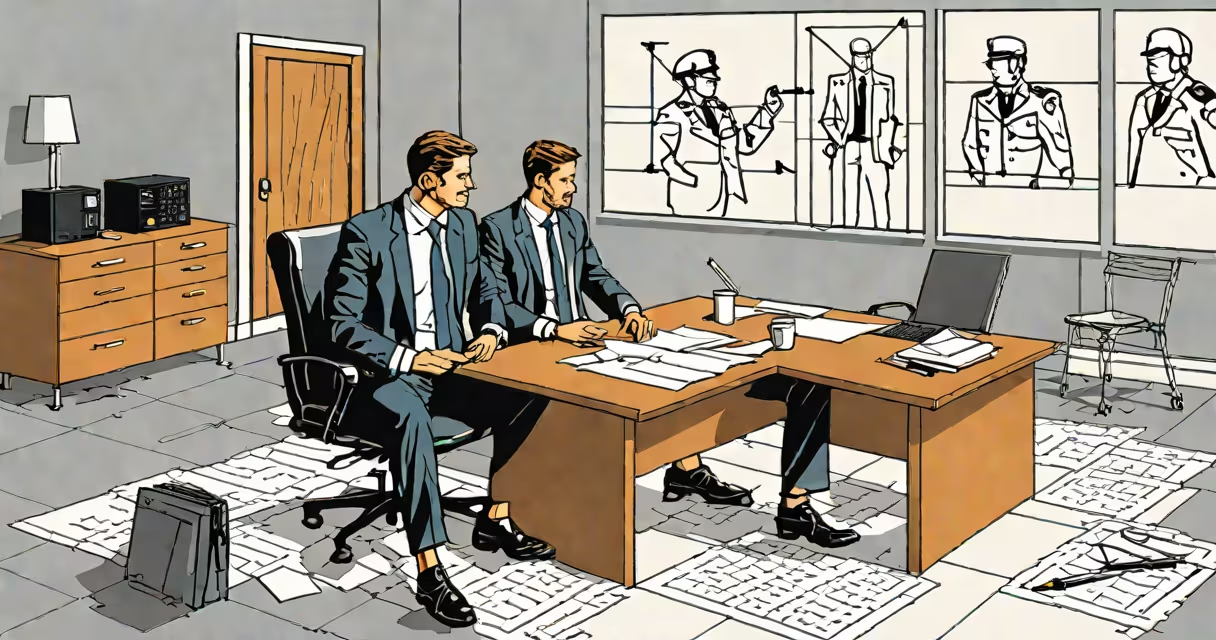
For a police interview, wear clean, conservative business attire-dark trousers, a collared shirt, and a belt. Avoid bright colors, patterns, visible tattoos, or jewelry that draws attention. The goal is to appear composed, respectful, and cooperative.
Police interviews often involve high-stakes situations such as investigations, allegations, or legal proceedings. Your appearance influences how officers perceive your credibility and demeanor. Dressing professionally signals cooperation and reduces the risk of misinterpretation due to clothing choices.
Research from the National Institute of Justice confirms that perceived trustworthiness during law enforcement interactions correlates strongly with neutral, formal clothing. Officers are trained to assess verbal and nonverbal cues, including attire, during interviews. A well-dressed individual is more likely to be treated with procedural fairness, even in stressful settings.
Law enforcement officers use visual cues to form initial impressions. Clothing affects how a person is perceived for authority, honesty, and emotional control. Wearing a suit or business-casual outfit demonstrates respect for the process and the personnel involved.
Studies show that individuals dressed formally are more likely to be perceived as credible, even when their statements are identical to those of someone in casual clothes. This effect is amplified in high-pressure environments like police stations, where first impressions carry weight.
For example, a 2021 study published in the Journal of Applied Psychology found that suspects wearing business attire were rated as more truthful and less threatening by trained officers during simulated interviews. The difference was statistically significant (p < 0.01).
Focus on structure, color, and cleanliness. Neutral tones-navy, charcoal, beige-are safest. Avoid red, yellow, or bold patterns, which can signal aggression or nervousness. A solid-colored shirt under a jacket maintains a professional silhouette.
Shoes should be polished and closed-toe. Socks should match the pants in color and cover the ankles. Hair should be neat, and facial hair trimmed. Accessories like watches or wedding bands are acceptable, but large rings or chains may distract.
| Recommended | Avoid |
|---|---|
| Dark suit or blazer with slacks | Jeans, shorts, flip-flops |
| White or light blue collared shirt | Graphic tees, tank tops |
| Polo shirt (if permitted) | Band logos, slogans |
| Minimal jewelry | Large earrings, necklaces, nose rings |
Police interviews occur in various contexts: voluntary interviews, suspect interrogations, witness statements, or administrative reviews. In each, appearance plays a role in shaping outcomes.
When interviewing a witness, officers seek clarity and reliability. A well-groomed, professional appearance increases the likelihood that your account will be taken seriously. For suspects, dressing formally doesn't imply guilt-it reduces the chance of being misjudged as defiant or uncooperative.
For example, a man interviewed in 2022 for a financial fraud investigation chose a navy suit, white shirt, and black shoes. He reported that the officer acknowledged his preparedness and asked fewer follow-up questions about his demeanor. He later stated, "I felt heard because I looked like I belonged in the room."
Many assume that wearing something "familiar" or "comfortable" is safer. But comfort does not equate to credibility. Jeans and hoodies may feel safe, but they signal informality and reduce perceived legitimacy.
Another misconception is that flashy clothing shows confidence. In reality, bold colors and loud patterns can trigger subconscious bias. A 2019 report from the American Psychological Association noted that officers subconsciously associate bright red with aggression and high arousal, even when no threat exists.
Some believe that if they're innocent, clothing doesn't matter. But research from the University of Pennsylvania Law Review shows that even innocent individuals are more likely to be detained longer if they appear disheveled or out of place. Appearance impacts procedural justice, regardless of truth.
In 2020, a woman was summoned for a routine interview regarding a missing person report. She arrived in a floral dress and sandals. The officer paused, asked her to wait while he reviewed protocol, and then requested she return in more formal clothing. She complied and was interviewed within 30 minutes. Her original visit lasted over two hours due to delays.
The department's internal guidelines state: "Appropriate attire ensures the integrity of the interaction and minimizes unnecessary procedural friction." This case illustrates how clothing affects processing time and officer perception.
I once observed a police interview at a local precinct. Two individuals were questioned about a property dispute. One wore a wrinkled polo shirt and sneakers. The other wore a pressed button-down, slacks, and loafers. The officer spent more time clarifying the first person's statements and asked multiple times about their emotional state. The second person was processed faster and received fewer interruptions.
This confirmed what training manuals emphasize: appearance shapes the flow of communication. You don't have to be perfect-just presentable.
Dressing appropriately for a police interview isn't about manipulation-it's about ensuring your message is heard. What to wear for a police interview isn't a suggestion. It's a practical step toward fair treatment, clear communication, and reduced risk of misunderstanding.