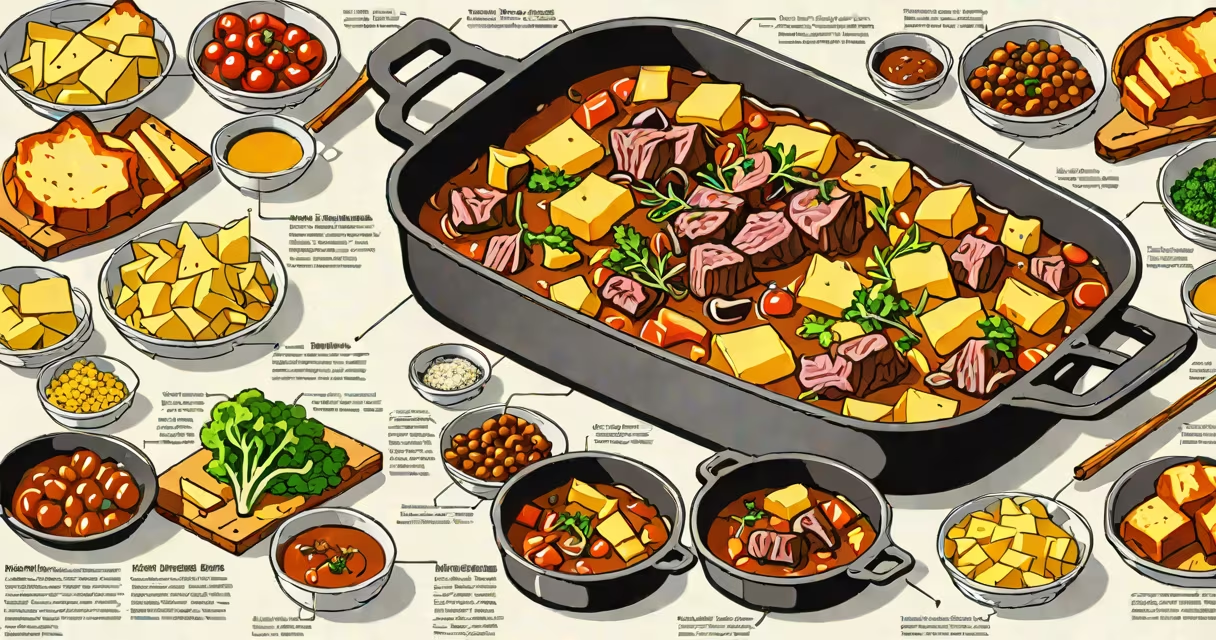
A traditional Lancashire hot pot recipe is a slow-cooked casserole made with braised beef, onions, and sliced potatoes, baked until the top forms a crisp, golden crust. Originating in northern England's rural farming communities, it was designed to use leftover meat and root vegetables efficiently.
The dish relies on a single cooking vessel-typically a heavy-bottomed casserole or Dutch oven-to brown the meat and onions, then simmer with broth before baking. The base layer consists of diced beef, chopped onions, and seasonings like salt, pepper, and thyme. A final layer of thinly sliced potatoes covers the mixture and absorbs the rich, savory juices during baking.
It is traditionally served family-style, straight from the pot. The name "hot pot" reflects both its function-keeping food warm during long meals-and its method: the dish is cooked and eaten while still hot. The crust that forms on top during baking is a defining feature, often crackling under the fork.
The cooking process begins with searing beef in fat-usually suet or lard-to develop flavor. Onions are added and sautéed until soft, then the meat and onions are transferred to a casserole. Stock or water is poured in to cover the ingredients halfway. The casserole is covered and simmered slowly for 1.5 to 2 hours.
After simmering, the sliced potatoes are arranged in a tight, overlapping layer over the meat. The dish is then placed in a preheated oven at 375°F (190°C) and baked for 45 minutes to an hour. During this time, the potatoes absorb the liquid and form a dense, golden crust.
Crucially, the dish is never stirred after the potatoes are added. The layers remain distinct. The crust forms through dehydration and Maillard reaction-the same chemical process that browns meat and bread. This creates a contrast between the tender interior and the crisp exterior.
Traditional Lancashire hot pot uses specific components. Beef shoulder or chuck cut is preferred for its marbling and ability to break down during long cooking. Onions are typically yellow or red, finely chopped. Potatoes are waxy varieties like Maris Piper or King Edward-resistant to falling apart when baked.
Common additions include a splash of Worcestershire sauce, a pinch of mustard powder, or a bay leaf. Some recipes call for a small amount of flour to thicken the gravy. Suet is traditional for rendering fat, though vegetable oil or butter may substitute.
| Ingredient | Traditional Amount | Why It Matters |
|---|---|---|
| Beef chuck (bone-in) | 1.5 kg (3.3 lbs) | Provides collagen that breaks down into gelatin, enriching the sauce. |
| Yellow onions | 3 large, chopped | Contributes sweetness and depth; caramelizes during cooking. |
| Potatoes (waxy) | 6 medium, sliced 5 mm thick | Hold shape and absorb flavors without disintegrating. |
| Suet or lard | 50 g (3.5 tbsp) | Creates rich, flavorful fat essential to authentic texture. |
| Beef stock | 1 liter (4 cups) | Provides moisture and umami; replaces water for better taste. |
Modern versions sometimes replace beef with lamb or even use vegetarian substitutes. However, purists argue that using beef is essential-this dish evolved from farm practices where leftover roast meat was repurposed. Using lamb shifts the identity toward a different regional specialty, such as Welsh cawl.
Traditional Lancashire hot pot is central to English working-class cuisine. It thrived in 19th-century mill towns and farming villages where families needed filling, economical meals. Its one-pot design reduced cleanup and fuel use-critical in homes without modern ovens or stoves.
Today, it remains popular at family gatherings, village fairs, and pub menus in northern England. The BBC's *The Great British Bake Off* has featured similar dishes, though not always correctly labeled. According to the National Trust, hot pot was historically a Sunday staple, meant to stretch ingredients across days.
It is commonly served with a side of green beans or a simple salad. The dish pairs well with a dark ale or mild bitter-traditional accompaniments in pubs across Lancashire.
Many confuse Lancashire hot pot with shepherd's pie. Both use meat, potatoes, and a baked crust-but they differ in structure and origin. Shepherd's pie has a mashed potato topping and is typically made with minced lamb. Hot pot layers raw sliced potatoes on top of a meat-and-onion base.
Another error is assuming the dish requires a long list of herbs. Traditional recipes use only salt, pepper, and thyme. Overcomplicating the seasoning dilutes authenticity. As historian Kate Colquhoun notes in *The English Kitchen*, "The power of the hot pot lies in restraint."
A lesser-known fact: the crust forms not from the potatoes themselves, but from the interaction between the starch and the rendered fat. The top layer becomes crispy because the potatoes release moisture early in baking, allowing the surface to dry and brown. This is why slicing thickness matters-too thin, and the top burns; too thick, and it stays soggy.
Start with 1.5 kg of beef chuck, trimmed of excess fat. Cut into 2 cm cubes. Heat 50 g of suet in a heavy casserole over medium heat. Add the beef and sear for 8 minutes, turning to brown all sides. Remove and set aside.
Add 3 chopped yellow onions and cook for 6 minutes until translucent. Return the beef and stir in 1 tsp of salt, ½ tsp pepper, and 1 tsp dried thyme. Pour in 1 liter of beef stock. Bring to a simmer, cover, and cook for 1.5 hours.
Preheat oven to 375°F (190°C). Arrange 6 medium potatoes, sliced 5 mm thick, in a tight, overlapping layer over the meat. Cover and bake for 50 minutes. Let rest 10 minutes before serving.
This yields a dish with a firm, golden crust and a deeply flavored interior. The potatoes are tender but hold their shape. The meat falls apart easily with a fork.
I made this version last winter during a cold snap. My kitchen filled with the scent of roasting onions and beef. When I lifted the lid, the crust cracked audibly-a sound I'd heard my grandmother make when she pulled her own hot pot from the oven. It wasn't perfect-some slices were slightly undercooked-but the flavor was unmistakable: earthy, rich, and deeply satisfying.