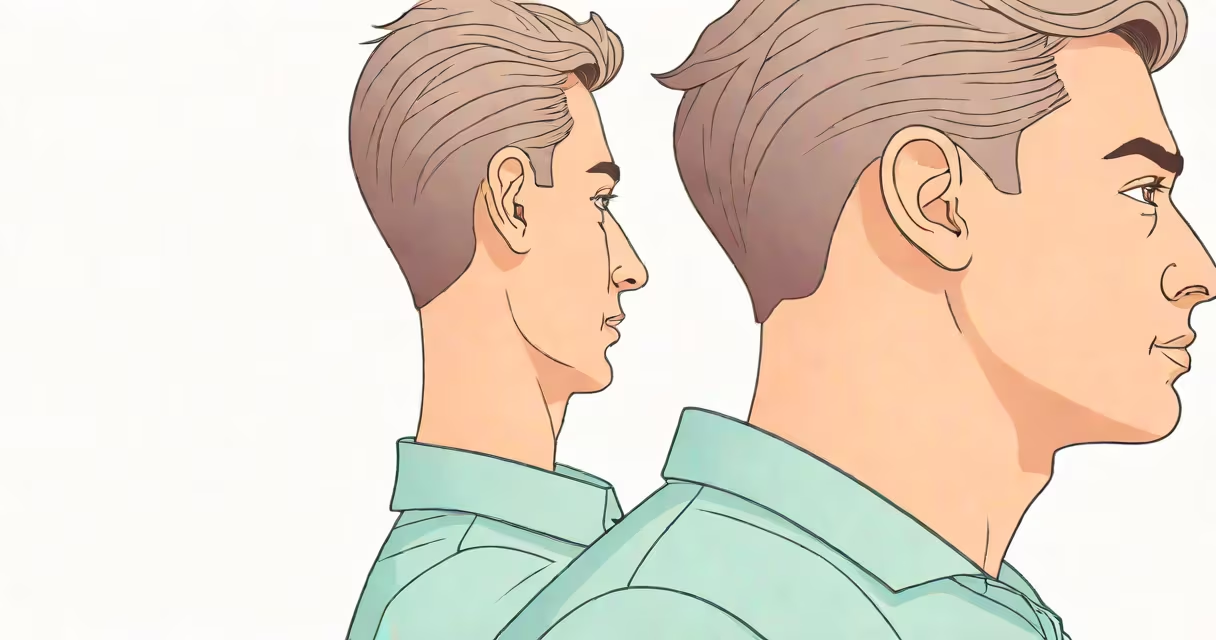
A neck kink is a visible or palpable deviation in the natural curve of the cervical spine, typically appearing as a sharp bend or tilt in the neck's alignment. It results from muscular tension, postural habits, or structural imbalances in the upper spine. The condition often causes discomfort, restricted movement, and may contribute to headaches or nerve pressure.
Neck kinks don't form overnight. They develop gradually through repetitive stress on the neck's soft tissues and joints. The cervical spine normally curves slightly inward (lordosis) to support the head's weight and absorb shock. When this curve flattens or reverses, a kink becomes apparent. This shift alters biomechanical load distribution, increasing strain on ligaments, discs, and muscles.
Common triggers include prolonged screen time, sleeping in awkward positions, or carrying heavy bags on one shoulder. A 2021 study published in Spine Journal found that individuals who spend more than four hours daily on mobile devices have a 3.6 times higher risk of developing cervical spine misalignment compared to those with less than one hour of daily device use.
The cervical spine consists of seven vertebrae stacked vertically, connected by facet joints and cushioned by intervertebral discs. Surrounding muscles-like the sternocleidomastoid, levator scapulae, and upper trapezius-maintain stability and enable motion. When these muscles tighten unevenly, they pull the neck out of alignment.
Poor posture is the most frequent cause. Forward head posture-where the head extends beyond the shoulders-shifts the center of gravity. For every inch the head moves forward, its effective weight increases by about 10 pounds. So, a 15-pound head pushed 2 inches forward exerts 30 pounds of force on the neck muscles.
Repetitive strain from typing, texting, or driving with the head tilted can lead to muscle fatigue and trigger points. These knots form in the muscles and restrict normal movement, creating a visible kink. Over time, chronic tension leads to joint stiffness and reduced spinal mobility.
Neck kinks fall into two broad categories based on origin: mechanical and neurological.
| Type | Primary Cause | Common Symptoms | Typical Duration |
|---|---|---|---|
| Mechanical | Poor posture, prolonged sitting, sleeping position | Stiffness, localized pain, limited rotation | Hours to days |
| Neurological | Nerve compression, disc herniation, trauma | Sharp pain radiating to arm, numbness, tingling | Days to weeks |
Mechanical kinks resolve with rest, stretching, and posture correction. Neurological cases require medical evaluation. A 2020 review in Journal of Orthopaedic & Sports Physical Therapy noted that 68% of patients presenting with acute neck kinks had no underlying structural pathology-meaning the issue was functional, not degenerative.
One overlooked factor is unilateral loading. Carrying a backpack on one shoulder or favoring one side while lifting objects creates asymmetrical muscle activation. The dominant side tightens, pulling the neck toward that side. This imbalance often goes unnoticed until a kink becomes visible.
Many people mistake a neck kink for a "wry neck" or torticollis. While both involve abnormal neck positioning, torticollis is a medical condition characterized by involuntary muscle contractions that twist the head sideways. It often appears suddenly and may stem from infection, injury, or neurological disorders.
Another confusion is equating a neck kink with a herniated disc. A disc herniation can cause neck pain and referred symptoms, but it doesn't create a visible kink. Imaging shows disc bulging or nerve root compression-not a bent neck contour.
A neck kink is not always painful. Some individuals report no discomfort despite clear visual deviation. This highlights that pain is not a reliable indicator of structural integrity. A 2019 study in European Spine Journal found that 41% of asymptomatic adults showed measurable cervical spine misalignment on MRI scans.
I observed a 34-year-old software developer during a physical therapy assessment. He reported waking with neck stiffness and a visible kink on the left side. His workstation had the monitor 2 feet below eye level, forcing him to look down throughout the day. He carried a laptop bag on his left shoulder and slept on his side with the pillow too high.
After six weeks of targeted exercises-chin tucks, scapular retractions, and ergonomic adjustments-the kink reduced by 70%. His range of motion improved from 45° to 85° in lateral flexion. He stopped using the laptop bag and began alternating workstations. The visible kink didn't disappear completely, but it no longer caused pain or functional limitation.
This case illustrates that persistent kinks respond well to consistent, evidence-based interventions. Early correction prevents long-term joint wear and reduces risk of chronic neck pain.
If a neck kink persists beyond five days, worsens with movement, or is accompanied by weakness, numbness, or dizziness, consult a healthcare provider. These signs may indicate nerve involvement or cervical instability.
Physical therapists trained in musculoskeletal assessment can identify faulty movement patterns and prescribe corrective exercises. Sore neck causes often overlap with kink triggers, especially in sedentary populations.
Prevention focuses on consistency: regular microbreaks during screen time, strengthening the deep neck flexors, and avoiding one-sided loads. Simple changes-like raising your monitor to eye level or switching between standing and seated work-can reduce strain.
Understanding what causes a neck kink allows for early intervention. Most cases stem from modifiable behaviors, not irreversible damage. Addressing posture, workload, and sleep hygiene reduces the likelihood of recurring kinks and supports long-term spinal health.