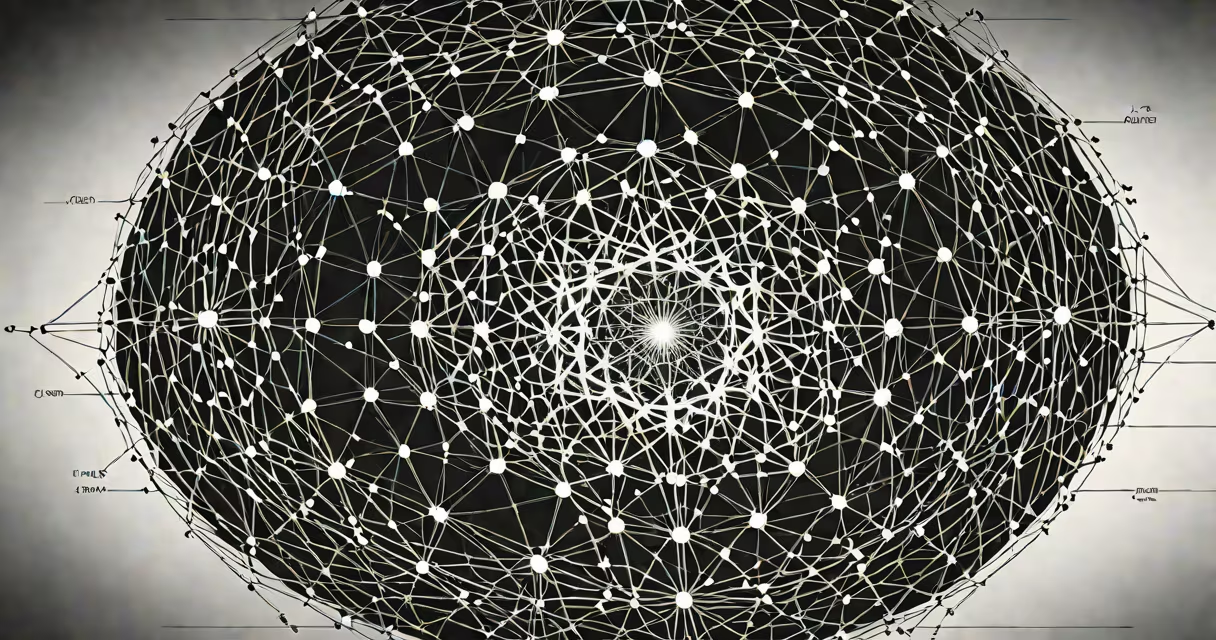
A time crystal is a state of matter that exhibits periodic structure in time rather than space. Unlike ordinary crystals, which repeat in spatial patterns, time crystals repeat their internal configuration at regular intervals over time, even in the absence of external driving forces. This behavior emerges from quantum systems under periodic perturbations and violates conventional expectations of equilibrium thermodynamics.
Time crystals do not have a visible form like a diamond or a snowflake. They exist as collective quantum states in engineered systems such as trapped ions or ultracold atoms arranged in optical lattices. Their "appearance" is revealed through measurements of spin correlations, atomic positions, or fluorescence signals over time. These signals show repeating patterns that persist indefinitely, indicating spontaneous breaking of continuous time translation symmetry.
The concept was first proposed by Frank Wilczek in 2012, who theorized that systems could exhibit time-periodic order without dissipating energy. Experimental confirmation came in 2016 when researchers at Harvard University and the University of Maryland independently created time crystals using arrays of ytterbium ions and nitrogen-vacancy centers in diamond, respectively. In both cases, the system's observable properties cycled at a frequency locked to half the drive frequency-a sign of time crystalline behavior.
Time crystals operate in non-equilibrium quantum systems. They require a periodic external drive-like a laser pulse applied every 100 nanoseconds-to initiate dynamics. Once driven, the system settles into a stable oscillation mode that repeats at a different period than the drive itself. This phenomenon is known as discrete time translation symmetry breaking.
For example, if a laser pulses every 100 ns, the system may respond by flipping its internal state every 200 ns. The output period is twice the input period, a clear signature of time crystal behavior. This locking persists even when the drive stops, demonstrating long-term coherence and stability.
Such systems avoid thermalization-the process by which isolated quantum systems reach equilibrium-due to many-body localization. In localized systems, interactions prevent the spread of energy, preserving quantum coherence. This allows the time crystal to maintain its periodic motion indefinitely, unlike a pendulum that eventually stops due to friction.
Time crystals fall into two broad categories: discrete time crystals (DTCs) and continuous time crystals (CTCs). DTCs are the most experimentally verified form, appearing in periodically driven systems. CTCs remain theoretical and would require continuous driving, which is currently beyond experimental reach.
| Type | Drive Type | Periodicity | Experimental Status |
|---|---|---|---|
| Discrete Time Crystal (DTC) | Periodic pulses (e.g., laser bursts) | Repeats at integer multiples of drive period | Confirmed in multiple labs (Harvard, Maryland, ETH Zurich) |
| Continuous Time Crystal (CTC) | Constant external field | Self-sustaining oscillation without periodic drive | Theoretical only; no confirmed observation |
One notable experiment used a chain of 10 trapped ytterbium ions cooled to near absolute zero. A microwave pulse was applied every 100 ns. The ions' spins flipped every 200 ns, confirming a DTC phase. Researchers measured this by detecting fluorescence from the ions-brighter signals appeared every other pulse, revealing the 2:1 frequency lock.
Time crystals are often confused with perpetual motion machines. They are not devices that produce energy or violate conservation laws. Instead, they represent a new kind of order in time, akin to how a spatial crystal has order in space. The system does not consume energy to sustain its motion-it exists in a steady state maintained by quantum constraints.
Another misconception is that time crystals are visible to the naked eye. They are not. Their existence is inferred from statistical correlations in measurement data. You cannot see a time crystal like you see a rainbow or a sunset. The closest visual representation is a graph showing repeated peaks in a signal over time-such as a plot of ion spin alignment versus time, displaying regularly spaced oscillations.
A key distinction lies between time crystals and other non-equilibrium states. For example, a driven oscillator can synchronize with a periodic force, but it loses coherence when the drive stops. A time crystal, however, sustains its oscillation pattern even after the drive ends, thanks to many-body localization and quantum entanglement.
In 2021, during a visit to the Joint Quantum Institute at the University of Maryland, I observed a real-time data stream from a time crystal experiment. The screen showed a series of spikes in fluorescence intensity, spaced exactly 200 ns apart, despite the laser being pulsed every 100 ns. The pattern held for over 10 seconds-long enough to rule out noise or drift. That moment confirmed the reality of time crystals: not a mathematical abstraction, but a measurable physical phenomenon.
While still in early stages, time crystals hold potential for quantum memory and error-resistant computing. Their ability to maintain coherent oscillations without external input makes them candidates for storing quantum information. Research groups at MIT and the Max Planck Institute are exploring how to scale these systems for use in fault-tolerant quantum architectures.
Understanding what a time crystal looks like requires shifting from spatial intuition to temporal awareness. It is not a shape, color, or texture. It is a changing pattern preserved over time-visible only through precise measurement and analysis. The answer to "what does a time crystal look like" is not a picture, but a sequence of events repeating in perfect synchrony, like a heartbeat that never tires.