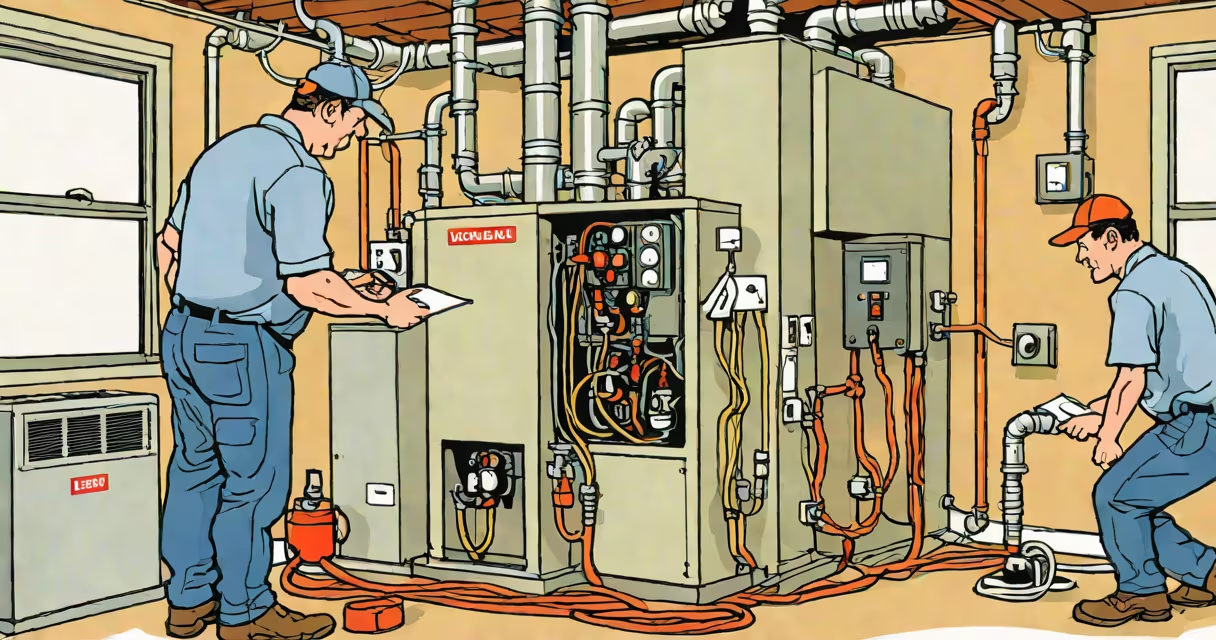
An HVAC tune-up consists of a systematic inspection, cleaning, and performance testing of heating and cooling systems to ensure safe, efficient, and reliable operation. Technicians evaluate critical components such as blower motors, heat exchangers, refrigerant lines, electrical connections, and airflow systems. The process typically takes 60 to 90 minutes and is recommended annually before peak heating or cooling seasons.
The National Association of Home Builders (NAHB) reports that regular HVAC maintenance reduces energy consumption by up to 15% and extends equipment lifespan by 20-25%. A properly tuned system maintains consistent indoor temperatures, lowers utility bills, and minimizes unexpected failures during extreme weather.
During a tune-up, a licensed technician follows a standardized checklist to assess both the heating and cooling functions of the system. The process begins with turning off power at the breaker panel for safety. The technician then accesses the indoor unit (air handler or furnace) and outdoor condenser unit.
Each component is inspected for wear, debris buildup, corrosion, or loose wiring. Blower wheels are cleaned to remove dust and lint that restrict airflow. The technician checks the heat exchanger for cracks using a mirror and flashlight-this step is critical because a cracked heat exchanger can release carbon monoxide into living spaces.
Refrigerant pressure is measured using a manifold gauge set. Low levels indicate a leak, which must be repaired before recharging. Electrical connections are tightened, and capacitor function is tested. Thermostat calibration is verified by comparing indoor temperature readings with the device's display.
Not all HVAC systems are identical, but most residential units share core components. The following table outlines what is typically evaluated during a standard tune-up.
| Component | What's Inspected | Why It Matters |
|---|---|---|
| Blower Motor & Wheel | Cleaned for dust; checked for bearing noise | Dust buildup reduces airflow and increases strain on motor |
| Heat Exchanger | Visual inspection for cracks or rust | Cracks can allow carbon monoxide into homes-life-threatening risk |
| Refrigerant Lines | Pressure tested; leaks checked with electronic detector | Low refrigerant reduces cooling capacity and damages compressor |
| Electrical Connections | Tightened; terminals cleaned | Loose wires cause overheating and fire risk |
| Thermostat | Calibration tested; battery replaced if needed | Inaccurate readings lead to inefficient cycling |
For older systems (over 10 years), technicians may recommend replacing worn belts or lubricating moving parts. Modern systems often have sealed motors with no lubrication points, so the focus shifts to electrical integrity and sensor calibration.
Many homeowners assume a tune-up only involves cleaning the filter and turning on the system. That's insufficient. A true tune-up requires diagnostic tools and trained eyes. For example, a 2022 study by the American Society of Heating, Refrigerating and Air-Conditioning Engineers (ASHRAE) found that 43% of HVAC failures in winter were linked to undetected heat exchanger damage-damage that could have been caught during a proper inspection.
One homeowner in Phoenix reported their AC stopped cooling after a summer heatwave. The issue wasn't low refrigerant-it was a clogged drain line causing water overflow, which short-circuited the control board. A tune-up would have identified the blockage during a visual check of the condensate drain. The repair cost $320; the tune-up had cost $110.
Another misconception is that tune-ups fix existing problems. They don't. They prevent them. If a system is already failing-say, the compressor is making grinding noises-the tune-up won't fix it. But it can catch early warning signs like unusual vibrations or rising amperage draw before failure occurs.
Annual HVAC tune-ups are standard practice in the U.S., especially in climates with extreme temperatures. In regions like the Southwest (Arizona, Nevada), where cooling loads exceed 10,000 BTU/hour during July, systems run nearly 16 hours a day. Without preventive maintenance, failure rates spike by 30% compared to maintained units.
Utility companies in California and Texas offer rebates for certified tune-ups through programs like PG&E's Energy Efficiency Program. Customers who schedule annual service receive $50-$100 credits on their next bill. These incentives reflect the proven link between maintenance and reduced grid strain during peak demand.
Commercial buildings use tune-ups too. A 2021 audit of office complexes in Atlanta showed that facilities with quarterly HVAC checks had 50% fewer tenant complaints about temperature swings and 35% lower energy costs than those without scheduled maintenance.
Some contractors offer "quick inspections" that skip key steps. A true tune-up includes more than visual checks. It requires measuring airflow with a manometer, testing static pressure, and documenting baseline performance metrics. A quick walk-through that only cleans filters and resets the thermostat doesn't meet industry standards.
Another confusion arises between tune-ups and repairs. A tune-up identifies issues but doesn't fix them unless included in a service package. For example, finding a frayed wire during a tune-up triggers a repair quote-but the tune-up itself remains a diagnostic and preventative service.
I once observed a technician diagnose a failed capacitor during a routine check. The homeowner had ignored a faint buzzing sound for six months. Replacing the capacitor prevented a complete system shutdown during a cold snap. The repair cost $85; the tune-up cost $135. The system ran smoothly for another four years.
When hiring a technician, confirm they perform all of the following:
Regular HVAC tune-ups aren't optional. They're essential. A well-maintained system runs efficiently, operates safely, and lasts longer. Skipping one service may save $100 now-but could cost $2,000 in emergency repairs later.