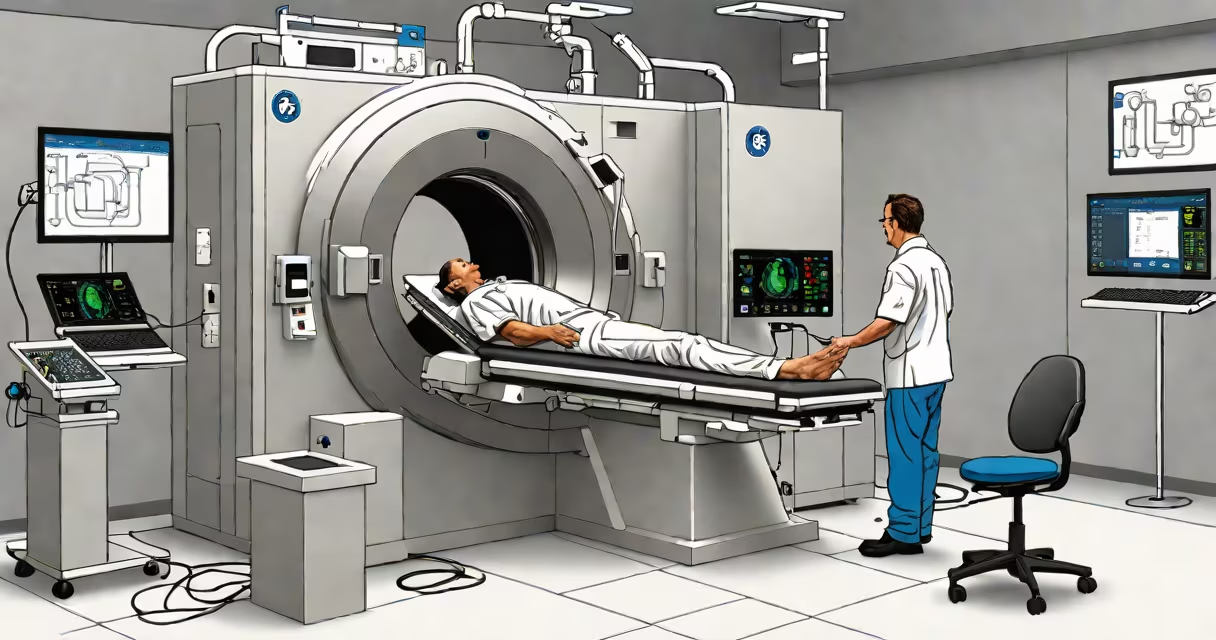
GE Healthcare tech support delivers specialized technical assistance for medical imaging, monitoring, and diagnostic equipment used in hospitals and clinics. Support includes remote diagnostics, on-site repairs, software updates, and preventive maintenance, handled by certified engineers trained in GE's proprietary systems.
When a CT scanner fails during a critical scan or an ultrasound system displays corrupted images, GE Healthcare tech support ensures rapid resolution. The team responds to alerts from connected devices, accesses system logs remotely, and dispatches field technicians within hours for urgent cases. All support follows FDA guidelines and ISO 13485 standards for medical device safety and reliability.
Access to GE Healthcare tech support requires a valid service contract. Equipment under warranty may receive free initial diagnostics, but repair labor and parts typically require paid service agreements. Users must register their devices with GE's central support portal to enable tracking and escalation protocols.
Support begins when a clinician or facility engineer reports an issue via the GE Healthcare Service Portal or by calling the dedicated hotline. The system automatically assigns a ticket based on device model, location, and severity level. Critical failures-such as a ventilator shutting down mid-procedure-are flagged as P1 priority and trigger immediate response.
Engineers use secure remote access tools to diagnose problems. For example, a hospital reported intermittent image artifacts on a 3T MRI. Remote diagnostics revealed a cooling pump failure in the magnet cryogen system. The engineer isolated the fault, verified thermal sensor readings, and dispatched a technician with replacement parts. The system was restored within 6.5 hours, minimizing patient delays.
Field technicians carry standardized toolkits and spare components. They follow GE's Field Service Work Instructions (FSWI), which detail step-by-step procedures for disassembly, calibration, and reassembly. Each visit generates a digital report, including timestamps, part serial numbers, and post-repair performance tests.
GE Healthcare tech support covers five core product lines:
| Product Category | Examples | Support Type |
|---|---|---|
| Imaging Systems | Optima CT, Signa MRI, Voluson Ultrasound | Remote diagnostics, firmware patches, calibration |
| Monitoring & Patient Care | MAC 5000 Monitor, Aestiva Anesthesia System | Real-time troubleshooting, alarm validation |
| Interventional Systems | C-arm Fluoroscopes, Angio Suites | Image quality correction, radiation safety checks |
| Software Platforms | Centricity Imaging, Edison AI Analytics | Integration support, data migration |
| Diagnostic & Lab Equipment | Proteus Blood Gas Analyzer, DCS Immunoassay | Calibration, regulatory compliance checks |
Each category has tiered support levels. Tier 1 handles basic queries like password resets or display issues. Tier 2 involves deeper software analysis. Tier 3 is reserved for hardware failures requiring component replacement. Only Tier 3 incidents require on-site visits.
A key distinction often missed: GE Healthcare tech support does not manage clinical workflows. It does not train staff on scanning protocols or interpret results. That responsibility lies with radiologists, sonographers, and biomedical engineers. Tech support focuses solely on device functionality.
Many users assume that GE Healthcare tech support offers 24/7 availability. While emergency response is available around the clock, standard business hours apply to most service requests. Non-emergency tickets may take 24-48 hours to acknowledge.
Another error is bypassing official channels. Some facilities contact third-party vendors for faster fixes. This risks violating FDA 21 CFR Part 820, which mandates that only authorized personnel modify medical device software. Unauthorized changes void warranties and can lead to regulatory citations.
I once observed a clinic attempt to replace a faulty power supply in a GE Signa MRI using a generic part from a local electronics store. The mismatch caused voltage spikes that damaged the gradient coil. GE's investigation confirmed the failure originated from improper component selection. The repair cost $14,200-over double the price of a GE-approved replacement.
Direct access to GE Healthcare tech support requires registration at https://www.gehealthcare.com/support. Users must provide device serial numbers, model identifiers, and proof of service contract. After login, they can submit tickets, view service history, and schedule technician appointments.
For urgent issues, call the global support hotline at +1-800-GE-HEALTH (43-4325). Operators route calls based on region and language preference. Multilingual support is available in English, Spanish, German, French, and Mandarin.
Some hospitals integrate GE's support API into their internal IT systems. When a device sends an alert, the hospital's asset management platform auto-creates a ticket in GE's service database. This reduces average response time from 4.2 hours to 1.8 hours, according to a 2023 study by the Association for the Advancement of Medical Instrumentation (AAMI).
ge healthcare tech support is a critical resource for maintaining operational uptime in clinical environments. It relies on formal contracts, certified personnel, and strict compliance protocols. Always use official channels to avoid safety risks, legal exposure, and extended downtime.