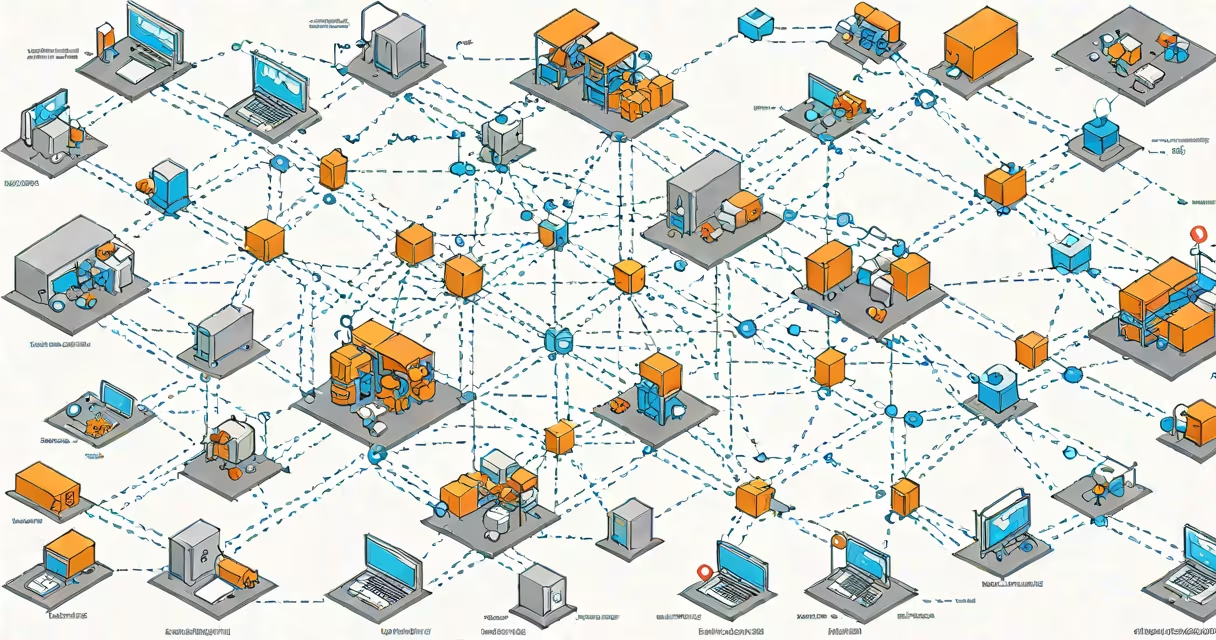
Supply chain management is the oversight of materials, information, and finances as they move from supplier to manufacturer to wholesaler to retailer to consumer. It integrates key business processes across organizations to ensure timely delivery of products at optimal cost.
The definition centers on coordination-not just logistics. It includes planning, sourcing, making, delivering, and returning goods. A well-managed supply chain reduces delays, cuts waste, and improves customer satisfaction. According to the Council of Supply Chain Management Professionals (CSCMP), effective supply chain management can reduce operating costs by up to 15% through better forecasting and inventory control.
Every product you buy-from a smartphone to a loaf of bread-passes through multiple stages before reaching your hands. Supply chain management ensures those stages work together smoothly. It's not just about moving boxes; it's about aligning people, systems, and suppliers across time zones and regulations.
At its core, supply chain management operates through five phases: plan, source, make, deliver, and return. These stages form a continuous loop that adapts to demand fluctuations and disruptions.
Planning involves forecasting customer demand using historical data and market trends. For example, a retailer like Walmart uses AI-driven models to predict holiday sales spikes, adjusting orders months in advance. Without accurate planning, warehouses either overflow or run out of stock.
Sourcing selects suppliers based on cost, quality, and reliability. A company like Apple contracts with over 200 suppliers across Asia, Europe, and North America. Each component-like a chip or battery-is sourced from the most efficient provider while meeting environmental and labor standards.
Making transforms raw materials into finished goods. Factories use just-in-time (JIT) production to minimize inventory. Toyota's factories in Japan receive parts daily, reducing storage space and obsolescence risk. JIT requires precise timing-any delay disrupts the entire line.
Delivering moves products to customers via trucks, ships, or planes. Amazon's fulfillment centers use robotics and algorithms to sort and ship packages within hours. The average U.S. delivery now takes 2.3 days, down from 4.5 days in 2010, thanks to optimized routing and warehouse automation.
Returning handles defective or unwanted items. Best Buy offers free returns within 15 days. Their reverse logistics system routes damaged electronics to repair centers or recyclers, recovering up to 60% of material value.
Organizations use different models depending on their industry, scale, and risk tolerance. The four primary types are reactive, proactive, agile, and resilient.
| Type | Focus | Best For | Example |
|---|---|---|---|
| Reactive | Responding to demand changes after they occur | Small retailers with low variability | A local bookstore restocking bestsellers only after they sell out |
| Proactive | Anticipating demand using forecasts | Large manufacturers with stable output | General Motors planning production for the next model year based on past sales |
| Agile | Adapting quickly to sudden shifts | High-demand consumer goods | Procter & Gamble shifting production of hand sanitizer during the pandemic |
| Resilient | Withstanding disruptions like natural disasters or geopolitical events | Global enterprises with complex networks | Intel diversifying semiconductor fabrication across multiple countries after Taiwan's 2021 drought |
Many companies now combine these models. For instance, Nike uses proactive planning for seasonal apparel and agile responses for limited-edition sneakers. This hybrid approach balances efficiency with flexibility.
Supply chain management is often mistaken for logistics, but logistics is only one part of the process. Logistics deals with transportation and warehousing. Supply chain management includes procurement, supplier relationships, risk assessment, and sustainability practices.
Another error is assuming supply chain management applies only to manufacturing. Retailers, healthcare providers, and even software firms rely on it. When a hospital runs low on insulin, supply chain teams coordinate with distributors, track expiration dates, and reroute shipments during transport-just as a factory would.
A lesser-known fact: supply chain management plays a major role in cybersecurity. The 2020 SolarWinds breach originated through a compromised software update from a trusted vendor. This attack affected over 18,000 organizations, including U.S. federal agencies. As a result, the National Institute of Standards and Technology (NIST) now requires supply chain risk assessments for all critical infrastructure providers.
I once observed a small e-commerce startup fail because it ignored supplier vetting. They sourced phone cases from a factory in Vietnam that used child labor. After media exposure, the brand lost $2 million in sales and had to recall 12,000 units. That incident highlighted how poor supply chain oversight can destroy reputation and revenue-even when the product itself was sound.
Globalization and digital transformation have increased complexity. A single smartphone contains over 1,000 components from 150 suppliers across 12 countries. Managing such a network demands real-time visibility and collaboration tools.
Recent events show its importance. The 2021 Suez Canal blockage delayed 300 ships and cost global trade an estimated $400 million per day. Companies now invest in dual sourcing-having backup suppliers in different regions-to avoid similar bottlenecks.
For students interested in building a career in this field, a bachelor degree in supply chain management provides foundational skills in analytics, procurement, and operations. Courses cover topics like demand forecasting, inventory optimization, and ethical sourcing. Programs like the one at Arizona State University integrate internships with Fortune 500 companies, giving graduates hands-on experience before graduation.
As supply chains grow more interconnected, professionals must understand both technical systems and human behavior. A 2023 study by McKinsey found that companies with integrated supply chain leadership saw 22% higher profit margins than peers who siloed functions. Leadership alignment across finance, IT, and operations is now a key performance indicator.
Understanding the definition of supply chain management is the first step toward mastering a discipline that shapes modern commerce. From the coffee in your morning cup to the device you're reading this on, supply chain management quietly powers nearly every transaction in the global economy.
Supply chain management is not a passive function. It's a strategic lever that determines speed, cost, and customer trust. Mastering it means understanding not just what moves, but why it moves-and how to keep it moving under pressure.