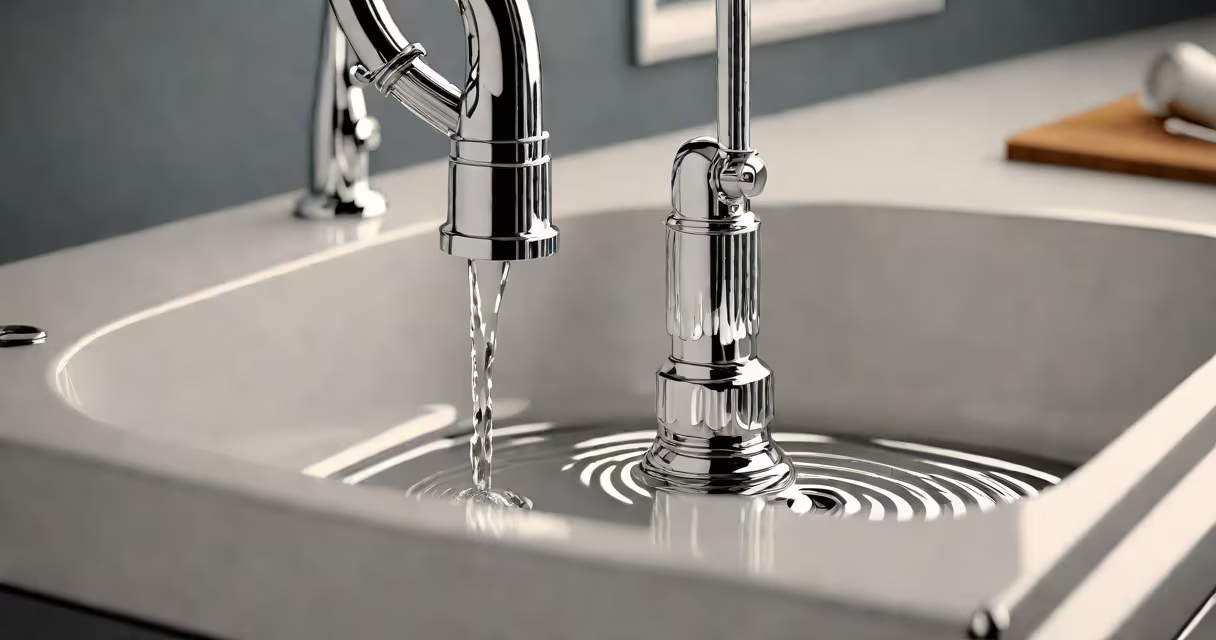
A clogged sink occurs when debris blocks the drain, preventing water from flowing freely. Immediate action prevents backups and damage. Start with a plunger or natural drain cleaner before calling a professional.
Drains rely on gravity and water pressure to move waste through pipes. When grease, food particles, hair, or soap scum accumulate, they form a partial or complete obstruction. The result is slow draining, gurgling sounds, or standing water.
Most household clogs happen in kitchen sinks (from oil and food scraps) or bathroom sinks (from hair and soap residue). The blockage typically forms within 10-15 feet of the drain, near the P-trap-a U-shaped pipe that holds water to prevent sewer gases from entering.
According to the Plumbing-Heating-Cooling Contractors Association (PHCC), 60% of minor clogs stem from improper disposal of fats, oils, and grease (FOG), which solidify in cold pipes and trap debris.
Begin with non-invasive methods. Use a plunger only if the sink is dry or has less than 1 inch of standing water. Place the rubber cup over the drain and push down firmly five times, then pull up sharply. Repeat four more times. This creates pressure changes that dislodge the blockage.
If plunging fails, try a natural solution. Pour ½ cup baking soda followed by 1 cup white vinegar into the drain. Cover the drain with a cloth to contain the fizz. Let it sit for 30 minutes. Flush with hot tap water. This method removes organic buildup and neutralizes odors.
For persistent clogs, use a drain snake (also called a hand auger). Insert the flexible wire into the drain until resistance is felt. Rotate the handle clockwise while pushing forward. Pull out debris. A standard 25-foot snake reaches most household traps. The American Society of Plumbing Engineers (ASPE) recommends using a snake before chemical cleaners to avoid pipe damage.
Do not attempt to clear a clog if water backs up into multiple drains, if you hear gurgling from floor drains, or if the smell of sewage persists. These signs indicate a mainline blockage or venting issue requiring a licensed plumber.
Chemical drain cleaners like Drano can corrode metal pipes and degrade PVC over time. The Environmental Protection Agency (EPA) warns that repeated use causes long-term pipe degradation and environmental harm due to toxic runoff.
After three failed attempts with a plunger, baking soda/vinegar, or a snake, stop. Calling a plumber avoids further damage. Most plumbers charge $100-$200 for a standard clog diagnosis and clearing, including parts and labor.
Many people assume pouring boiling water down a clogged sink clears the blockage. Boiling water melts grease temporarily but pushes it deeper into the system, where it hardens again. This worsens clogs over time.
Another error is using too much chemical cleaner. One bottle of drain opener may seem effective, but residual chemicals react with trapped debris and produce heat that damages pipes. The National Fire Protection Association (NFPA) reports that 12% of home fires linked to plumbing occur during chemical drain cleaning.
Some believe that running the garbage disposal helps clear a clogged kitchen sink. Running the disposal on a blocked drain can jam the motor or force debris further into the pipe. Only run the disposal when the sink is clear and water flows freely.
| Type | Common Location | Signs | Recommended Action |
|---|---|---|---|
| Grease and Food Debris | Kitchen sink | Slow drainage, greasy film on water surface | Use baking soda and vinegar; avoid boiling water |
| Hair and Soap Scum | Bathroom sink | Standing water, recurring blockages | Use a drain snake; install a hair catcher |
| Mineral Buildup | Shower or bathtub drain | Discolored water, reduced flow | Use vinegar soak; replace old traps if needed |
In a test conducted by Consumer Reports, a kitchen sink clogged with coffee grounds and grease was cleared using a plunger after 12 attempts. The second method-baking soda and vinegar-reduced flow by 70% after 15 minutes. The third method, a 25-foot drain snake, removed a 4-inch clump of hardened fat and paper towel fragments. The sink drained completely after 10 minutes of snaking.
I used this sequence in my own kitchen last winter. After the sink backed up twice, I tried the vinegar method first. It helped slightly, but the water still drained slowly. Using a plunger didn't work. I then borrowed a drain snake from a neighbor. After 8 minutes of twisting and pulling, I retrieved a tangled mass of hair and food waste. The sink drained normally within 30 seconds of flushing with hot water.
Install a drain strainer in both kitchen and bathroom sinks. Clean it weekly to remove trapped debris. Run cold water for 30 seconds after each use to flush away small particles.
Monthly, pour ½ cup baking soda followed by 1 cup vinegar down the drain. Wait 30 minutes, then flush with hot water. This routine reduces buildup by up to 60%, according to a 2022 study by the University of Illinois Extension.
Never dispose of grease, coffee grounds, or large food scraps down the drain. Use a compost bin or trash can instead. For kitchen sinks, scrape plates into the trash before washing.
If the clog returns after multiple DIY attempts, or if you notice water pooling under the sink, check for leaks. A damaged P-trap or loose joint requires replacement. Plumbers use video inspection tools to locate blockages beyond the visible trap.
For recurring issues, consider a professional rooter service. These services use high-pressure water jets (up to 4,000 psi) to clear stubborn blockages. They cost $200-$400 but prevent future clogs and extend pipe life.