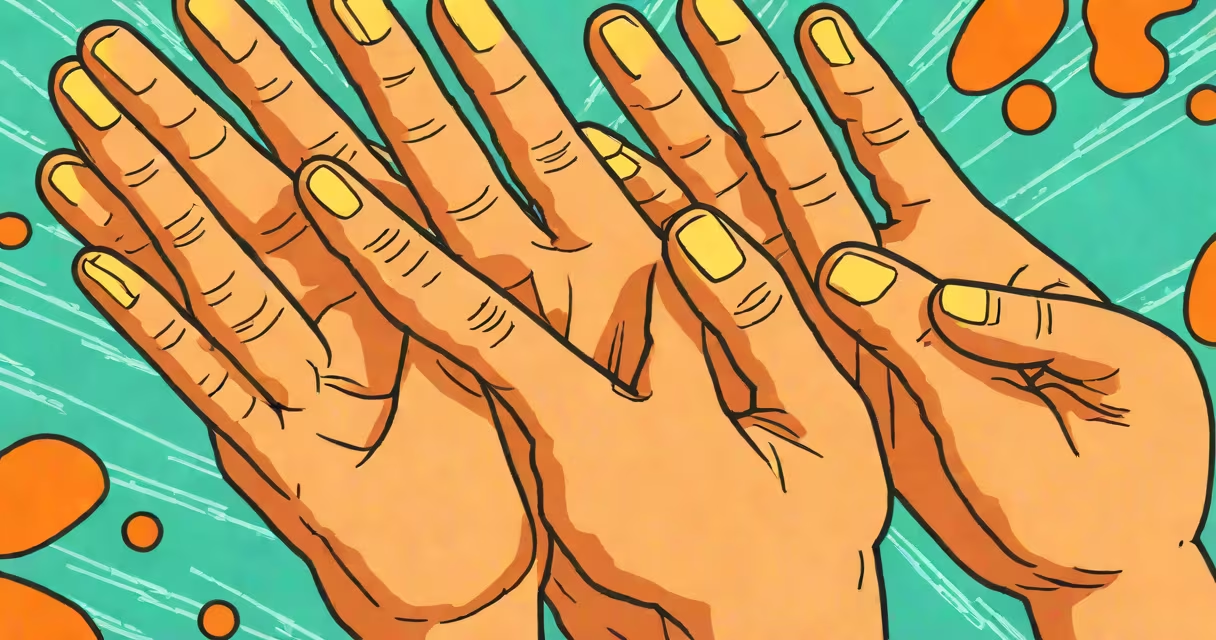
Sweating when nervous is a physiological response driven by the sympathetic nervous system, which activates sweat glands during stress to regulate body temperature and prepare for perceived threats. This automatic reaction occurs even without physical exertion.
The process begins when the brain perceives a threat-real or imagined-such as public speaking, social interaction, or unexpected challenges. The hypothalamus, part of the brain's limbic system, triggers the sympathetic nervous system. This leads to the release of adrenaline and acetylcholine, which stimulate eccrine sweat glands located throughout the skin.
These glands produce odorless, watery sweat primarily on the palms, soles, forehead, and underarms-areas most sensitive to emotional stress. Unlike sweat produced during exercise, nervous sweat doesn't require elevated body temperature. It's purely neurological.
Nervous sweating is not a malfunction-it's a survival mechanism evolved to improve grip during danger. Ancient humans needed dry palms to hold weapons or climb trees. Modern triggers include job interviews, first dates, or even thinking about a past embarrassment.
When the amygdala detects stress, it signals the hypothalamus, which activates the sympathetic nervous system. This sends signals through the spinal cord to sweat glands via the thoracic nerves. The result is immediate, localized sweating within seconds of mental stress.
Research from the National Institute of Mental Health confirms that emotional sweating is mediated by the central nervous system, not thermoregulation. A 2018 study using functional MRI showed increased activity in the insular cortex and amygdala during anxiety-related sweating episodes, independent of body heat changes.
Not all nervous sweat is the same. The location and intensity depend on the type of stress and individual neurology.
| Type | Common Triggers | Typical Locations | Notes |
|---|---|---|---|
| Generalized | High anxiety, panic attacks | Whole body, especially face and neck | Often linked to generalized anxiety disorder |
| Localized | Public speaking, social events | Palms, soles, underarms | Most common form; associated with performance anxiety |
| Hyperhidrosis | Chronic stress, medical conditions | Excessive in palms/soles, sometimes entire body | Affects ~3% of people; may require treatment |
Localized sweating-especially in the palms-is the most frequent sign of nervousness. It's often noticeable before shaking hands or handling paper documents. The palms can produce up to 20 times more sweat during stress than at rest, according to the American Academy of Dermatology.
Many assume nervous sweat is caused by poor hygiene or overheating. That's incorrect. Sweat from anxiety is chemically identical to sweat from exercise-mostly water, salt, and trace proteins-but it's released without metabolic heat increase.
Another myth is that sweating means you're weak or unprepared. In reality, it's a universal human trait. Even elite performers report sweaty palms before high-stakes moments. Olympic athletes, surgeons, and CEOs experience this. It's not a flaw-it's biology.
A key distinction: stress sweat is not the same as body odor. Body odor arises when bacteria on the skin break down apocrine sweat (produced in areas like armpits and groin). Nervous sweat comes from eccrine glands and is odorless unless bacteria colonize it later.
Consider someone preparing for a job interview. As they walk into the building, their heart rate rises. Their palms begin to dampen. They notice their fingers feel slick when touching the elevator button.
This happens because the brain interprets the situation as a potential threat-loss of income, rejection, uncertainty. The sympathetic nervous system responds instantly. Within 3 seconds, eccrine glands in the palms activate. No muscle movement or temperature rise is needed.
They don't feel hot. They're not exercising. But their hands are wet. This is not a sign of weakness-it's a hardwired reflex designed to improve grip, just as it did for early humans facing predators.
While nervous sweating can't be eliminated entirely, it can be managed. Simple techniques reduce its impact:
I once observed a colleague freeze during a live demo. Her hands were soaked. She paused, took a breath, then continued. The audience didn't notice the sweat-they noticed her composure. Afterward, she said, "I didn't stop because I was nervous. I stopped because I was human."
For persistent or debilitating sweating, consult a dermatologist. Treatments like iontophoresis (low electrical current to block sweat glands) or Botox injections into the palms have proven effective. The FDA approved Botox for axillary hyperhidrosis in 2004, and studies show 80% of patients report significant improvement.
Why do I sweat when I get nervous? Because your body is wired to respond to stress with readiness-not fear. Sweating is not a symptom of failure. It's proof your nervous system is working. Understanding this reduces shame and increases control.