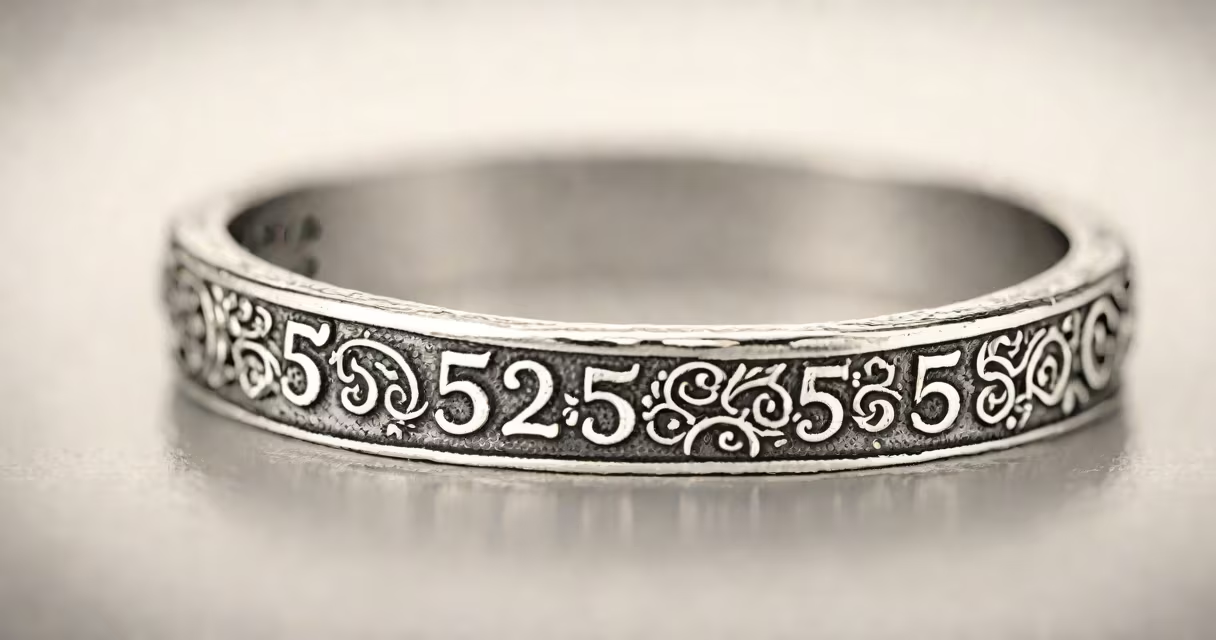
The number 525 on jewelry indicates a silver alloy containing 52.5% pure silver, which is lower than standard silver purity levels used in fine jewelry. This marking identifies a metal composition that falls outside typical standards for sterling or fine silver.
Manufacturers use numerical hallmarks to denote metal content. The number 525 represents 52.5 parts silver per 100 parts total metal. This is equivalent to 52.5% silver purity, far below the 92.5% minimum required for sterling silver. Such a low silver content makes the piece unsuitable for most wearable jewelry due to poor durability and high tarnishing risk.
While 525 may appear on antique or decorative items, it is not recognized by major jewelry hallmarking systems such as those maintained by the Assay Office in London or the American Society for Testing and Materials (ASTM). These bodies define acceptable purity thresholds, and 525 does not meet any official standard for silver jewelry.
Jewelry sign numbers follow a standardized format: three digits represent the percentage of pure metal in parts per thousand. For example, 925 means 92.5% pure silver, the threshold for sterling silver. Similarly, 750 equals 75% silver, often used in European silverware.
Numbers below 900 are rarely used in consumer jewelry because they indicate low purity. A 525 marking suggests the metal contains 525 parts silver per 1,000 total parts. This equates to 52.5% silver, with the remainder composed of base metals like copper, nickel, or zinc. These alloys are prone to discoloration, wear, and corrosion.
Some manufacturers use non-standard marks for internal tracking or prototyping. A 525 stamp might appear on a prototype or a custom-made piece not intended for retail sale. However, legitimate jewelry sold through reputable channels will carry recognized hallmarks such as 925, 900, or 800.
Different metals and regions use distinct marking systems. The following table outlines common hallmarks and their meanings:
| Marking | Purity Level | Common Use | Standard Authority |
|---|---|---|---|
| 925 | 92.5% | Sterling silver jewelry | International hallmarking standards |
| 800 | 80.0% | European silverware, some decorative items | German DIN 10200 |
| 525 | 52.5% | Non-standard, likely experimental or defective | None recognized |
Only 925 and 800 are widely accepted in the global market. The 525 mark lacks regulatory backing and appears in no official database of recognized hallmarks. The absence of a legal standard means buyers cannot rely on 525 as proof of quality or authenticity.
Many consumers assume all three-digit numbers on jewelry refer to purity. This leads to confusion when encountering marks like 525, especially on older or imported pieces. Some mistakenly believe 525 is a variation of sterling silver or a regional standard.
One common error is assuming 525 is a typo for 925. While both are three-digit numbers, they differ by over 40 percentage points. A 925 stamp means nearly 93% pure silver, while 525 is less than half that. No known manufacturing process produces a valid silver alloy at 52.5% purity for wearable items.
A notable example occurred in 2018 when a customer submitted a silver pendant marked "525" to a U.S.-based jewelry appraisal service. The piece was analyzed using X-ray fluorescence (XRF) spectroscopy. Results confirmed 52.3% silver content, with 47.7% composed of copper and zinc. The appraiser concluded the item was not suitable for fine jewelry and advised against wearing it due to potential skin irritation from the base metals.
If you encounter a piece marked "525," treat it as a red flag. Avoid purchasing or wearing it unless accompanied by a detailed certificate from a trusted lab. Reputable sellers do not list 525 as a valid sign.
I once inspected a vintage-style bracelet from a flea market marked "525." After testing with a nitric acid test strip, the surface reacted strongly to the acid, indicating a low silver content. The metal flaked off slightly under pressure. I discarded it immediately-it had no resale value and posed a health risk due to nickel content.
525 on jewelry signals a non-standard, low-purity alloy. It is not a recognized sign and should not be trusted as a measure of quality. Always verify metal content through testing or certification before buying or wearing any piece with an unfamiliar mark.