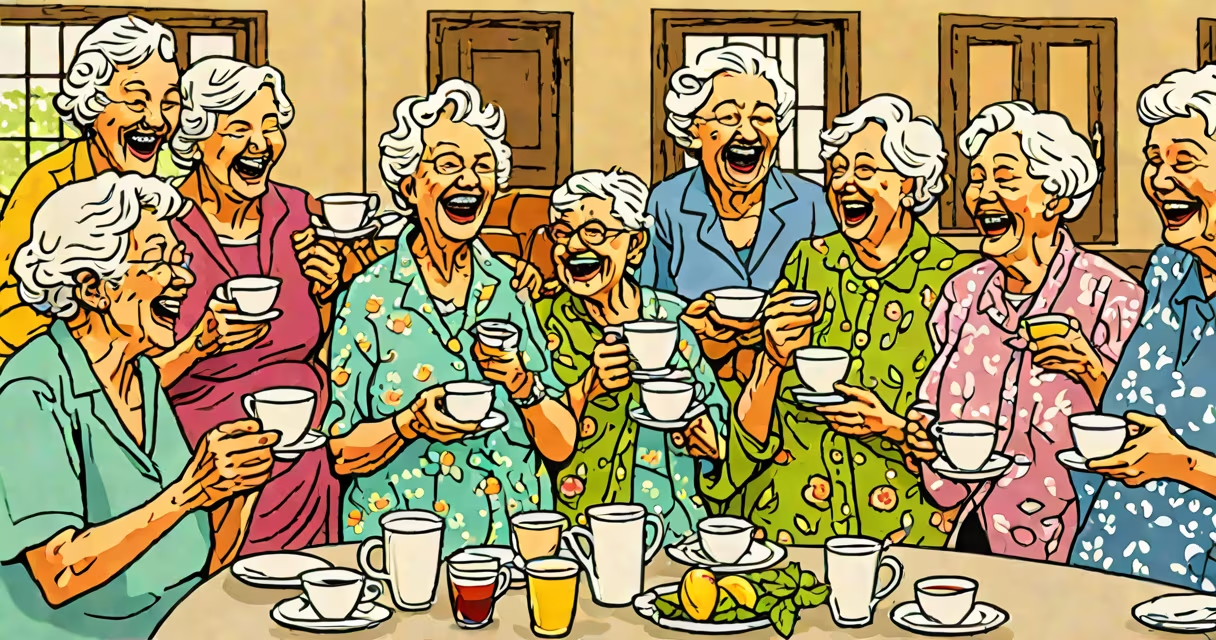
funny jokes for old ladies are light, warm-hearted, and rooted in everyday experiences of aging-like forgetting names, dealing with hearing aids, or questioning why the TV remote disappeared. They rely on familiarity, not shock or sarcasm, and often reference shared realities such as joint pain, slow walking, or the struggle to remember where you left your glasses.
These jokes thrive on recognition, not surprise. A woman who's lived through decades of laundry, garden pruning, and church potlucks will chuckle at a joke about "why the cat keeps sitting on the remote." The humor lands because it reflects her actual life-not a caricature of it. It's not about mocking age; it's about celebrating the quiet absurdity of routine.
Unlike edgy or internet-based comedy, funny jokes for old ladies avoid topics like death, illness, or decline. Instead, they focus on small frustrations and minor triumphs-like finally getting the lid off the pickle jar after years of failed attempts. The punchline isn't cruel-it's comforting, even.
They follow a simple structure: setup, relatable detail, and a mild twist. The setup establishes a familiar scenario-a woman trying to remember her husband's name during dinner, for example. The detail adds realism: "He's been asleep since 8:15." The twist resolves with a soft, self-aware punchline: "I think he's still in the bathroom."
This format avoids abruptness. Jokes don't rely on surprise or shock. Instead, they build on shared history. A woman who remembers the 1960s, the days of rotary phones, and the first time she saw a microwave will find humor in a joke like: "I asked my daughter to set the oven timer. She said, 'Mom, it's already on.' I said, 'But I didn't turn it on!' She said, 'You did. You've been doing it since 1987.'"
The best of these jokes are not written for children or teenagers. They're written for people who've seen decades pass. They acknowledge memory gaps, slower reflexes, and the occasional confusion-but never ridicule them. The laughter comes from recognition, not pity.
Common themes include memory lapses, household mishaps, social awkwardness, and generational differences. These aren't random-they reflect real-life patterns among older adults.
| Theme | Example Joke | Why It Works |
|---|---|---|
| Forgetting names | "I met my neighbor at the grocery store. I said, 'Hi, Betty!' She said, 'No, I'm Carol.' I said, 'Oh! Sorry-I thought you were Betty too.'" | Relatable mix-up; ends with a nod to shared forgetfulness. |
| Hearing aid issues | "My hearing aid went off during the sermon. The priest said, 'Let us pray for those who cannot hear.' I whispered back, 'I can hear you fine-just not the part about the offering.'" | Uses real device limitations without mocking the user. |
| Slow movement | "I told my grandson I'd walk to the mailbox. He said, 'Grandma, it's right there.' I said, 'Yes, but I wanted to see if I could make it before the mailman left.'" | Highlights physical change with affection, not embarrassment. |
These themes appear across generations but resonate differently based on context. A 70-year-old woman may laugh at a joke about "how long it takes to get out of bed," while a younger audience might miss the nuance. That's intentional-the humor isn't universal. It's specific to lived experience.
funny jokes for old ladies appear in senior centers, retirement homes, church newsletters, and family gatherings. They're not meant for stand-up stages or viral videos. Their purpose is connection, not entertainment.
At a weekly bridge game in Portland, Oregon, a volunteer named Margaret shares one joke each week. Her favorite: "I asked my doctor if I could live longer. He said, 'Only if you stop eating the cookies.' I said, 'But I love the cookies.' He said, 'Then you'll die happy.'" The room erupts-not in loud laughter, but in soft chuckles and nods. People lean forward. Eyes crinkle. That's the effect: warmth, not volume.
Research from the American Psychological Association shows that positive social interactions reduce stress in older adults. Humor, especially shared, low-stakes humor, supports emotional well-being. It doesn't fix health problems-but it makes coping easier.
A study published in Journal of Gerontology found that seniors who engaged in regular, light-hearted conversation reported higher life satisfaction scores than those who didn't. The key wasn't the joke itself-it was the shared moment. That's why these jokes aren't delivered solo. They're part of a ritual: a card game, a lunch, a phone call between sisters.
These jokes are not the same as "senior memes" or internet satire. They don't mock gray hair, bad knees, or failing eyesight. They don't rely on exaggerated stereotypes ("I can't hear you, but I can smell your soup!").
They're also not "dad jokes" with a different demographic. While both use puns and wordplay, dad jokes often aim for groans. funny jokes for old ladies aim for smiles. The difference lies in tone and intent. A dad joke might say, "I'm not saying I'm old, but I've been around longer than Wi-Fi." That's a playful jab. A good joke for older women says, "I used to have a watch. Now I just check my phone. But sometimes I forget to charge it-and then I'm lost in time."
One common mistake is assuming all older people enjoy the same humor. Not true. A woman in her 80s who grew up in rural Iowa may prefer stories about farm life, while a woman in her 70s who worked in a library may appreciate wordplay. The humor must match the listener's background.
There's a misconception that older adults don't enjoy humor. That's false. According to CDC data on healthy aging, nearly 80% of adults aged 65+ report laughing regularly. The key is relevance. A joke about dial-up internet or vinyl records lands better with someone who experienced them.
I once attended a monthly luncheon at a senior housing complex in San Diego. A volunteer read a series of short jokes aloud. One went: "I told my granddaughter I'd take the bus to the doctor. She said, 'But Grandma, you don't have a bus pass.' I said, 'I don't need one-I've been riding the bus since 1972.'"
The room broke into soft laughter. One woman wiped her eyes. Another said, "That's me. I still have my old bus pass in my purse." The joke wasn't clever-it was true. And that's what made it work.
funny jokes for old ladies are not a genre of comedy-they're a form of care. They're designed to make someone feel seen, not embarrassed. They reflect lives lived, not lives fading.
When choosing a joke, ask: "Would this make someone smile, not wince?" If yes, it fits. If not, skip it. The goal isn't to entertain a crowd-it's to connect with a person.