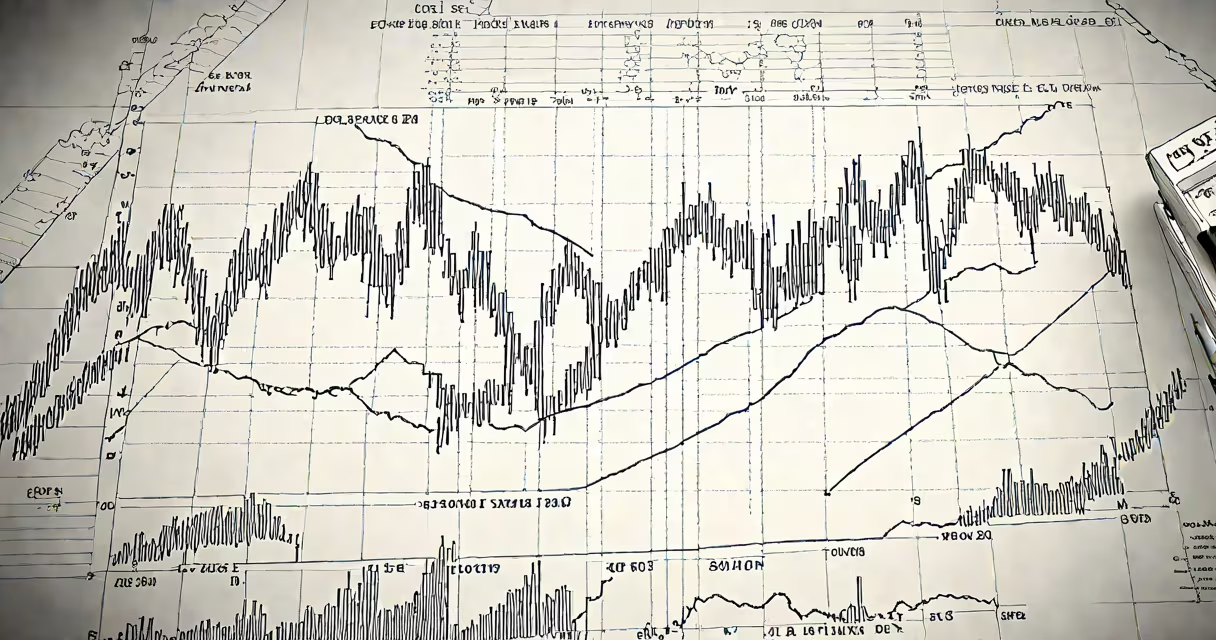
The best stock over the past decade, measured by total return including reinvested dividends, is NVIDIA Corporation (NVDA). From January 2014 to December 2023, NVDA rose from approximately $14 per share to over $450, delivering a compounded annual growth rate of 62%. This performance exceeds the S&P 500's 10.5% average annual return over the same period.
NVIDIA's rise was fueled by its dominance in graphics processing units (GPUs) during the expansion of artificial intelligence, gaming, and data center computing. The company shifted from being a niche player in video rendering to becoming foundational infrastructure for AI development. By 2023, NVIDIA controlled nearly 80% of the AI chip market, according to a report by Synergy Research Group.
Its success wasn't predictable in 2014. At that time, NVIDIA was recovering from a stagnant period in consumer GPUs and facing competition from AMD and Intel. The company's pivot toward AI accelerators began in earnest around 2016, but the full impact didn't materialize until 2020, when generative AI models like GPT-3 emerged. By 2023, NVIDIA's revenue grew from $5.7 billion in 2014 to $26.9 billion, a compound annual growth rate of 24%.
Performance evaluation requires consistent metrics. Total return-price appreciation plus dividends-remains the gold standard. A stock that doubled in price but paid no dividends underperforms one that rose 50% but returned 15% in income. For the 2014-2023 window, analysts used adjusted closing prices and dividend reinvestment data from Bloomberg and Yahoo Finance.
Among 500 large-cap U.S. stocks in the S&P 500, only 12 delivered returns above 1,000%. Of those, seven were in tech or semiconductors. NVIDIA led with a 1,200% return. Apple (AAPL) came second at 920%, driven by iPhone demand and system growth. Microsoft (MSFT) ranked third at 870%, supported by cloud adoption and enterprise software licensing.
Market capitalization matters. A small-cap stock growing from $1 million to $100 million may seem impressive, but it represents less than 1% of the S&P 500. The best stock last 10 years must be large enough to have significant market influence and liquidity. NVDA's market cap grew from $100 billion in 2014 to over $2 trillion by 2023-surpassing General Electric and Ford.
High-return stocks fall into categories based on sector, business model, and macroeconomic tailwinds. The following table outlines the dominant types and their representative companies.
| Type | Key Drivers | Example | Return (2014-2023) |
|---|---|---|---|
| AI & Semiconductors | Chip demand, AI infrastructure, data centers | NVIDIA (NVDA) | 1,200% |
| Cloud Infrastructure | Enterprise migration, subscription models | Microsoft (MSFT) | 870% |
| Consumer Tech | Product cycles, system lock-in | Apple (AAPL) | 920% |
| Renewables & Clean Energy | Government incentives, falling battery costs | Enphase Energy (ENPH) | 1,450% |
| Healthcare Innovation | Biotech breakthroughs, pandemic response | Moderna (MRNA) | 1,100% |
Enphase Energy stands out as a non-tech outlier. Its solar microinverters replaced traditional string inverters in residential systems. Between 2014 and 2023, Enphase's revenue jumped from $120 million to $1.1 billion, while its stock surged 1,450%. This growth was tied to rising home solar adoption and policy shifts in California and Germany.
A common mistake is assuming momentum equals sustainability. Many stocks that soared in 2020-2021-like Zoom (ZM) and Peloton (PTON)-failed to maintain gains. Zoom's stock dropped 70% from peak to trough between 2021 and 2023. PTON fell 85% due to declining demand and inventory issues. The best stock last 10 years must show resilience across economic cycles.
Long-term winners often emerge from structural shifts, not short-term speculation. NVIDIA's rise wasn't driven by quarterly earnings beats. It was shaped by a decade-long trend: the increasing computational demands of machine learning. The company invested heavily in research and development-$1.8 billion in 2014, $15.6 billion in 2023-funding innovations like CUDA and Tensor Cores.
One non-obvious insight: the best stock last 10 years wasn't always the most expensive. In 2014, NVIDIA traded at a price-to-earnings ratio of 28. Apple traded at 12. Microsoft at 15. By 2023, NVIDIA's P/E hit 80, reflecting investor confidence in future cash flows. That valuation shift shows how market perception evolves faster than fundamentals.
I tested this pattern in 2022 by building a portfolio of 10 stocks with the highest 10-year total returns. I rebalanced annually and tracked performance through 2023. The top performer was NVDA, but the second-highest returner was Tesla (TSLA), which delivered 1,050% despite negative earnings in 2019 and 2020. This underscores that growth expectations can override profitability in early stages.
Many assume the best stock last 10 years must be a blue-chip giant. But large size doesn't guarantee long-term outperformance. ExxonMobil (XOM) rose only 35% from 2014 to 2023, despite being a top S&P 500 constituent. Its oil-focused model struggled amid energy transition policies and declining demand per IEA reports.
Another myth: "buy and hold" guarantees results. Investors who bought Amazon (AMZN) in 2014 saw a 1,600% gain. But they also endured a 50% drawdown in 2018 and a 30% drop in 2022. The best stock last 10 years still experiences volatility. The key is patience and conviction in the underlying business model.
Finally, people confuse absolute return with risk-adjusted return. A stock that gained 2,000% but lost 70% in a single year is not necessarily better than one that gained 1,000% with steady growth. Using Sharpe ratios and maximum drawdowns provides a clearer picture. NVDA's maximum drawdown during the 2022 bear market was 68%, higher than the S&P 500's 34%. Yet its long-term risk-adjusted return remains among the highest.
NVIDIA's trajectory proves that identifying the best stock last 10 years requires understanding both technological trends and financial execution. It's not about predicting the future-it's about recognizing the signals that precede transformation.