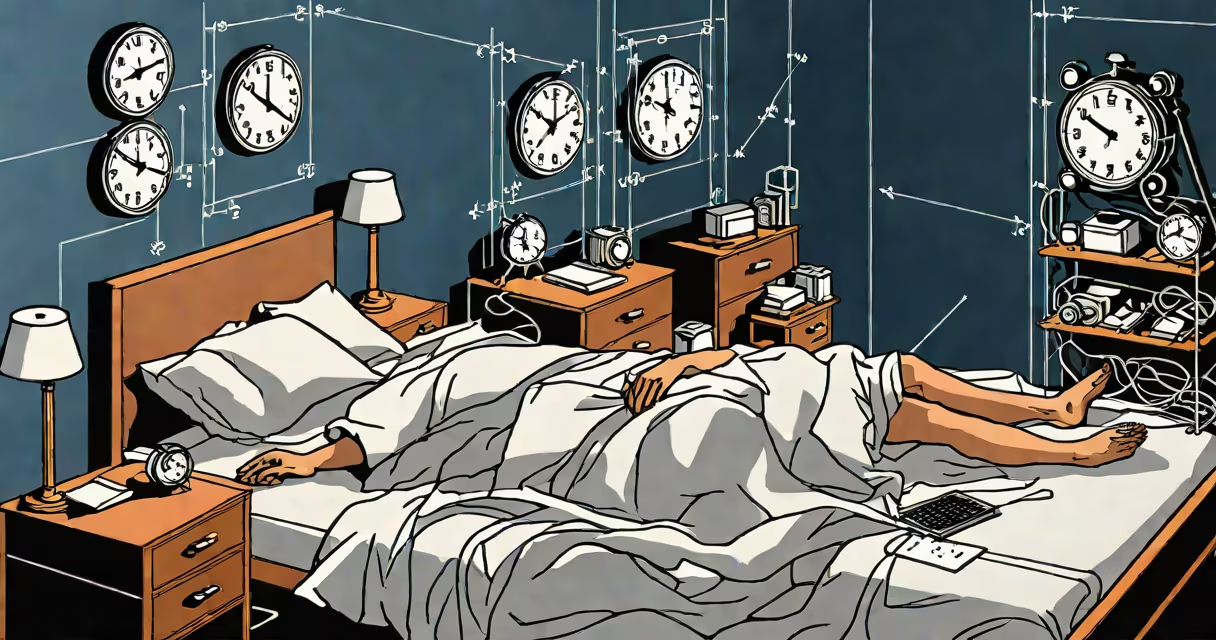
Waking up repeatedly during the night is a common sleep disruption caused by physiological, environmental, or psychological factors that interrupt sleep continuity. This pattern often stems from stress, poor sleep hygiene, medical conditions, or circadian misalignment.
Normal sleep cycles alternate between light, deep, and REM stages. Most adults cycle through these four to six times per night. Waking briefly between cycles is natural-but persistent awakenings lasting more than five minutes indicate disrupted sleep maintenance. The brain's arousal system activates during these interruptions, releasing cortisol and adrenaline, which can make it harder to fall back asleep.
According to the American Academy of Sleep Medicine, 10-15% of adults report frequent nighttime awakenings, with higher rates among people over 60. These episodes are not just about falling back asleep-they affect sleep quality, leading to fatigue, mood changes, and reduced cognitive performance the next day.
The human body follows a 24-hour internal clock called the circadian rhythm, regulated by the suprachiasmatic nucleus in the hypothalamus. Light exposure, meal timing, and physical activity influence this system. When the rhythm is out of sync-due to shift work, jet lag, or irregular sleep schedules-the body may release melatonin too early or too late, disrupting sleep onset and maintenance.
During sleep, the autonomic nervous system shifts from sympathetic (fight-or-flight) to parasympathetic (rest-and-digest) dominance. If stress hormones remain elevated due to anxiety, chronic pain, or sleep apnea, the body stays in a state of mild arousal. This prevents sustained deep sleep and increases the likelihood of waking.
A 2021 study published in Sleep Medicine Reviews found that individuals with frequent nighttime awakenings had higher levels of cortisol in saliva upon waking compared to those with uninterrupted sleep. Elevated cortisol is linked to both mental stress and metabolic dysfunction, creating a feedback loop that worsens sleep quality.
Not all awakenings stem from the same root. Some are lifestyle-related, others tied to medical conditions. Understanding the underlying cause is key to effective treatment.
| Type | Primary Cause | Typical Symptoms | Prevalence |
|---|---|---|---|
| Stress-Related | Anxiety, racing thoughts, rumination | Waking after 2-3 hours, difficulty returning to sleep | ~30% of adult insomniacs |
| Medical | GERD, sleep apnea, nocturnal leg cramps | Waking with heartburn, gasping, or muscle spasms | 15-20% of adults with chronic sleep issues |
| Circadian Disruption | Shift work, delayed sleep phase syndrome | Consistent waking at 3-4 AM despite fatigue | ~10% of working adults |
| Environmental | Noise, temperature extremes, partner movement | Awakening at random intervals with no clear trigger | Varies widely by living situation |
One underappreciated factor is fluid intake before bedtime. A 2019 study in Journal of Clinical Sleep Medicine showed that drinking more than 500 mL of water within two hours of sleep onset increased nocturnal awakenings by 42% due to bladder activation. This is especially relevant for older adults, whose bladder capacity decreases with age.
Waking up during the night is not always a sign of insomnia. True insomnia involves difficulty falling asleep, staying asleep, or waking too early, regardless of sufficient sleep opportunity. Frequent awakenings may simply reflect poor sleep efficiency-not a disorder.
Many assume that sleeping pills solve the problem. But long-term use of benzodiazepines or Z-drugs like zolpidem increases the risk of rebound insomnia and daytime drowsiness. The National Institutes of Health warns against prolonged use, citing a 2020 meta-analysis showing that medication users were 2.3 times more likely to report fragmented sleep after discontinuation.
Another myth: "I must get eight hours." Research from the Journal of Sleep Research shows that sleep duration varies by individual. Some people function optimally on 6.5 hours; others need 8.5. What matters more is sleep continuity and stage distribution. A person who wakes twice but spends 75% of their time in deep sleep may feel better than someone who sleeps nine hours but never reaches deep stages.
Consider a 42-year-old woman who reported waking up three to four times per night for six months. She had no history of depression but worked nights as a nurse. Her sleep diary showed consistent awakenings around 2:00 AM, coinciding with her body's natural cortisol peak. She also consumed caffeine after 3 PM and kept her bedroom at 23°C (73°F).
After adjusting her schedule, she stopped caffeine after noon, lowered room temperature to 18°C (64°F), and began a 30-minute wind-down routine including light stretching and reading. Within two weeks, awakenings dropped to once per night. After four weeks, she reported feeling more alert during her shifts and improved concentration.
This case illustrates how small behavioral changes can resolve sleep maintenance issues without medication. The key was identifying triggers-temperature, light, and circadian misalignment-that disrupted her sleep architecture.
If nighttime awakenings persist beyond three weeks despite consistent sleep hygiene practices, consult a healthcare provider. Persistent awakenings may signal undiagnosed conditions such as obstructive sleep apnea, restless legs syndrome, or hyperthyroidism.
Polysomnography (sleep study) can detect breathing interruptions, limb movements, or abnormal brain wave patterns. A 2022 review in Neurology found that 37% of patients referred for sleep testing had previously undiagnosed sleep apnea, which was causing micro-arousals during the night.
For those with recurring anxiety-driven awakenings, cognitive behavioral therapy for insomnia (CBT-I) is the gold standard. A 2023 randomized trial showed that participants receiving CBT-I reduced nighttime awakenings by 60% after eight sessions, compared to 20% in the control group using sleep medications.
Understanding why you wake up throughout the night begins with tracking your habits. Use a sleep journal or wearable device to record wake times, potential triggers, and morning energy levels. Over time, patterns emerge that point to solutions.
Explore how sleep cycles and brain activity influence nighttime awakenings to understand deeper mechanisms behind disrupted rest.