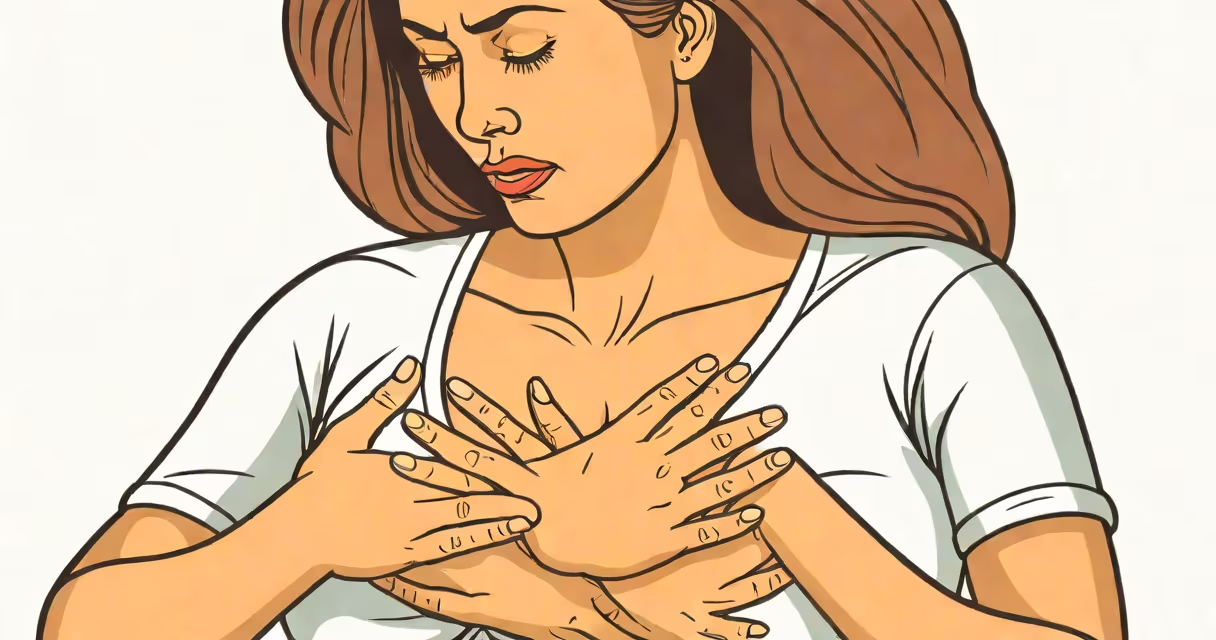
Chest pain left upper breast refers to discomfort or pressure felt in the upper portion of the left side of the chest, typically between the sternum and the left nipple. This pain can arise from cardiac, pulmonary, gastrointestinal, or musculoskeletal sources. Identifying the cause requires evaluating location, duration, quality, and associated symptoms.
Left upper breast pain is not a diagnosis. It's a symptom that may indicate conditions ranging from benign muscle strain to life-threatening heart attacks. The location-especially near the center or left side of the chest-raises concern for cardiovascular events. However, most cases are not heart-related. A 2021 study in JAMA Internal Medicine found that only 15% of patients presenting with chest pain in emergency departments had acute coronary syndrome.
Accurate assessment begins with distinguishing sharp, stabbing pain from dull, crushing sensations. Sharp pain often relates to costochondritis or pleurisy. Dull, pressure-like pain may suggest cardiac ischemia. Pain that worsens with breathing or movement points toward musculoskeletal or lung involvement. Persistent pain lasting more than 20 minutes, especially with sweating, nausea, or radiating to the jaw or arm, demands immediate medical evaluation.
Pain signals travel through nerves from the affected tissue to the spinal cord and brain. The left upper chest region is innervated by the intercostal nerves (T2-T6), which supply the ribs, muscles, and skin. These nerves also relay input from deeper structures like the heart and lungs. Because multiple systems share nerve pathways, pain can be misinterpreted by the brain-this is called referred pain.
For example, a blocked artery in the heart may trigger pain perceived in the left shoulder or upper chest. The brain associates the sensation with the area of greatest nerve density, even if the source is internal. Similarly, inflammation of the pleura-the lining around the lungs-can cause sharp pain that worsens with deep breaths. The sensation is localized to the upper chest because the diaphragm and lung surface are richly innervated.
When pain originates in the chest wall, such as from strained intercostal muscles or inflamed cartilage (costochondritis), it often worsens with palpation or movement. Patients describe a "stabbing" or "aching" feeling that doesn't radiate. These cases are common in people who lift heavy objects or engage in repetitive upper-body motions.
Conditions causing chest pain left upper breast fall into four categories: cardiac, pulmonary, gastrointestinal, and musculoskeletal. Each has distinct characteristics.
| Type | Common Causes | Pain Quality | Key Triggers |
|---|---|---|---|
| Cardiac | Myocardial infarction, angina | Dull, crushing, pressure-like | Exertion, stress, cold weather |
| Pulmonary | Pleuritis, pulmonary embolism | Sharp, stabbing, worsens with breathing | Deep inhalation, coughing |
| Gastrointestinal | GERD, esophagitis, hiatal hernia | Burning, pressure behind sternum | After eating, lying down |
| Musculoskeletal | Costochondritis, muscle strain, rib fracture | Sharp, localized, worsens with touch or motion | Palpation, twisting, lifting |
One non-obvious distinction: cardiac pain rarely changes with position. Musculoskeletal pain often shifts with posture. A 2020 review in The Lancet noted that 70% of patients with costochondritis reported pain relief when lying still, while cardiac pain persisted regardless of position.
Referred pain from the gallbladder or pancreas can mimic left upper chest pain. These organs sit in the upper abdomen and send signals via shared nerves. A patient with pancreatitis may feel pain radiating to the back and left upper quadrant, sometimes mistaken for heart disease. This is why abdominal imaging is sometimes needed when chest pain persists despite normal EKGs.
Among adults aged 40-65, chest pain left upper breast ranks among the top reasons for emergency department visits. The American Heart Association reports that approximately 1.2 million Americans seek care annually for suspected cardiac events, though only about 40% receive a confirmed diagnosis of heart disease.
A 43-year-old woman presented with burning chest pain that worsened after meals and when bending forward. She had no history of heart disease. An endoscopy revealed severe esophagitis. Her symptoms resolved after eight weeks of proton pump inhibitor therapy. This case illustrates how gastrointestinal causes are frequently overlooked.
Another example: a 58-year-old man experienced sudden left-sided chest pressure during a walk. The pain lasted 12 minutes and eased with rest. He was diagnosed with stable angina. His EKG showed ST-segment depression. He began beta-blocker therapy and underwent coronary angiography, revealing a 70% blockage in the left anterior descending artery.
These cases show that symptom patterns matter. Cardiac pain typically lasts longer than five minutes, may recur, and responds poorly to antacids or movement. Musculoskeletal pain usually improves with rest and local heat. Gastrointestinal pain often follows food intake and may be relieved by antacids.
Many assume that chest pain always means a heart attack. That's false. The National Institutes of Health states that over 80% of chest pain episodes are non-cardiac in origin. Costochondritis, anxiety, and acid reflux are frequent culprits.
Another misconception: women don't have heart attacks. This is incorrect. Women are more likely than men to experience atypical symptoms-fatigue, nausea, shortness of breath-without classic crushing chest pain. A 2022 study in Circulation found that 35% of women with myocardial infarction reported only fatigue and dizziness, not chest pain.
Some patients mistake panic attacks for heart attacks. Panic-induced chest pain is often sharp, localized, and accompanied by hyperventilation, tingling, and fear. It resolves within 10-20 minutes. A 2019 meta-analysis in General Hospital Psychiatry found that 28% of patients with panic disorder presented with chest pain in primary care settings.
One key difference: cardiac pain does not move with body position. Musculoskeletal pain often does. For example, leaning forward may relieve costochondritis pain but worsen pleuritic pain. This physical clue helps differentiate causes.
Any chest pain that lasts more than 5 minutes, recurs, or is accompanied by sweating, nausea, dizziness, or shortness of breath requires urgent evaluation. These are red flags for acute coronary syndrome.
Pain that occurs at rest, especially at night, may indicate unstable angina. This condition increases the risk of heart attack within days. Immediate hospitalization is advised.
If pain is sharp and worsens with breathing, consider pulmonary embolism or pleurisy. Risk factors include recent surgery, prolonged immobility, or oral contraceptive use. A D-dimer test and CT pulmonary angiogram are standard diagnostic steps.
Never ignore chest pain left upper breast. Even mild discomfort can signal serious underlying issues. Early intervention saves lives.