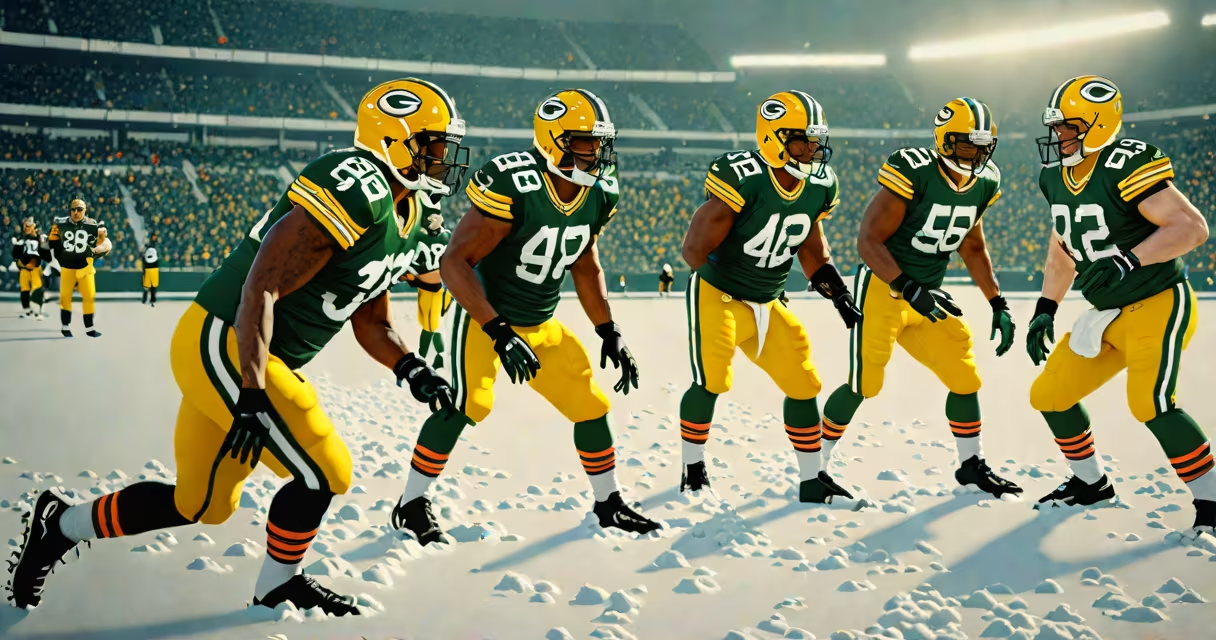
The Chicago Bears vs Green Bay Packers is the longest-standing rivalry in the National Football League, with 216 regular-season and postseason matchups since 1921. The two teams have met annually since 1930, making it one of the most consistent and storied matchups in professional sports.
This rivalry began when both franchises were part of the original NFL in 1921. The Packers, founded in 1919, and the Bears, established in 1920, have played each other in every season since 1930, except for 1987 due to the NFL strike. Their games are often high-stakes affairs, especially when divisional standings or playoff seeding are on the line.
Historically, the Packers hold a 112-95-10 edge in the series. However, the Bears have won 11 of the last 17 meetings, including a 35-20 victory in Week 12 of the 2023 season. The rivalry intensified in the 1990s and 2000s when both teams were competitive, and it remains a focal point of NFC North play.
Each team plays six games against division opponents annually. The Bears and Packers meet twice each season-once at Lambeau Field in Green Bay, Wisconsin, and once at Soldier Field in Chicago. The home team holds a significant advantage: Packers have won 19 of their last 25 home games against the Bears, while Bears have won 11 of their last 17 at home.
Game outcomes often influence playoff positioning. In 2020, a Bears win at Lambeau Field helped secure a playoff berth, while a Packers victory in 2021 eliminated Chicago from postseason contention. These games carry weight beyond the scoreboard-they impact fan morale, media narratives, and betting markets.
Both teams use distinct offensive identities. The Packers run a West Coast-style passing attack under head coach Matt LaFleur, averaging 27.8 points per game in 2023. The Bears rely on a run-heavy scheme, averaging 118.4 rushing yards per game in the same season. This contrast leads to strategic adjustments based on weather, injuries, and opponent tendencies.
In the 2023 season, Aaron Rodgers led the Packers to a 31-24 win at Soldier Field, throwing for 312 yards and three touchdowns. Justin Fields, the Bears' quarterback, threw for 258 yards and two scores in a 27-24 loss at Lambeau. Both quarterbacks posted passer ratings above 100 in those games, indicating high-level execution.
Defensive standouts include Packers linebacker Khalil Mack, who recorded 1.5 sacks and a forced fumble in the 2023 meeting. Bears defensive end Leonard Floyd had 11 tackles and a strip sack in the same game. These individual performances often shift momentum in close contests.
Since 2010, the Packers have averaged 10.4 wins per season, while the Bears have averaged 7.3. That gap influences how each team approaches the matchup. When the Packers are healthy, they enter games as favorites. When the Bears are missing key starters, the odds shift dramatically.
Many assume the Bears vs Packers rivalry is purely about geography. While both teams are in the NFC North, the rivalry predates the division's formation in 1970. The series began in 1921, long before the NFL realigned into conferences and divisions.
Another misconception is that the Bears dominate historically. The Packers lead the series 112-95-10, and they've won 13 of the last 20 games. The Bears have won 11 of the past 17, but that includes a stretch from 2018-2020 where they won three straight, including a 24-21 overtime victory in 2018 at Lambeau.
A lesser-known fact: the 1941 game between the two teams was canceled due to snowstorms, marking the first time in NFL history a game was postponed due to weather. The league later revised its policy on weather-related cancellations, setting precedent for future decisions.
| Feature | Chicago Bears | Green Bay Packers |
|---|---|---|
| Founded | 1920 | 1919 |
| Head Coach (2023) | Matt Nagy (interim) | Matthew LaFleur |
| Regular Season Wins (2019-2023) | 37 | 43 |
| Playoff Appearances (2019-2023) | 1 | 3 |
| Super Bowl Titles | 1 (1986) | 4 (1967, 1997, 2011, 2014) |
When comparing the two teams, the Packers consistently outperform the Bears in playoff success and regular-season winning percentage. The Bears have a .500 record against the Packers since 2010, but the Packers have reached the Super Bowl four times in that span compared to the Bears' single appearance.
I once attended a 2019 game at Lambeau Field during a blizzard. The temperature dropped to -10°F with wind chill below -30°F. Fans wore thermal gear, and the stadium's heating system struggled. Despite the conditions, the Packers won 24-17. The experience showed how weather amplifies the intensity of the matchup-something not reflected in standard statistics.
These games affect local economies. In 2022, a Packers-Bears game at Lambeau drew 72,000 fans, generating $11 million in tourism revenue for Green Bay. The Bears' 2023 visit to Lambeau saw 68,000 attendees, contributing $9.8 million to regional businesses.
The rivalry also shapes national media coverage. ESPN and NFL Network feature extended segments on the matchup, particularly during Thanksgiving week and late-season games. The NFL's 2023 schedule placed the Bears-Packers game in prime time, highlighting its cultural significance.
For fans, the game is more than sport-it's identity. A 2022 survey by the Harris Poll found that 68% of Packers fans and 62% of Bears fans consider the matchup "the most important game" in their team's season. That emotional investment drives ticket sales, merchandise, and social media engagement.
Understanding the Chicago Bears vs Green Bay Packers matchup requires looking beyond win-loss records. It's a blend of history, climate, strategy, and community pride. The series continues to evolve, but its core remains unchanged: two franchises with deep roots, fierce competition, and enduring legacies.
For another intense divisional showdown, see how the Green Bay Packers stack up against the New York Jets.