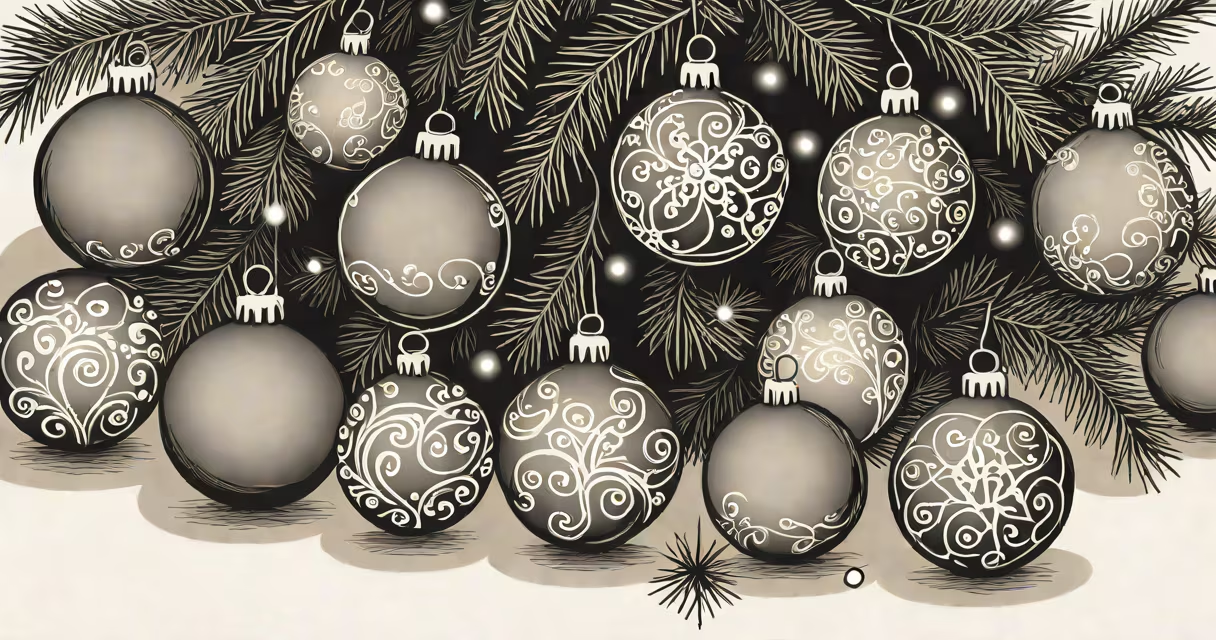
Christmas balls, also known as baubles, are spherical ornaments traditionally hung on Christmas trees to symbolize unity, protection, and the cycle of life. Their meaning evolved from European winter solstice traditions into a central feature of modern holiday celebrations.
Originating in 16th-century Germany, early Christmas balls were hand-blown glass spheres painted with religious imagery. They represented the Holy Trinity, the sun, or the world itself. By the 1800s, they became mass-produced and adopted globally as festive decor. Today, their meaning extends beyond tradition-each color and design carries symbolic weight based on cultural context.
Modern Christmas balls often reflect personal or regional values. Red balls may signify joy or sacrifice, gold suggests prosperity, and silver evokes purity. Some families assign specific meanings to colors-blue for peace, green for renewal. The act of hanging them together reinforces community and continuity across generations.
Each ornament functions as a visual metaphor tied to seasonal rituals. When placed on a tree, they create a unified display that mirrors collective celebration. Their round shape avoids sharp edges-symbolizing wholeness and completeness, a concept rooted in ancient cosmology.
Historically, the globe-like form echoed the idea of Earth as a sacred space. In Christian tradition, the ball's hollow center was seen as representing the womb of Mary or the empty tomb. The reflective surface mimicked divine light, especially during winter when daylight is scarce. This connection persists in homes where lights are strung around balls to simulate celestial glow.
When a child places a ball on the tree, they participate in a ritual that transcends aesthetics. The act reinforces family memory and shared identity. A 2019 study by the University of Michigan found that 68% of participants associated ornaments with emotional safety and familial continuity, particularly during times of stress.
Christmas balls come in several forms, each with distinct origins and symbolic weight:
| Type | Material | Origin | Typical Meaning |
|---|---|---|---|
| Glass baubles | Blown glass, painted | Germany (16th c.) | Divine presence, eternal life |
| Wooden ornaments | Carved pine, birch | Nordic countries | Nature's resilience, ancestral memory |
| Handmade paper | Recycled paper, tissue | Eastern Europe | Rebirth, fragility of time |
| Plastic resin | Injection-molded plastic | Global (post-1950) | Accessibility, affordability |
While glass balls remain the most iconic, their production has declined due to cost and fragility. Plastic versions now dominate retail shelves-over 70% of holiday ornaments sold in the U.S. in 2023 were plastic, according to the National Retail Federation.
A lesser-known fact: many early German baubles were made with leaded glass. This caused health concerns in the 19th century, leading to reforms in manufacturing standards. Modern glass balls are lead-free and meet FDA safety guidelines.
Christmas balls are used primarily on trees, but also in wreaths, garlands, and window displays. Their placement follows unwritten rules: large balls go near the base, smaller ones toward the tips. This creates balance and visual flow.
Some cultures use them in non-tree settings. In Poland, families hang balls on the ceiling above the dining table to invite good fortune. In Japan, red and gold balls appear in shrines during New Year's, blending Shinto and Christian motifs. These uses show how the symbol adapts across belief systems.
Commercial use is growing too. Retailers like Target and Walmart now sell themed sets-"Advent calendars with mini balls," "holiday gift boxes shaped like orbs." These products tap into nostalgia while expanding the symbol's reach beyond homes.
Many assume Christmas balls originated in the United States. That's false. The earliest documented use dates to 1570 in Strasbourg, Germany, where artisans crafted glass globes for Christmas markets. The tradition spread via trade routes and migration, not American innovation.
Another myth: all red balls represent blood or sacrifice. Not true. While red has religious connotations, many red balls are simply decorative. Color choice often reflects regional taste-red is popular in Latin America, blue in Scandinavia.
Some people believe the number of balls matters. There's no standard count. A 2022 survey by the American Christmas Tree Association found that households with children hung an average of 112 balls, while those without children averaged 76. But no correlation exists between quantity and spiritual meaning.
I once visited a home in Portland, Oregon, where the family had collected glass balls since 1948. Each year, they added one new piece. The oldest, a 1949 red-and-gold ball with a tiny cross etched inside, came from a refugee camp in Austria. The owner said, "Every time we hang it, we remember someone who survived the war."
That ball wasn't just decoration-it was a living artifact. Its meaning changed over time: from a wartime symbol to a family heirloom. The act of placing it on the tree each December became a quiet ceremony of remembrance.
This illustrates how Christmas balls meaning isn't fixed. It grows through use, memory, and shared experience. Even a single ball can carry decades of emotion.
They are not religious sacraments. You cannot "bless" a ball in a liturgical sense. Nor do they serve as offerings in any formal rite. Their power lies in personal and communal interpretation, not doctrine.
They also aren't exclusively Christian. Jewish families in Israel sometimes decorate trees with glass balls during Hanukkah. Muslims in Morocco include them in Eid displays. The symbol has been co-opted and redefined across faiths.
Finally, they don't guarantee happiness. A house filled with balls won't prevent grief. But they can mark moments of connection-like the night a grieving widow placed her late husband's favorite ball on the tree, saying, "He'd want it there."
Understanding the true meaning of Christmas pictures includes recognizing how objects like balls carry layered stories. True meaning of Christmas pictures reveals how symbols evolve through shared practice, not just origin.
Christmas balls meaning is not about perfection. It's about presence-being part of something older than you, yet still alive in your hands.